On the early morning of June 21, 1582, an unprecedented coup d’état erupted that would redirect the entire course of Japanese history. At Honnoji Temple in Kyoto, Oda Nobunaga, the powerful warlord who had unified most of the country and stood on the brink of complete unification, was surrounded and killed by his own most trusted general, Akechi Mitsuhide. This “Honnoji Incident” shattered the Oda regime, ending an era and setting off a chain of events that would ultimately lead to the Rise of Toyotomi Hideyoshi and the Tokugawa Shogunate. This multi-language guide—available in English, Japanese, French, and German—explores the background, course, and key figures of one of the most dramatic and debated events in Japanese history.
The Honnoji Incident: The Betrayal That Shook Japan
On the morning of June 21, 1582, Japan’s most powerful warlord — Oda Nobunaga, the man who had united most of the country and stood on the brink of complete unification — was surrounded at Honnoji Temple in Kyoto and killed by his own most trusted general, Akechi Mitsuhide. The incident shattered the Oda regime and set off a chain of events that would ultimately lead to the Tokugawa Shogunate. It remains one of the most dramatic and debated events in Japanese history.
Death of Oda Nobunaga; death of heir Oda Nobumasa at Nijojo Castle
Aftermath
Toyotomi Hideyoshi defeated Mitsuhide at the Battle of Yamazaki (July 2, 1582)
Significance
End of the Oda era; beginning of the Toyotomi regime
Background to the Incident
By 1582, Oda Nobunaga had transformed Japan. Starting from a minor domain in Owari, he had risen to dominate central Japan, deposed the last Ashikaga Shogun, crushed the Buddhist militaries, and subjugated most of the country. His generals were conquering the remaining holdouts: Toyotomi Hideyoshi (then Hashiba Hideyoshi) was besieging Takamatsu Castle in the west; Niwa Nagahide was campaigning in the north. Akechi Mitsuhide had just completed a major campaign in the west and was ordered to march west again to reinforce Hideyoshi.
Akechi Mitsuhide was one of Nobunaga’s most capable and cultured generals — a skilled poet as well as a military commander. Yet for reasons that historians still debate, he chose this moment to rebel. The most common theories for his motivation include: personal humiliation inflicted by Nobunaga in front of others; fear that Nobunaga intended to strip him of his domain; and a principled objection to Nobunaga’s ruthlessness. The truth may never be fully known.
On June 20, Mitsuhide led his army away from Kyoto — ostensibly heading west. At Ōeyama, he issued the famous command: “The enemy is at Honnoji!” (敵は本能寺にあり). His troops, who had expected to march against the Mōri clan, were turned toward Kyoto.
Course of the Incident
Scene 1 — The Night Approach to Honnoji
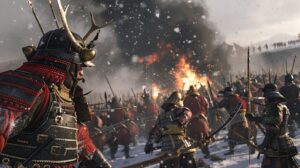
Mitsuhide‘s army of 13,000 moved through the night of June 20–21, surrounding Kyoto in darkness. Nobunaga was staying at Honnoji Temple with only a small personal retinue of fewer than 100 men — generals and attendants appropriate for a private lodging in the capital, not a fortress. There was no hint of danger; Nobunaga had no reason to expect treachery from Mitsuhide.
Scene 2 — Dawn at Honnoji
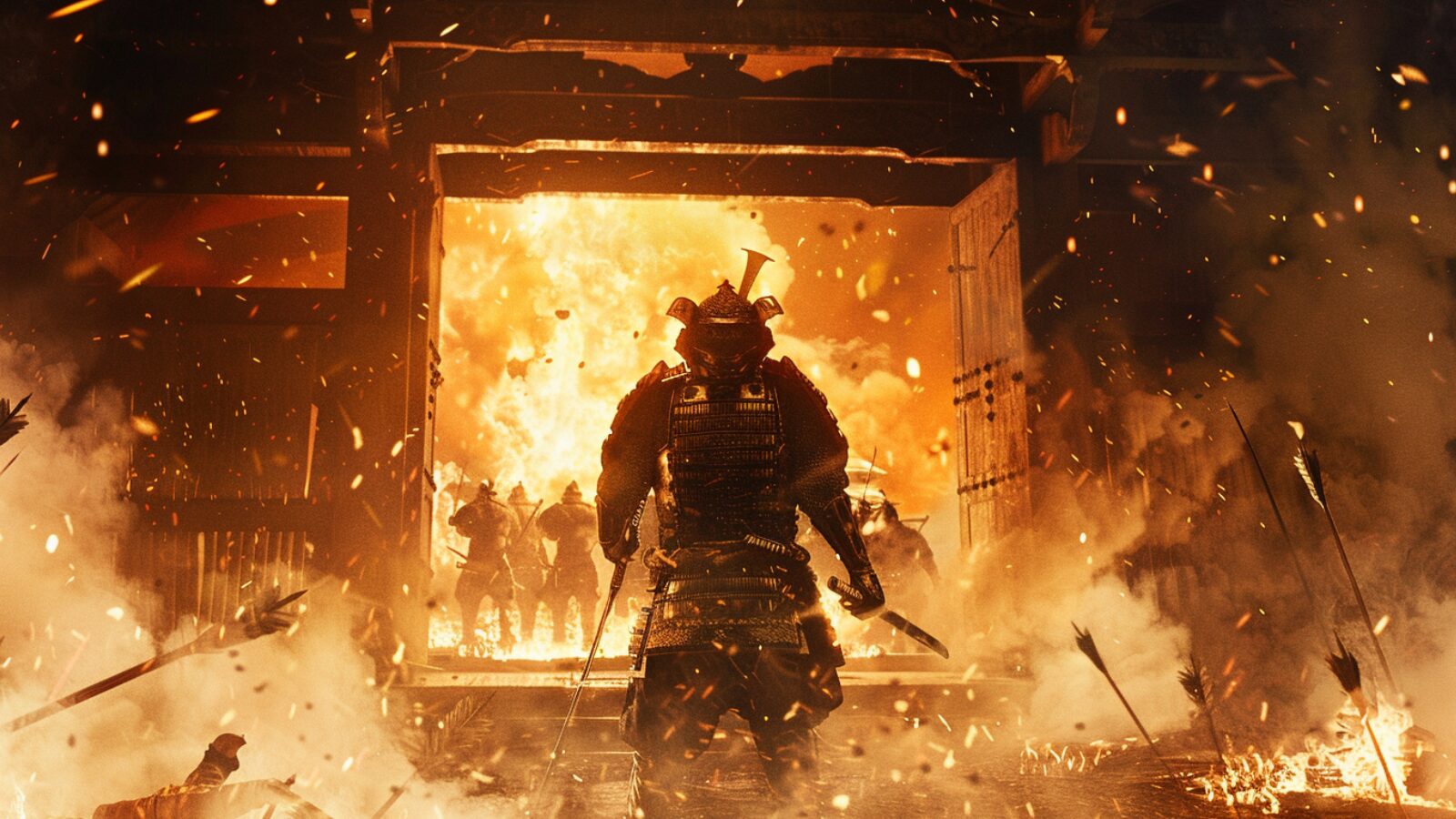
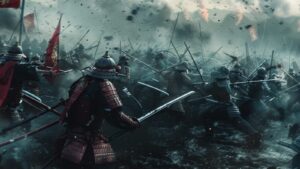
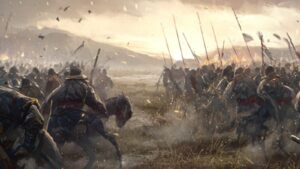
As dawn broke on June 21, the Akechi army surrounded Honnoji and attacked. Nobunaga’s attendants attempted to resist, but were overwhelmed almost immediately. Nobunaga himself reportedly fought back — first with a bow, then with a spear — as the temple was set alight. He reportedly retreated to an inner room, where he either died of his wounds or committed ritual suicide (seppuku). No remains were ever recovered.
Scene 3 — The Battle of Nijojo Castle
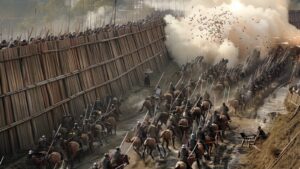
Nobunaga’s heir and eldest son, Oda Nobumasa, was lodged nearby at Nijojo Castle (the Myōkakuji) with a somewhat larger force. Word reached him of his father’s fate, and he organized a determined defense. He fought for several hours before he too was overwhelmed. Nobumasa also died — by suicide or in battle — ensuring that no immediate Oda successor could rally resistance.
Scene 4 — Mitsuhide as Ruler of Kyoto
For thirteen days, Akechi Mitsuhide controlled Kyoto. He attempted to win the allegiance of other daimyo, but found little support. Most powerful lords either remained neutral or actively opposed him. Niwa Nagahide, campaigning in the north, could not act quickly enough. The one general who did act with extraordinary speed was the one who would prove Mitsuhide’s nemesis.
Scene 5 — The Great March Back: Hideyoshi’s Revenge
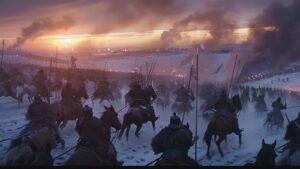
Toyotomi Hideyoshi, upon receiving word of Nobunaga’s death, immediately negotiated a ceasefire with the Mōri clan and turned his army east in what became known as the “Great March Back” (Chūgoku Ōgaeshi). Covering roughly 200 kilometers in less than two weeks, Hideyoshi’s army arrived at Yamazaki, just south of Kyoto, on July 1. The next day — only thirteen days after Honnoji — he engaged and destroyed Mitsuhide’s forces at the Battle of Yamazaki. Mitsuhide fled and was reportedly killed by a peasant’s spear shortly after. The “Thirteen-Day Shogun,” as he came to be called, was gone.
Why the Honnoji Incident Changed History
The Honnoji Incident is one of those pivotal moments where a single act of violence redirects the entire course of a nation’s history. Nobunaga‘s death at the hands of his own general did not just end one man’s life — it ended an era. The Oda regime collapsed; the Toyotomi rose in its place. Toyotomi Hideyoshi, by his swift response and victory at Yamazaki, positioned himself as the avenger of Nobunaga and seized the initiative. Within eight years, he had completed the unification of Japan that Nobunaga had started.
Questions about why Mitsuhide rebelled continue to fascinate historians. Was it a personal grievance? A political calculation? A moment of desperate ambition? The mystery is part of what makes the incident so compelling. In Japanese culture, the phrase “Three days of Mitsuhide” — a shortened version of the idea that his triumph lasted only thirteen days — remains in common use to describe a short-lived victory.
Key Figures
Oda Nobunaga (織田信長) — Japan’s great unifier; killed at Honnoji at the moment of his greatest triumph
Akechi Mitsuhide (明智光秀) — Nobunaga’s trusted general; mastermind of the coup; defeated at Yamazaki thirteen days later
Toyotomi Hideyoshi (豊臣秀吉) — Oda’s greatest general; avenged Nobunaga at Yamazaki and inherited the unification project
Niwa Nagahide (丹羽長秀) — Loyal Oda general campaigning in the north at the time of the incident; later supported Hideyoshi’s succession
L’Incident de Honnoji : La Trahison qui Ébranla le Japon
Le matin du 21 juin 1582, le seigneur de guerre le plus puissant du Japon — Oda Nobunaga, l’homme qui avait unifié la majeure partie du pays et se trouvait au bord d’une unification complète — fut encerclé au temple Honnoji à Kyoto et tué par son propre général de confiance, Akechi Mitsuhide. L’incident brisa le régime Oda et déclencha une chaîne d’événements qui mènerait finalement au shogunat Tokugawa.
Mort d’Oda Nobunaga ; mort de l’héritier Oda Nobumasa
Suite
Toyotomi Hideyoshi vainquit Mitsuhide à la Bataille de Yamazaki (2 juillet 1582)
Importance
Fin de l’ère Oda ; début du régime Toyotomi
Contexte de l’Incident
En 1582, Oda Nobunaga avait transformé le Japon. Ses généraux conquéraient les dernières résistances : Toyotomi Hideyoshi assiégeait le château de Takamatsu à l’ouest. Akechi Mitsuhide venait de terminer une campagne et fut ordonné de marcher à l’ouest pour renforcer Hideyoshi.
Akechi Mitsuhide était l’un des généraux les plus capables et cultivés de Nobunaga — un poète habile autant qu’un commandant militaire. Les raisons de sa rébellion restent débattues par les historiens : humiliation personnelle infligée par Nobunaga, crainte de perdre son domaine, objection principielle à la brutalité de Nobunaga… Le 20 juin, Mitsuhide lança sa célèbre commande : « L’ennemi est à Honnoji ! »
Déroulement de l’Incident
Scène 1 — L’Approche Nocturne de Honnoji
L’armée de 13 000 hommes de Mitsuhide se déplaça dans la nuit, encerclant Kyoto dans l’obscurité. Nobunaga logeait à Honnoji avec moins de 100 hommes — aucune raison d’attendre une trahison.
Scène 2 — L’Aube à Honnoji
À l’aube du 21 juin, l’armée Akechi encercla Honnoji et attaqua. Nobunaga lui-même combattit — d’abord avec un arc, puis avec une lance — tandis que le temple était incendié. Il se retira dans une chambre intérieure, où il mourut de ses blessures ou se suicida rituellement.
Scène 3 — La Bataille du Château de Nijo
L’héritier de Nobunaga, Oda Nobumasa, logé à proximité, organisa une défense déterminée pendant plusieurs heures avant d’être submergé. Nobumasa mourut également, privant l’Oda clan d’un successeur immédiat.
Scène 4 — Mitsuhide en Maître de Kyoto
Pendant treize jours, Akechi Mitsuhide contrôla Kyoto. Il tenta d’obtenir l’allégeance d’autres daimyo, mais trouva peu de soutien. Le général qui agit avec une vitesse extraordinaire fut celui qui se révélerait son nemesis.
Scène 5 — La Grande Marche de Retour : La Revanche d’Hideyoshi
Toyotomi Hideyoshi, apprenant la mort de Nobunaga, négocia immédiatement un cessez-le-feu avec le clan Mōri et tourna son armée vers l’est. Parcourant près de 200 kilomètres en moins de deux semaines, il arriva à Yamazaki le 1er juillet. Le lendemain — seulement treize jours après Honnoji — il écrasa les forces de Mitsuhide à la Bataille de Yamazaki. Le « Shogun des Treize Jours » disparut.
Pourquoi l’Incident de Honnoji a Changé l’Histoire
L’Incident de Honnoji est un de ces moments charnières où un seul acte de violence réoriente tout le cours d’une nation. La mort de Nobunaga mit fin à une ère. Toyotomi Hideyoshi, par sa réponse rapide à Yamazaki, se positionna comme le vengeur de Nobunaga. En huit ans, il acheva l’unification que Nobunaga avait commencée. La phrase japonaise « Trois jours de Mitsuhide » reste en usage courant pour décrire un triomphe éphémère.
Figures Clés
Oda Nobunaga (織田信長) — Grand unificateur du Japon ; tué à Honnoji au moment de son plus grand triomphe
Akechi Mitsuhide (明智光秀) — Général de confiance de Nobunaga ; cerveau du coup ; défait à Yamazaki treize jours plus tard
Toyotomi Hideyoshi (豊臣秀吉) — Plus grand général d’Oda ; vengea Nobunaga à Yamazaki et hérita du projet d’unification
Niwa Nagahide (丹羽長秀) — Général loyal d’Oda ; soutint plus tard la succession d’Hideyoshi
Der Honnoji-Zwischenfall: Der Verrat, der Japan erschütterte
Am Morgen des 21. Juni 1582 wurde Japans mächtigster Kriegsherr — Oda Nobunaga, der Mann, der den größten Teil des Landes vereint hatte und kurz vor der vollständigen Vereinigung stand — im Honnoji-Tempel in Kyoto von seinem eigenen vertrauenswürdigsten General, Akechi Mitsuhide, eingekreist und getötet. Der Zwischenfall erschütterte das Oda-Regime und löste eine Kette von Ereignissen aus, die schließlich zum Tokugawa-Shogunat führte.
Toyotomi Hideyoshi besiegte Mitsuhide in der Schlacht von Yamazaki (2. Juli 1582)
Bedeutung
Ende der Oda-Ära; Beginn des Toyotomi-Regimes
Hintergrund des Zwischenfalls
Im Jahr 1582 hatte Oda Nobunaga Japan transformiert. Seine Generäle eroberten die letzten Bastionen: Toyotomi Hideyoshi belagerte im Westen Burg Takamatsu. Akechi Mitsuhide hatte gerade eine Kampagne abgeschlossen und wurde angewiesen, erneut nach Westen zu marschieren, um Hideyoshi zu verstärken. Am 20. Juni gab Mitsuhide den berühmten Befehl: „Der Feind ist in Honnoji!” Seine Truppen wurden auf Kyoto umgeleitet.
Verlauf des Zwischenfalls
Szene 1 — Die nächtliche Annäherung an Honnoji
Die 13.000 Mann starke Armee von Mitsuhide bewegte sich in der Nacht und umzingelte Kyoto. Nobunaga hielt sich im Honnoji-Tempel mit weniger als 100 Begleitern auf — keine Ahnung von Verrat.
Szene 2 — Dämmerung bei Honnoji
Bei Tagesanbruch am 21. Juni umzingelte und griff die Akechi-Armee Honnoji an. Nobunaga selbst soll sich gewehrt haben — zuerst mit einem Bogen, dann mit einer Lanze — als der Tempel in Brand gesetzt wurde. Er zog sich in ein inneres Zimmer zurück, wo er an seinen Wunden starb oder rituellen Selbstmord beging.
Szene 3 — Die Schlacht am Schloss Nijo
Nobunagas Erbe, Oda Nobumasa, organisierte in der Nähe eine entschlossene Verteidigung für mehrere Stunden, bevor er ebenfalls überwältigt wurde. Er starb — durch Selbstmord oder im Kampf —, was dafür sorgte, dass kein unmittelbarer Oda-Nachfolger Widerstand sammeln konnte.
Szene 4 — Mitsuhide als Herr von Kyoto
Dreizehn Tage lang kontrollierte Akechi Mitsuhide Kyoto. Er versuchte, die Loyalität anderer Daimyo zu gewinnen, fand aber kaum Unterstützung. Der General, der mit außerordentlicher Geschwindigkeit handelte, sollte sich als sein Verhängnis erweisen.
Szene 5 — Der große Rückmarsch: Hideyoshis Rache
Toyotomi Hideyoshi verhandelte sofort einen Waffenstillstand mit dem Mōri-Clan und wandte seine Armee nach Osten. In dem als „Großer Rückmarsch” bekannt gewordenen Zug legte er rund 200 Kilometer in weniger als zwei Wochen zurück. Am 2. Juli — nur dreizehn Tage nach Honnoji — schlug er Mitsuhides Kräfte in der Schlacht von Yamazaki. Der „Dreizehn-Tage-Shogun” war verschwunden.
Warum der Honnoji-Zwischenfall die Geschichte veränderte
Der Honnoji-Zwischenfall ist einer jener Wendepunkte, an dem ein einzelner Gewaltakt den gesamten Verlauf der Geschichte einer Nation umlenkt. Nobunagas Tod durch die Hand seines eigenen Generals beendete nicht nur ein Menschenleben — er beendete eine Ära. Toyotomi Hideyoshi, durch seine schnelle Reaktion und seinen Sieg bei Yamazaki, positionierte sich als Rächer Nobunagas. Der japanische Ausdruck „Drei Tage Mitsuhides” bleibt im allgemeinen Gebrauch, um einen kurzlebigen Sieg zu beschreiben.
Schlüsselfiguren
Oda Nobunaga (織田信長) — Japans großer Einiger; im Honnoji-Tempel im Moment seines größten Triumphs getötet
Akechi Mitsuhide (明智光秀) — Vertrauensgenereal von Nobunaga; Architekt des Putsches; dreizehn Tage später bei Yamazaki besiegt
Toyotomi Hideyoshi (豊臣秀吉) — Größter General Odas; rächte Nobunaga bei Yamazaki und erbte das Vereinigungsprojekt
Niwa Nagahide (丹羽長秀) — Loyaler Oda-General; unterstützte später Hideyoshis Nachfolge
Yanorisu
history fan
Nice to meet you! I am Yanorisu, a Japanese guy who loves history.


comment