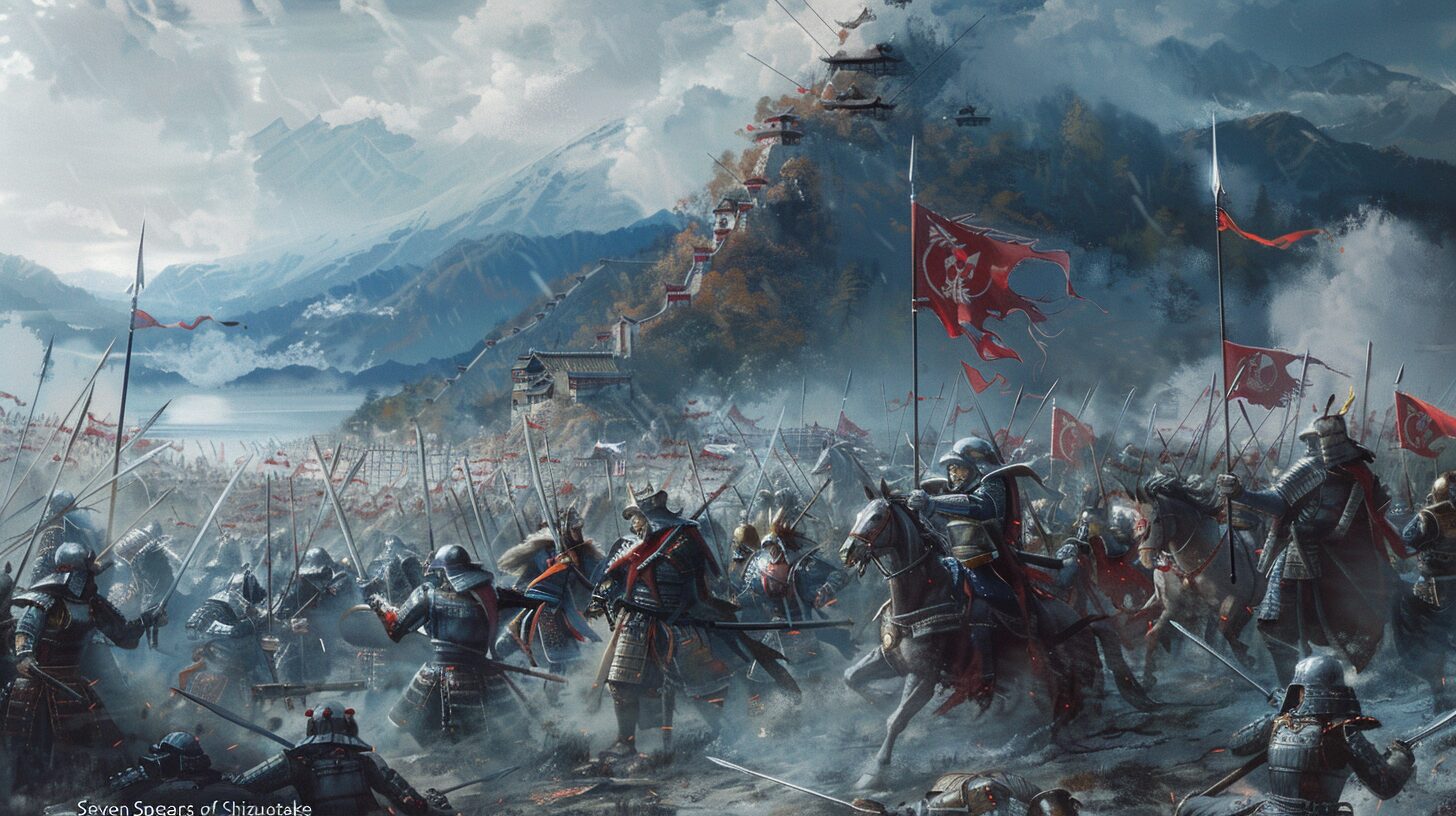
In the spring of 1583, the struggle to inherit Oda Nobunaga’s legacy reached its dramatic climax on the heights of Shizugatake in northern Ōmi Province. This pivotal battle between Nobunaga’s two most formidable generals, Hashiba Hideyoshi and Shibata Katsuie, determined the future ruler of Japan. Remembered for Hideyoshi’s legendary forced march, the strategic withdrawal of Maeda Toshiie, and the debut of the “Seven Spears of Shizugatake” alongside the tragic end of Lady Oichi, this article provides a comprehensive overview of the Battle of Shizugatake, from its background to its lasting historical significance.
contents
The Battle of Shizugatake (1583): Hideyoshi Defeats Shibata Katsuie and Claims Nobunaga’s Legacy
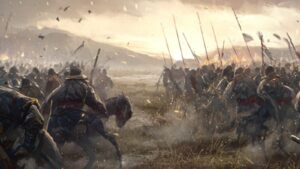
In the spring of 1583, the struggle to inherit Oda Nobunaga‘s legacy reached its climax at the heights of Shizugatake in northern Ōmi Province. The Battle of Shizugatake — fought between Hashiba Hideyoshi and Shibata Katsuie, two of Nobunaga’s most formidable generals — determined once and for all which man would become the dominant power among the Oda retainer class, and by extension, who would shape the future of Japan.
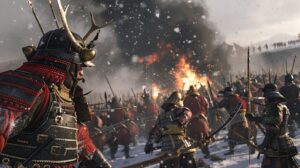
The battle is remembered for several reasons: Hideyoshi’s extraordinary forced march from Ogaki to the front in a matter of hours; the catastrophic overreach of Katsuie’s general Sakuma Morimasa, whose refusal to withdraw turned certain advantage into utter defeat; the withdrawal of Maeda Toshiie that sealed Katsuie’s fate; and the tragic end of Oichi — Nobunaga’s sister and Katsuie’s wife — who perished with her husband at Kitanosho Castle. It is also remembered as the debut of the young warriors who would go on to shape the next generation of Japanese history: the Seven Spears of Shizugatake.
This article explains the background, the course of the battle, and its lasting significance, closing with a list of key figures involved.
What Was the Battle of Shizugatake?
The Battle of Shizugatake took place on the 20th day of the 4th month of Tenshō 11 (approximately May 21, 1583), at the mountain of Shizugatake in northern Ōmi Province — in the area of modern-day Nagahama City, Shiga Prefecture.
Hashiba Hideyoshi won a decisive victory over Shibata Katsuie, the most powerful of Nobunaga’s former generals and Hideyoshi’s principal rival for dominance over the Oda clan’s successor state. Katsuie retreated to his home castle of Kitanosho in Echizen Province, where he committed suicide alongside his wife Oichi. With Katsuie’s death, Hideyoshi’s supremacy over the former Oda domain was effectively complete.
Superior numbers; rapid response; Maeda Toshiie’s withdrawal; momentum
Experienced commanders; strong castle network; allied with Oda Nobutaka
Year
1583 (Tenshō 11), approx. May 21
Location
Shizugatake, northern Ōmi Province (modern Nagahama City, Shiga Prefecture)
Result
Decisive Hideyoshi victory; Shibata Katsuie retreats and commits suicide; Hideyoshi becomes dominant successor to Nobunaga
Background to the Battle
The Kiyosu Conference and the Seeds of Rivalry (1582)
Following his victory at the Battle of Yamazaki, Hideyoshi convened the Kiyosu Conference in the summer of 1582, gathering the senior surviving Oda retainers to determine the succession of the Oda clan. Hideyoshi skillfully outmaneuvered Shibata Katsuie by championing the cause of Sanposhi — Nobunaga’s infant grandson, son of the slain Nobutada — as the primary heir. Katsuie had backed Nobunaga’s third son, Oda Nobutaka. Hideyoshi won the argument and secured control of the conference’s outcome, earning Katsuie’s lasting resentment.
Katsuie Marries Oichi — and Prepares for War
In a move that was both personal and political, Shibata Katsuie married Oichi — Nobunaga’s younger sister and the widow of Azai Nagamasa — after the Kiyosu Conference. For Katsuie, the marriage brought a symbolic connection to the Oda bloodline. For Oichi, who had already lost her first husband in the wars of the Sengoku era, it was another step in a life shaped entirely by conflict. Throughout late 1582 and early 1583, Katsuie built his alliance, drawing in Oda Nobutaka, Takigawa Kazumasu, and others who resented Hideyoshi’s growing dominance.
The Strategic Situation in Early 1583
By spring 1583, both sides had maneuvered into position across the mountain passes of northern Ōmi. Hideyoshi’s forces held a network of fortified positions around Shizugatake, while Katsuie’s main army was based farther north. Maeda Toshiie, nominally aligned with Katsuie, commanded forces on his flank — but his personal friendship with Hideyoshi made his loyalty uncertain. Hideyoshi was also managing a secondary front: Oda Nobutaka at Gifu Castle, which drew Hideyoshi himself westward just before the decisive engagement.
Course of the Battle
Scene 1 — Sakuma Morimasa’s Fatal Overreach
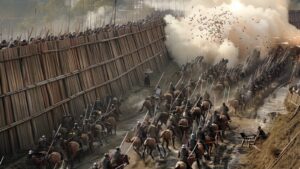
While Hideyoshi was occupied at Gifu dealing with Oda Nobutaka, Katsuie’s aggressive general Sakuma Morimasa saw an opportunity. In late April 1583, Morimasa attacked and captured the Hideyoshi garrison positions around Shizugatake, defeating several of Hideyoshi’s commanders in the process. Katsuie, alarmed by the tactical overextension, repeatedly ordered Morimasa to withdraw to a defensible position — orders that Morimasa ignored, confident that he had the upper hand.
Scene 2 — Hideyoshi’s Lightning March
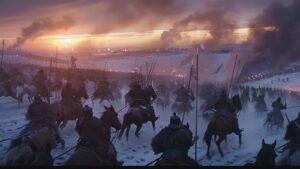
The moment Hideyoshi received word of Morimasa’s attack, he acted with the same lightning speed that had characterized his Chūgoku Ōmaegari the previous year. He disengaged from Gifu and force-marched his army approximately 50 kilometers back to the Shizugatake front in a matter of hours — a feat that stunned contemporaries and left Morimasa’s forces no time to consolidate their gains.
Scene 3 — The Collapse of the Shibata Flank: Maeda Toshiie Withdraws
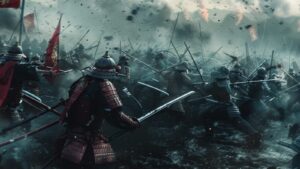
When Hideyoshi’s reinforced army struck Morimasa’s exposed position, the Shibata flank simultaneously crumbled. Maeda Toshiie, commanding forces nominally on Katsuie’s side, withdrew his contingent from the battle without engaging — an act that some sources describe as deliberate defection and others as strategic disengagement, but whose effect was the same: the Shibata left flank collapsed, and Morimasa’s forces were encircled and destroyed. Morimasa himself was captured and later executed.
Scene 4 — The Seven Spears of Shizugatake
In the fierce fighting that accompanied Hideyoshi’s counterattack, a group of young warriors distinguished themselves through extraordinary valor. They were later celebrated as the Seven Spears of Shizugatake (賤ヶ岳の七本槍): Fukushima Masanori, Katō Kiyomasa, Wakisaka Yasuharu, Katagiri Katsumoto, Hirano Nagayasu, Katō Yoshiaki, and Takenouchi Ichiemon (later replaced in some lists by Fukushima Hirotaka). Note: The “Seven Spears” designation is a retrospective grouping that became firmly established in later historical tradition; the exact composition of the list varies slightly across sources.
Scene 5 — The Fall of Kitanosho Castle and the Death of Oichi
Defeated at Shizugatake, Shibata Katsuie retreated north to his home castle of Kitanosho in Echizen Province (modern Fukui City). Hideyoshi’s forces quickly pursued and surrounded the castle. Recognizing that resistance was hopeless, Katsuie sent away Oichi’s three daughters — Cha-cha, Hatsu, and Ogo — before the castle fell. Oichi refused to leave her husband’s side. Katsuie and Oichi died together when Kitanosho Castle fell, most likely by suicide. Oichi’s daughters would go on to shape the next generation of history: Cha-cha became Yodo-dono, Hideyoshi’s concubine and mother of Toyotomi Hideyori; Ogo married Tokugawa Hidetada, the second Tokugawa shogun.
Why This Battle Matters Historically
1. The End of the Oda Succession Struggle
With Katsuie dead and Oda Nobutaka forced to commit suicide shortly after, Hideyoshi had eliminated the two most serious threats to his dominance over the former Oda domain. The Battle of Shizugatake effectively ended the internal succession struggle that had begun the moment Nobunaga died at Honnoji — and it resolved that struggle entirely in Hideyoshi’s favor. From this point, Hideyoshi’s path to national hegemony was clear.
2. The Debut of the Next Generation
The Seven Spears of Shizugatake — young warriors who proved themselves under fire in this battle — became the core of Hideyoshi’s loyal following in the years ahead. Fukushima Masanori and Katō Kiyomasa in particular would go on to become two of the most celebrated generals of the late Sengoku and early Edo periods, leading armies in the invasion of Korea and beyond. Shizugatake was their debut on the national stage.
3. The Tragedy of Oichi
Oichi’s death at Kitanosho Castle was a poignant punctuation mark on the Sengoku era’s pattern of using women as instruments of political alliance. Born as Nobunaga’s sister, she had been married to Azai Nagamasa to cement an alliance — then widowed when Nobunaga destroyed that alliance. She remarried Katsuie to cement another alliance — and died with him when that too collapsed. Her daughters, rescued from the burning castle, carried Oda blood into the next chapter of Japanese history.
List of Participating and Related Figures
Who were the key figures at the Battle of Shizugatake? Below is a list of the main samurai and related figures already featured on this site.
Young warriors who distinguished themselves in the fighting and were later celebrated under this name:
Fukushima Masanori (福島正則) — Later one of the most powerful daimyo of the Sengoku-Edo transition
Katō Kiyomasa (加藤清正) — Later famous as the general of the Korea invasions and lord of Kumamoto
Wakisaka Yasuharu (脇坂安治) — Later distinguished himself at the naval Battle of Myeongnyang
Katagiri Katsumoto (片桐且元) — Later served as a senior administrator under Hideyoshi and the Toyotomi clan
Hirano Nagayasu (平野長泰) — Loyal Toyotomi retainer
Katō Yoshiaki (加藤嘉明) — Later a naval commander in the Korea campaigns
Shibata (Katsuie) Side
Shibata Katsuie (柴田勝家) — Commander-in-chief; one of Nobunaga’s most formidable generals; defeated at Shizugatake and died with his wife Oichi at the fall of Kitanosho Castle
Sakuma Morimasa (佐久間盛政) — Katsuie’s aggressive senior general; his unauthorized advance and refusal to withdraw were the immediate cause of the Shibata defeat; captured and executed after the battle
Takigawa Kazumasu (滝川一益) — Senior Oda general allied with Katsuie; was already weakened after a defeat at the hands of the Hojo clan in 1582
Oda Nobutaka (織田信孝) — Nobunaga’s third son; allied with Katsuie against Hideyoshi; surrendered after Shizugatake and was ordered to commit suicide
The Pivotal Figure: Maeda Toshiie
Maeda Toshiie (前田利家) — Commanded forces nominally on Katsuie’s side; withdrew from the battle without engaging — an act whose exact nature (deliberate defection or strategic disengagement) is debated, but which effectively sealed the Shibata defeat. Toshiie quickly reconciled with Hideyoshi after the battle and became one of his most important allies.
Final Thoughts
The Battle of Shizugatake in 1583 was the defining moment in the post-Nobunaga succession struggle. Hashiba Hideyoshi, through a combination of political maneuvering, military speed, and fortunate circumstances — including Sakuma Morimasa’s fatal miscalculation and Maeda Toshiie’s withdrawal — emerged as the undisputed leading figure among Nobunaga’s former retainers.
The battle also closed a personal chapter in the Sengoku era’s long story. Oichi — who had been handed from one alliance to another across decades of war — died at Kitanosho with her second husband. Her daughters survived to shape the next era of Japanese history. And the young warriors who proved themselves at Shizugatake would go on to fight in Hideyoshi’s campaigns across Japan and Korea, carrying the legacy of that mountain battlefield into the decades to come.
La Bataille de Shizugatake (1583) : Hideyoshi Défait Shibata Katsuie et s’Empare de l’Héritage de Nobunaga
Au printemps 1583, la lutte pour hériter de l’héritage d’Oda Nobunaga atteignit son apogée sur les hauteurs de Shizugatake dans le nord de la province d’Ōmi. La bataille de Shizugatake — opposant Hashiba Hideyoshi à Shibata Katsuie, deux des généraux les plus redoutables de Nobunaga — détermina une fois pour toutes lequel des deux dominerait la classe des vassaux Oda, et par extension, qui façonnerait l’avenir du Japon.
La bataille est mémorable pour plusieurs raisons : la marche forcée extraordinaire de Hideyoshi depuis Ogaki ; l’excès fatal du général de Katsuie, Sakuma Morimasa, dont le refus de se retirer transforma un avantage certain en défaite totale ; le retrait de Maeda Toshiie qui scella le sort de Katsuie ; et la fin tragique d’Oichi — la sœur de Nobunaga et épouse de Katsuie — qui périt avec son mari au château de Kitanosho. Elle est également connue comme les débuts des Sept Lances de Shizugatake.
Qu’est-ce que la bataille de Shizugatake ?
La bataille eut lieu le 20e jour du 4e mois de Tenshō 11 (environ le 21 mai 1583), à Shizugatake dans le nord de la province d’Ōmi — dans la région de l’actuelle ville de Nagahama, préfecture de Shiga.
Hashiba Hideyoshi remporta une victoire décisive sur Shibata Katsuie. Katsuie se retira dans son château de Kitanosho en Echizen, où il commit le suicide rituel aux côtés de son épouse Oichi. Avec la mort de Katsuie, la suprématie de Hideyoshi sur l’ancien domaine Oda était effectivement acquise.
Supériorité numérique ; réaction rapide ; retrait de Maeda Toshiie ; élan
Commandants expérimentés ; réseau de châteaux forts ; alliance avec Oda Nobutaka
Année
1583 (Tenshō 11), environ le 21 mai
Lieu
Shizugatake, nord de la province d’Ōmi (actuelle ville de Nagahama, préfecture de Shiga)
Résultat
Victoire décisive de Hideyoshi ; Shibata Katsuie se retire et se suicide ; Hideyoshi devient le successeur dominant de Nobunaga
Contexte de la bataille
La Conférence de Kiyosu et les germes de la rivalité (1582)
Après sa victoire à la bataille de Yamazaki, Hideyoshi convoqua la Conférence de Kiyosu pour déterminer la succession du clan Oda. Il déjoua habilement Shibata Katsuie en soutenant Sanposhi — le petit-fils infant de Nobunaga — comme héritier principal. Katsuie avait soutenu Oda Nobutaka. La victoire politique de Hideyoshi lui valut le ressentiment durable de Katsuie.
Katsuie épouse Oichi — et prépare la guerre
Shibata Katsuie épousa Oichi après la conférence de Kiyosu. Tout au long de la fin 1582 et du début 1583, Katsuie construisit son alliance avec Oda Nobutaka, Takigawa Kazumasu et d’autres mécontents de la domination croissante de Hideyoshi.
La situation stratégique au printemps 1583
Au printemps 1583, les deux camps s’étaient positionnés de part et d’autre des cols montagneux du nord d’Ōmi. Maeda Toshiie, nominalement aligné avec Katsuie, commandait des forces sur son flanc — mais son amitié personnelle avec Hideyoshi rendait sa loyauté incertaine.
Chronologie de la bataille
Scène 1 — L’avancée fatale de Sakuma Morimasa
Pendant que Hideyoshi était occupé à Gifu avec Oda Nobutaka, le général agressif de Katsuie, Sakuma Morimasa, attaqua et prit les positions garnisonées par Hideyoshi autour de Shizugatake. Katsuie, alarmé par cette surextension, ordonna à plusieurs reprises à Morimasa de se retirer — des ordres que Morimasa ignora.
Scène 2 — La marche éclair de Hideyoshi
Dès réception de la nouvelle de l’attaque de Morimasa, Hideyoshi agit avec la même rapidité fulgurante que lors du Chūgoku Ōmaegari. Il se dégagea de Gifu et força sa marche sur environ 50 kilomètres jusqu’au front de Shizugatake en quelques heures seulement.
Scène 3 — Le retrait de Maeda Toshiie et l’effondrement du flanc Shibata
Quand la grande armée de Hideyoshi frappa les forces exposées de Morimasa, le flanc Shibata s’effondra simultanément. Maeda Toshiie retira son contingent de la bataille sans engager le combat — un acte dont la nature exacte (défection délibérée ou désengagement stratégique) est débattue, mais dont l’effet fut le même : la débâcle complète des forces Shibata. Morimasa fut capturé et exécuté.
Scène 4 — Les Sept Lances de Shizugatake
Dans les combats acharnés de la contre-attaque de Hideyoshi, un groupe de jeunes guerriers se distingua par une bravoure extraordinaire. Ils furent célébrés comme les Sept Lances de Shizugatake : Fukushima Masanori, Katō Kiyomasa, Wakisaka Yasuharu, Katagiri Katsumoto, Hirano Nagayasu et Katō Yoshiaki. Note : cette désignation est une appellation rétrospective dont la composition varie légèrement selon les sources.
Scène 5 — La chute du château de Kitanosho et la mort d’Oichi
Défait à Shizugatake, Shibata Katsuie se replia vers Kitanosho en Echizen. Avant la chute du château, il fit sortir les trois filles d’Oichi — Cha-cha, Hatsu et Ogo. Oichi refusa de quitter son mari. Katsuie et Oichi moururent ensemble. Le destin des filles : Cha-cha devint Yodo-dono, la concubine de Hideyoshi et mère de Toyotomi Hideyori ; Ogo épousa Tokugawa Hidetada, le deuxième shogun Tokugawa.
Pourquoi cette bataille est-elle historiquement importante ?
1. La fin de la lutte de succession Oda
Avec Katsuie mort et Oda Nobutaka contraint au suicide peu après, Hideyoshi avait éliminé les deux menaces les plus sérieuses à sa domination. La bataille de Shizugatake clôtura la lutte interne qui avait éclaté à la mort de Nobunaga — et la clôtura entièrement en faveur de Hideyoshi.
2. Les débuts de la prochaine génération
Les Sept Lances devinrent le cœur de la suite loyale de Hideyoshi. Fukushima Masanori et Katō Kiyomasa en particulier allaient devenir deux des généraux les plus célébrés des invasions de Corée et au-delà.
3. La tragédie d’Oichi
La mort d’Oichi à Kitanosho fut un point d’orgue poignant sur le schéma de l’ère Sengoku d’utiliser les femmes comme instruments d’alliance politique. Ses filles, rescapées du château en flammes, portèrent le sang Oda dans le prochain chapitre de l’histoire japonaise.
Liste des protagonistes et figures associées
Qui étaient les figures clés de la bataille de Shizugatake ? Voici les principaux samouraïs et personnages liés à cet événement, déjà présentés sur ce site.
Jeunes guerriers qui se distinguèrent dans les combats et furent célébrés sous ce nom :
Fukushima Masanori (福島正則) — Devint l’un des daimyos les plus puissants de la transition Sengoku-Edo
Katō Kiyomasa (加藤清正) — Célèbre pour les invasions de Corée et comme seigneur de Kumamoto
Wakisaka Yasuharu (脇坂安治) — Commandant naval lors des invasions de Corée
Katagiri Katsumoto (片桐且元) — Administrateur senior sous Hideyoshi et le clan Toyotomi
Hirano Nagayasu (平野長泰) — Vassal loyal du clan Toyotomi
Katō Yoshiaki (加藤嘉明) — Commandant naval lors des campagnes en Corée
Camp Shibata (Katsuie)
Shibata Katsuie (柴田勝家) — Commandant en chef ; l’un des généraux les plus redoutables de Nobunaga ; défait à Shizugatake et mort avec Oichi à Kitanosho
Sakuma Morimasa (佐久間盛政) — Général agressif de Katsuie ; son avancée non autorisée et son refus de se retirer furent la cause immédiate de la défaite Shibata ; capturé et exécuté
Takigawa Kazumasu (滝川一益) — Général Oda senior allié à Katsuie ; déjà affaibli après une défaite face au clan Hojo en 1582
Oda Nobutaka (織田信孝) — Troisième fils de Nobunaga ; allié de Katsuie contre Hideyoshi ; contraint au suicide après Shizugatake
La figure centrale : Maeda Toshiie
Maeda Toshiie (前田利家) — Commandait des forces nominalement du côté Katsuie ; se retira de la bataille sans combattre, scellant la défaite Shibata. Se réconcilia rapidement avec Hideyoshi après la bataille et devint l’un de ses alliés les plus importants.
Conclusion
La bataille de Shizugatake en 1583 fut le moment définitif de la lutte post-Nobunaga pour la succession. Hashiba Hideyoshi, par une combinaison de manœuvres politiques, de vitesse militaire et de circonstances favorables — dont l’erreur fatale de Sakuma Morimasa et le retrait de Maeda Toshiie — émergea comme le successeur incontesté de Nobunaga.
La bataille clôtura également un chapitre personnel de la longue histoire de l’ère Sengoku. Oichi — donnée de mariage politique en mariage politique, à travers des décennies de guerre — mourut à Kitanosho aux côtés de son second mari. Ses filles, sauvées du château, portèrent le sang Oda dans l’ère suivante.
Die Schlacht von Shizugatake (1583): Hideyoshi Besiegt Shibata Katsuie und Beansprucht Nobunagas Erbe
Im Frühjahr 1583 erreichte der Kampf um das Erbe von Oda Nobunaga seinen Höhepunkt auf den Höhen von Shizugatake im nördlichen Ōmi. Die Schlacht von Shizugatake — zwischen Hashiba Hideyoshi und Shibata Katsuie, zwei der gewaltigsten Generäle Nobunagas — entschied endgültig, welcher Mann die dominierende Kraft unter den Oda-Vasallen werden und damit Japans Zukunft gestalten würde.
Die Schlacht wird aus mehreren Gründen erinnert: Hideyoshis außerordentlicher Eilmarsch von Ogaki; die fatale Überschreitung von Katsuies General Sakuma Morimasa; der Rückzug von Maeda Toshiie, der Katsuies Schicksal besiegelte; und das tragische Ende Oichis — Nobunagas Schwester und Katsuies Frau. Ebenso bekannt ist die Schlacht als Debüt der Sieben Lanzen von Shizugatake.
Was war die Schlacht von Shizugatake?
Die Schlacht fand am 20. Tag des 4. Monats von Tenshō 11 (ca. 21. Mai 1583) am Berg Shizugatake im nördlichen Ōmi statt — im Bereich der heutigen Stadt Nagahama, Präfektur Shiga.
Hashiba Hideyoshi errang einen entscheidenden Sieg über Shibata Katsuie. Katsuie zog sich in seine Heimatburg Kitanosho in Echizen zurück, wo er gemeinsam mit seiner Frau Oichi starb. Mit Katsuies Tod war Hideyoshis Vorherrschaft über das ehemalige Oda-Gebiet effektiv gesichert.
Erfahrene Kommandeure ; Burgennetz ; Bündnis mit Oda Nobutaka
Jahr
1583 (Tenshō 11), ca. 21. Mai
Ort
Shizugatake, nördliche Provinz Ōmi (heutige Stadt Nagahama, Präfektur Shiga)
Ergebnis
Entscheidender Sieg Hideyoshis ; Shibata Katsuie zieht sich zurück und stirbt ; Hideyoshi wird dominanter Nachfolger Nobunagas
Hintergründe der Schlacht
Die Kiyosu-Konferenz und die Saat der Rivalität (1582)
Nach seinem Sieg bei der Schlacht von Yamazaki überlistete Hideyoshi auf der Kiyosu-Konferenz Shibata Katsuie, indem er Sanposhi — Nobunagas Enkel — als Haupterben unterstützte. Katsuie hatte Oda Nobutaka unterstützt. Hideyoshis politischer Sieg brachte ihm Katsuies dauerhaften Groll ein.
Katsuie heiratet Oichi — und bereitet sich auf den Krieg vor
Shibata Katsuie heiratete Oichi nach der Konferenz. Im Laufe des späten 1582 und frühen 1583 baute Katsuie seine Allianz mit Oda Nobutaka, Takigawa Kazumasu und anderen auf, die Hideyoshis wachsende Dominanz ablehnten.
Die strategische Lage im Frühjahr 1583
Im Frühjahr 1583 hatten sich beide Seiten entlang der Gebirgspässe des nördlichen Ōmi in Stellung gebracht. Maeda Toshiie befehligte nominell Kräfte auf Katsuies Seite — aber seine persönliche Freundschaft mit Hideyoshi ließ seine Loyalität zweifelhaft erscheinen.
Zeitplan der Ereignisse
Szene 1 — Sakuma Morimasas fatale Überschreitung
Während Hideyoshi in Gifu mit Oda Nobutaka beschäftigt war, nutzte Katsuies aggressiver General Sakuma Morimasa die Gelegenheit. Er griff Hideyoshis Garnisonspositionen rund um Shizugatake an und besetzte sie. Katsuie befahl Morimasa wiederholt, sich zurückzuziehen — Befehle, die Morimasa ignorierte.
Szene 2 — Hideyoshis Blitzmarsch
Sobald Hideyoshi die Nachricht von Morimasas Angriff erhielt, handelte er mit der gleichen Blitzschnelligkeit wie beim Chūgoku Ōmaegari. Er löste sich von Gifu und marschierte in wenigen Stunden etwa 50 Kilometer zurück zur Front von Shizugatake.
Szene 3 — Maeda Toshiies Rückzug und der Zusammenbruch des Shibata-Flügels
Als Hideyoshis verstärkte Armee Morimasas exponierte Position angriff, brach der Shibata-Flügel gleichzeitig zusammen. Maeda Toshiie zog sein Kontingent ohne Gefecht aus der Schlacht zurück — ob absichtliche Fahnenflucht oder strategischer Rückzug ist umstritten, aber die Wirkung war dieselbe: totaler Zusammenbruch. Morimasa wurde gefangen genommen und später hingerichtet.
Szene 4 — Die Sieben Lanzen von Shizugatake
In den harten Kämpfen von Hideyoshis Gegenangriff zeichneten sich junge Krieger durch außerordentliche Tapferkeit aus. Sie wurden als die Sieben Lanzen von Shizugatake gefeiert: Fukushima Masanori, Katō Kiyomasa, Wakisaka Yasuharu, Katagiri Katsumoto, Hirano Nagayasu und Katō Yoshiaki. Hinweis: Die Bezeichnung „Sieben Lanzen” ist eine retrospektive Gruppierung, deren Zusammensetzung in den Quellen leicht variiert.
Szene 5 — Der Fall von Burg Kitanosho und der Tod Oichis
Bei Shizugatake geschlagen, zog sich Shibata Katsuie nach Kitanosho in Echizen zurück. Bevor die Burg fiel, schickte er Oichis drei Töchter — Cha-cha, Hatsu und Ogo — in Sicherheit. Oichi weigerte sich, ihren Mann zu verlassen. Katsuie und Oichi starben gemeinsam. Das Schicksal der Töchter: Cha-cha wurde Yodo-dono, Hideyoshis Konkubine und Mutter von Toyotomi Hideyori; Ogo heiratete Tokugawa Hidetada, den zweiten Tokugawa-Shogun.
Warum diese Schlacht historisch bedeutsam ist
1. Das Ende des Oda-Erbfolgestreits
Mit Katsuie tot und Oda Nobutaka kurz darauf zum Selbstmord gezwungen, hatte Hideyoshi die beiden ernsthaftesten Bedrohungen für seine Vorherrschaft ausgeschaltet. Die Schlacht von Shizugatake beendete den internen Erbfolgestreit, der mit Nobunagas Tod begonnen hatte — vollständig zugunsten Hideyoshis.
2. Der Debüt der nächsten Generation
Die Sieben Lanzen wurden zum Kern von Hideyoshis loyalem Gefolge. Fukushima Masanori und Katō Kiyomasa sollten zu zwei der bekanntesten Generäle der Koreafeldzüge werden.
3. Oichis Tragödie
Oichis Tod in Kitanosho war ein eindringlicher Schlusspunkt auf dem Muster der Sengoku-Ära, Frauen als Instrumente politischer Allianzen zu benutzen. Ihre Töchter, aus dem brennenden Schloss gerettet, trugen das Oda-Blut in das nächste Kapitel der japanischen Geschichte.
Liste der Teilnehmenden und verwandten Persönlichkeiten
Wer waren die Schlüsselfiguren bei der Schlacht von Shizugatake? Nachfolgend sind die wichtigsten Samurai und verwandten Persönlichkeiten aufgeführt, die bereits auf dieser Website vorgestellt werden.
Junge Krieger, die sich in den Kämpfen auszeichneten und unter diesem Namen gefeiert wurden:
Fukushima Masanori (福島正則) — Wurde einer der mächtigsten Daimyos des Sengoku-Edo-Übergangs
Katō Kiyomasa (加藤清正) — Berühmt für die Koreafeldzüge und als Herr von Kumamoto
Wakisaka Yasuharu (脇坂安治) — Marinekommandant in den Koreafeldzügen
Katagiri Katsumoto (片桐且元) — Leitender Verwalter unter Hideyoshi und dem Toyotomi-Clan
Hirano Nagayasu (平野長泰) — Loyaler Toyotomi-Vasall
Katō Yoshiaki (加藤嘉明) — Marinekommandant in den Koreafeldzügen
Seite Shibata (Katsuie)
Shibata Katsuie (柴田勝家) — Oberbefehlshaber ; einer von Nobunagas gewaltigsten Generälen ; bei Shizugatake besiegt und gemeinsam mit Oichi in Kitanosho gestorben
Sakuma Morimasa (佐久間盛政) — Aggressiver General Katsuies ; sein unerlaubter Vorstoß und seine Weigerung, sich zurückzuziehen, waren die unmittelbare Ursache der Shibata-Niederlage ; gefangen genommen und hingerichtet
Takigawa Kazumasu (滝川一益) — Senior Oda-General, verbündet mit Katsuie ; bereits 1582 durch eine Niederlage gegen den Hojo-Clan geschwächt
Oda Nobutaka (織田信孝) — Dritter Sohn Nobunagas ; verbündet mit Katsuie gegen Hideyoshi ; nach Shizugatake zum Selbstmord gezwungen
Die entscheidende Figur: Maeda Toshiie
Maeda Toshiie (前田利家) — Befehligte nominell Kräfte auf Katsuies Seite ; zog sich ohne Kampf aus der Schlacht zurück — ob absichtliche Fahnenflucht oder strategischer Rückzug ist umstritten, aber die Wirkung war die Besiegelung der Shibata-Niederlage. Toshiie versöhnte sich schnell mit Hideyoshi und wurde einer seiner wichtigsten Verbündeten.
Schlussbetrachtung
Die Schlacht von Shizugatake im Jahr 1583 war der entscheidende Moment im post-Nobunaga-Erbfolgestreit. Hashiba Hideyoshi — durch politisches Geschick, militärische Schnelligkeit und günstige Umstände, darunter Sakuma Morimasas fatales Fehlkalkül und Maeda Toshiies Rückzug — trat als unbestrittene führende Figur unter Nobunagas ehemaligen Vasallen hervor.
Die Schlacht schloss auch ein persönliches Kapitel der langen Geschichte der Sengoku-Ära. Oichi — von einem politischen Bündnis zum anderen gereicht, über Jahrzehnte des Krieges — starb in Kitanosho an der Seite ihres zweiten Mannes. Ihre Töchter, aus der brennenden Burg gerettet, trugen das Oda-Blut in die nächste Ära der japanischen Geschichte.
Yanorisu
history fan
Nice to meet you! I am Yanorisu, a Japanese guy who loves history.


comment