
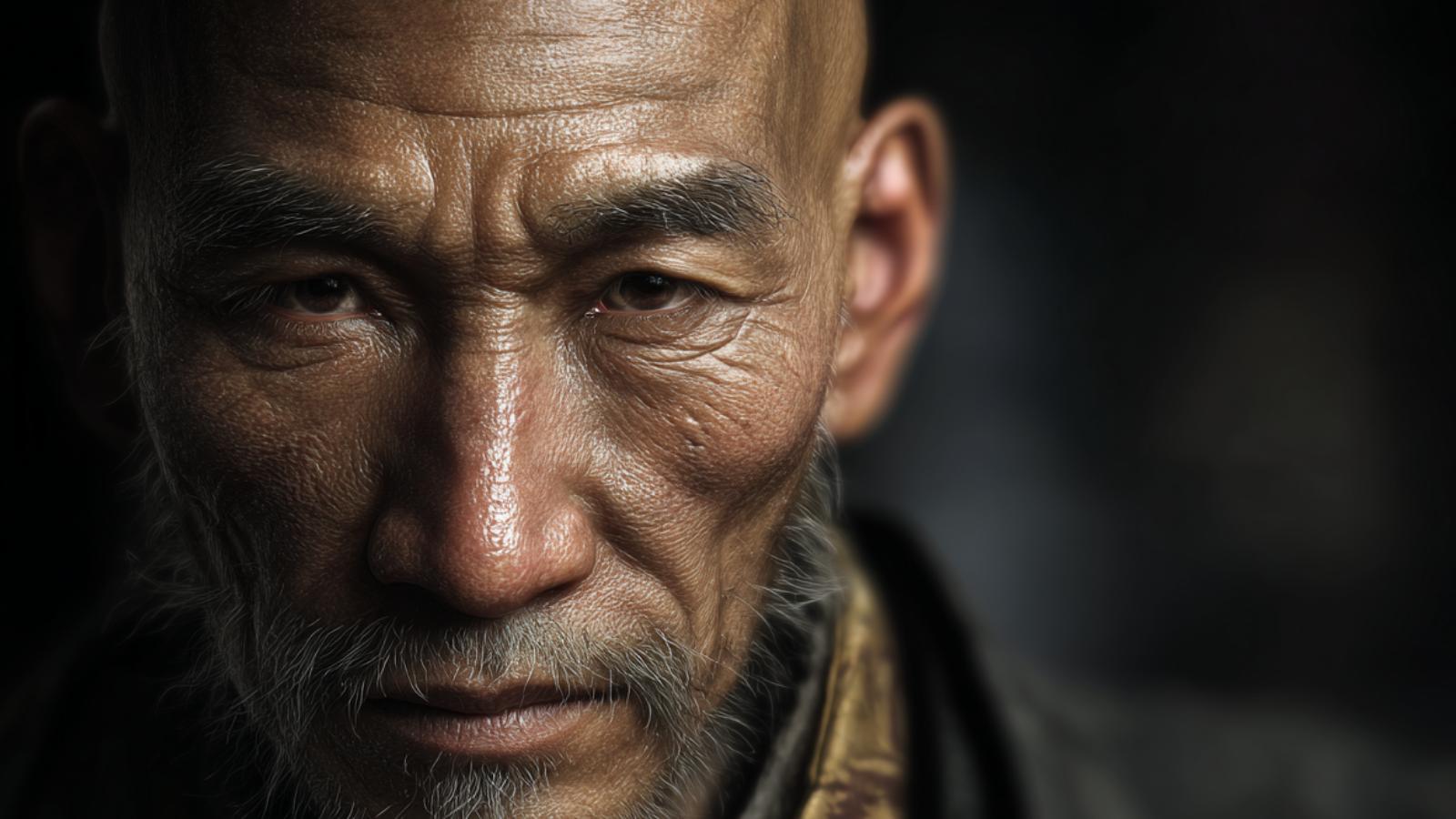
“風が吹けば桶屋が儲かる”
— When the wind blows, the coopers prosper.

| Lead 統率 |
Valor 武勇 |
Intel 知略 |
Pol 政治 |
|---|---|---|---|
| 70 | 40 | 95 | 85 |
| Name (JP) | 沢庵 宗彭 |
|---|---|
| Title | Zen Master |
| Clan / Force | Tokugawa Clan |
| Era | 1573 – 1645 |
| Origin | Senshu |
| Key Battles | |
| Arts | Zen Buddhism, Noh Drama |
About Takuan Soho
He lived in the Senshu province, where he cultivated his knowledge in Zen practices and its philosophical underpinnings.
His family background was humble, and he chose the path of Zen Buddhism, dedicating his life to spiritual growth and intellectual pursuits.
During the Edo period, Takuan became a pivotal figure in the cultural and philosophical development of Japan.
He was recognized for his insightful writings and teachings, which merged Zen principles with the samurai code of honor.
His relationship with notable samurai, including the famed swordsman Miyamoto Musashi, positioned him as a key spiritual advisor, solidifying his reputation beyond the monastic community.
While Takuan was not a warrior in the traditional sense, his influence on samurai culture cannot be understated.
His teachings on mindfulness and mental clarity offered profound insights that aided warriors like Musashi in honing their combat skills and strategic thinking.
Takuans writings, such as the The Unfettered Mind, emphasize the importance of a calm and focused mind as essential for success in, both physical and spiritual.
Takuan Soho’s is multifaceted, encompassing contributions to Zen Buddhism, samurai philosophy, and Japanese cultural arts.
His influence extended into later generations, as his teachings continue to inspire practitioners of Zen, martial artists, and scholars alike.
Takuan is remembered as a profound thinker whose insights bridged the gap between spiritual discipline and the samurai lifestyle, eming the seamless integration of Zen and the warriors life.









comment