
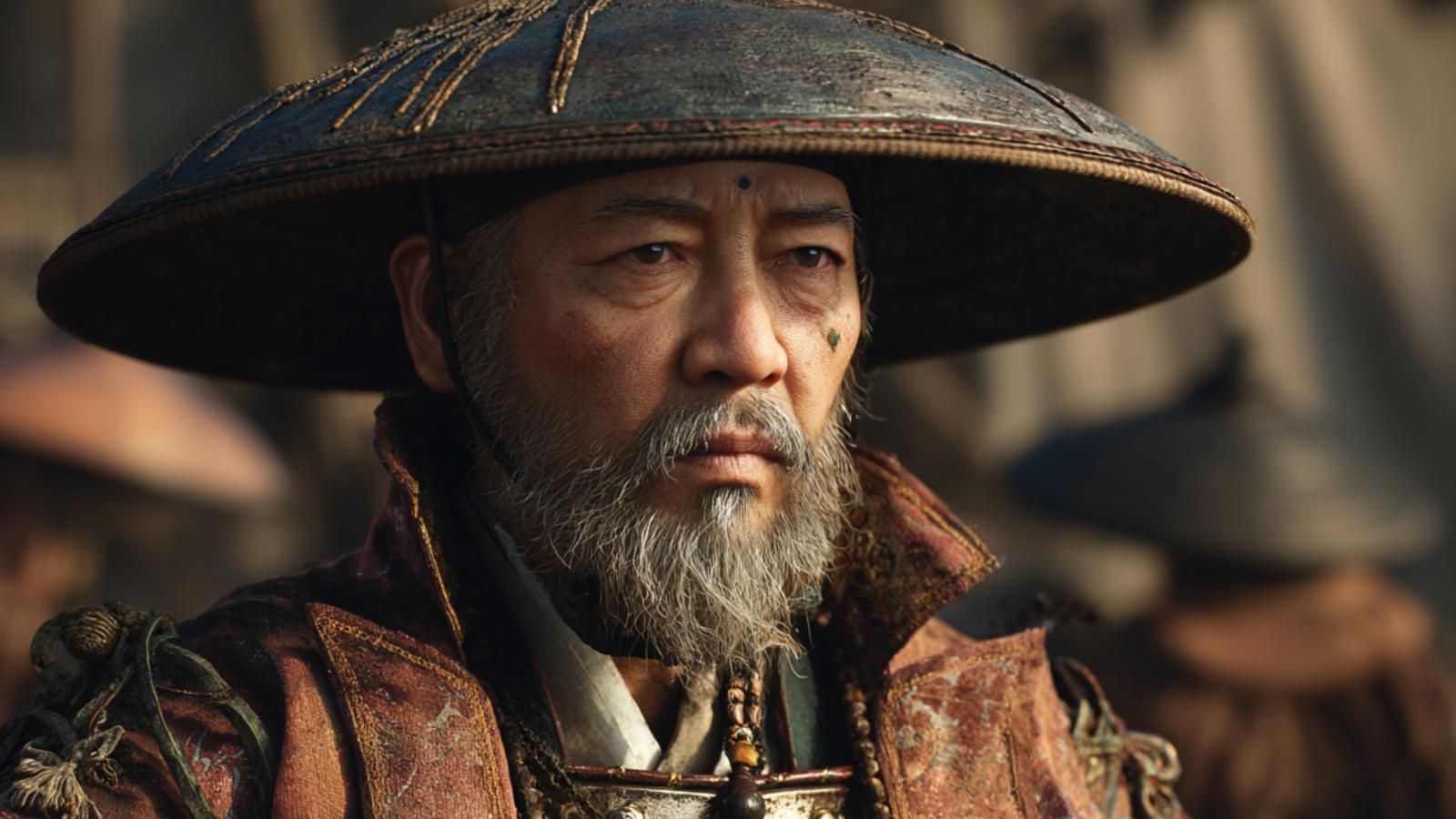
“戦の前に、心を整えよ。”
— Before battle, prepare your mind.

| Lead 統率 |
Valor 武勇 |
Intel 知略 |
Pol 政治 |
|---|---|---|---|
| 83 | 70 | 85 | 77 |
| Name (JP) | 大友 宗麟 |
|---|---|
| Title | Daimyo |
| Clan / Force | Otomo Clan |
| Era | 1530 – 1587 |
| Origin | Bungo |
| Key Battles | |
| Arts | Tea Ceremony |
About Otomo Sorin
He came from the Otomo clan, a family of shugo (military governors) with a rich history in the region.
His upbringing in a noble family imbued him with a sense of governance and responsibility towards his domain, which he would later display in his leadership.
As a young man, he exhibited a keen interest in martial practices and the arts, particularly in the delicate traditions of the tea ceremony that would later symbolize peace amidst conflict.
Sorin ascended to prominence in the mid-16th century as the head of the Otomo clan.
Under his leadership, the clan expanded its influence and became a formidable power in Kyushu.
He distinguished himself as a diplomatic leader, forging alliances through marriage and trade while also maintaining a strong military presence.
His ability to navigate the complexities of samurai politics allowed him to thrive in the volatile environment of the Sengoku period.
Sorin’s courage and strategic acumen were evident in numerous, where he often outmaneuvered his opponents.
One of his significant military achievements was the campaign against the rival Shimazu clan.
Despite facing a powerful adversary, Sorins forces utilized superior tactics, allowing them to emerge victorious in several conflicts.
In addition to his military successes, he played a crucial role in the introduction of Christianity to Japan, aligning with European powers which brought both trade advantages and cultural exchanges.
His religious tolerance and diplomatic strategies were seen as progressive for the time and contributed to his .
Otomo Sorins contributions to politics, culture, and warfare solidified his place in history.
He is remembered not only for his military capabilities but also for his role in fostering relationships between Japan and foreign powers, as well as his patronage of the arts.
His persists in the annals of Japanese history, and his life reflects the intricate balance of conflict and culture during one of Japans most turbulent eras.
Otomo Sorin passed away in 1587, leaving behind a as a formidable daimyo and a promoter of enlightenment in a time of strife.








comment