
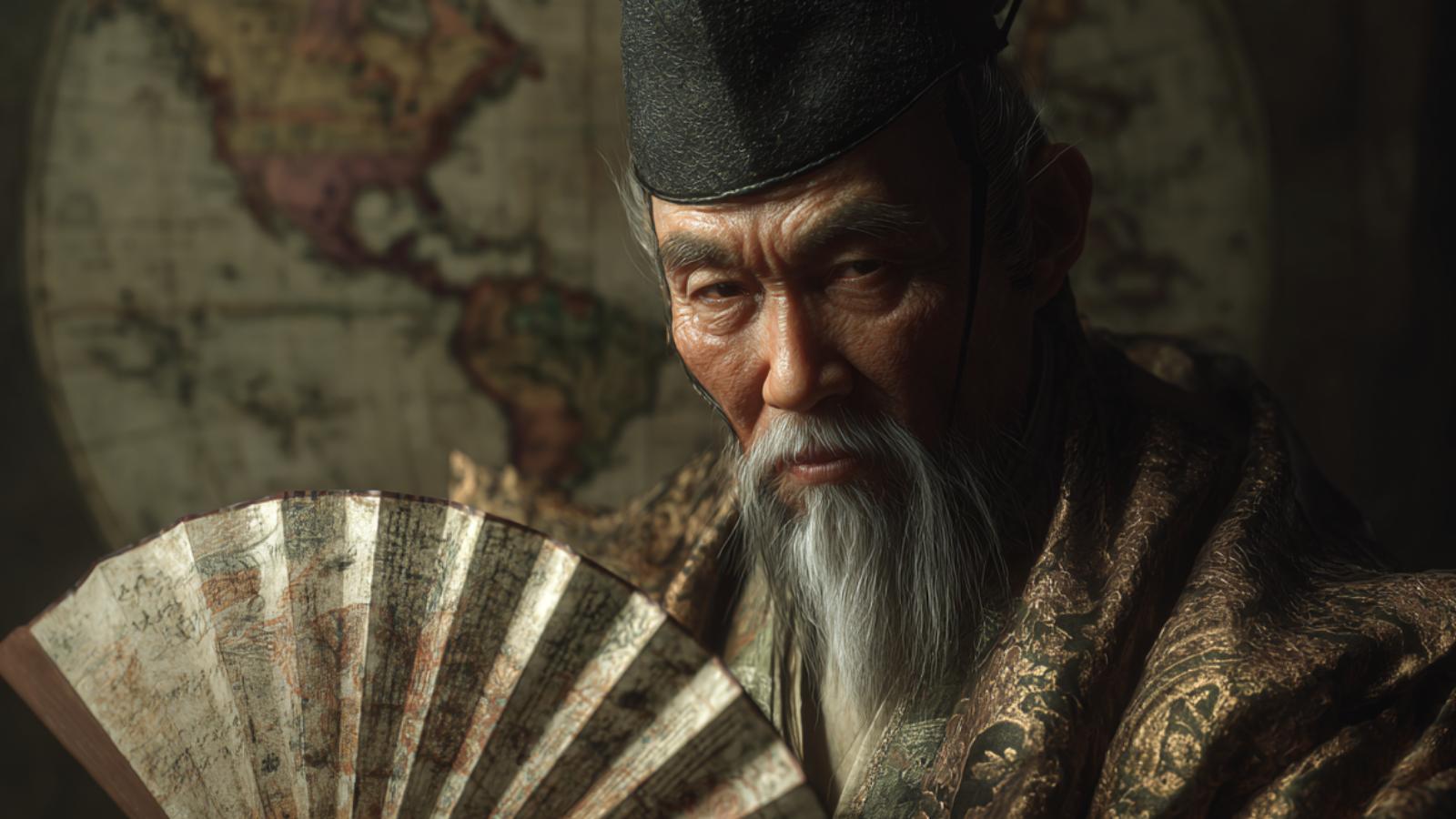
“心ひとつにして、真実を求めよう。”
— With a united heart, let us seek the truth.

| Lead 統率 |
Valor 武勇 |
Intel 知略 |
Pol 政治 |
|---|---|---|---|
| 75 | 70 | 85 | 80 |
| Name (JP) | 金地院 崇伝 |
|---|---|
| Title | Zen Monk |
| Clan / Force | Toyotomi Clan |
| Era | 1560 – 1633 |
| Origin | Kyoto |
| Key Battles | |
| Arts | Zen Buddhism, Calligraphy |
About Konchiin Suden
Raised in a Buddhist family, he was drawn to the teachings of Zen at an early age.
By the time he was a young man, he had already embarked on a spiritual journey that would lead him to some of the most respected Zen teachers of the time.
His was marked by rigorous training and a deep commitment to understanding the nature of existence through meditation and reflection.
As a Zen monk, Suden gained recognition for his insight and teachings.
He became the head of the Konchiin temple in Kyoto, where he not only focused on spiritual training but also on the integration of Buddhist philosophy with the arts.
His influence began to extend beyond the monastery walls, attracting the attention of samurai and nobles who were eager to learn from his profound understanding of Zen.
Suden’s ability to convey the subtleties of Zen thought through calligraphy and tea ceremonies set him apart as a cultural leader of his time.
Although Suden was not a warrior in the traditional sense, he played a key role in several negotiations and spiritual during the tumultuous times of the late 16th century.
He advocated for peace and understanding among the factions vying for power in Kyoto.
His ability to navigate the complex political landscape through wisdom and counsel gained him respect among influential lords, as he helped to mediate clashes and promote harmony.
His teachings often emphasized non-violence, which resonated with many in an era marked by conflict.
Konchiin Sudens endures through his contributions to Zen Buddhism and the cultural practices of the samurai.
As the head of the Konchiin temple, he fostered a connection between spiritual life and the artistic pursuits of the time, making Zen accessible to a broader audience.
Suden’s calligraphy is still studied and revered, and his teachings continue to inspire practitioners of Zen to seek truth and understanding.
He passed away in 1633, leaving behind a rich that blended spirituality with the cultural renaissance of early modern Japan.








comment