
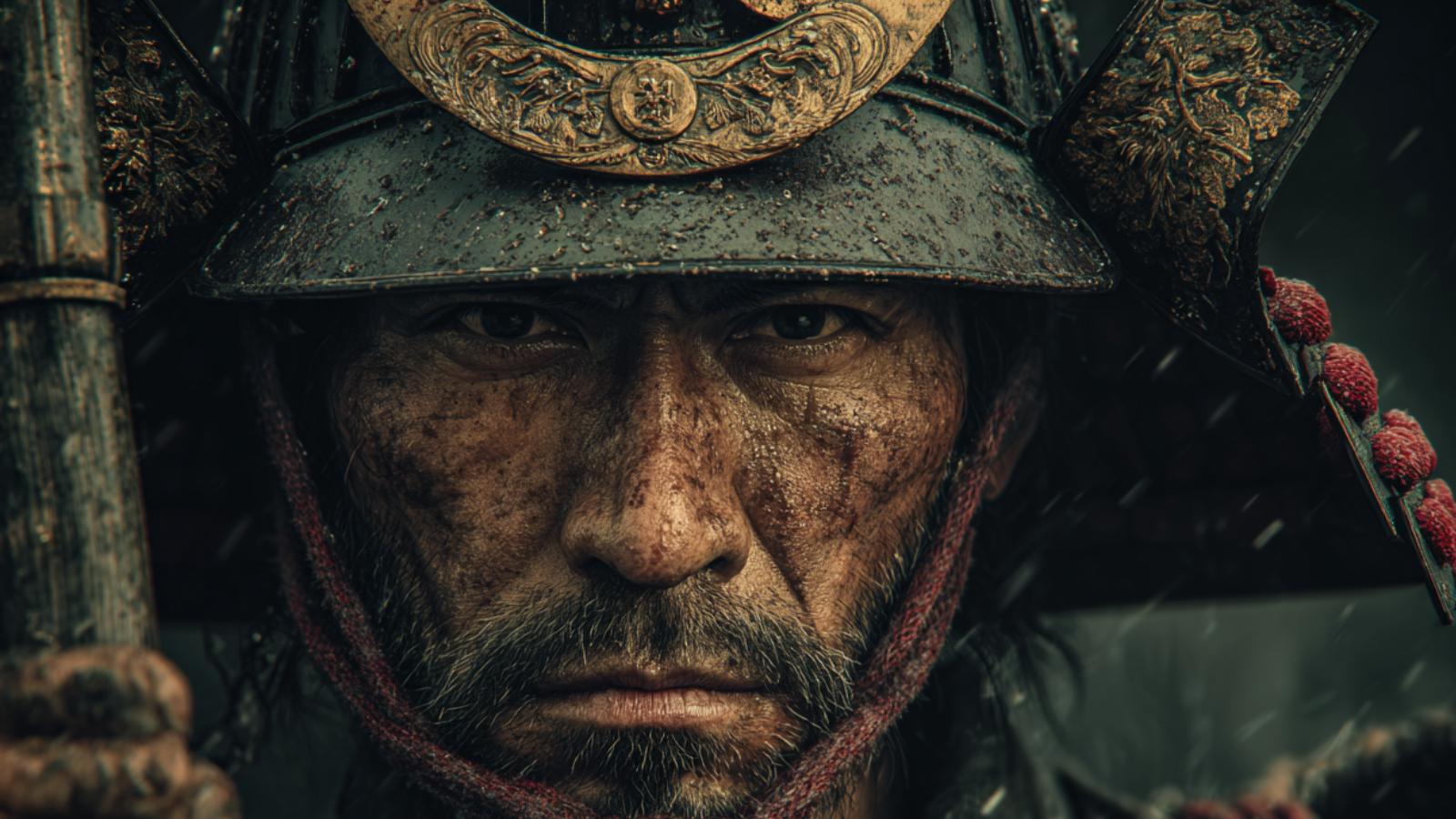
“戦は時に餌食となるが、すべての戦士には名誉がある。”
— War may sometimes be a feast for the foolish, but every warrior has honor.

| Lead 統率 |
Valor 武勇 |
Intel 知略 |
Pol 政治 |
|---|---|---|---|
| 66 | 70 | 72 | 65 |
| Name (JP) | 亀寿 |
|---|---|
| Title | Samurai |
| Clan / Force | Unknown |
| Era | 1580 – 1642 |
| Origin | Harima |
| Key Battles | |
| Arts | Kintsugi |
About Kameju
Despite his humble beginnings, he grew up aware of the feudal conflicts that surrounded his homeland.
With a passion for martial arts and strategy, Kameju sought ways to elevate his status, dreaming of becoming a samurai.
His early experiences on the battlefield and relationships with local warriors ignited his ambition and honed his combat skills.
As Kameju matured, he distinguished himself in several local skirmishes.
By showcasing his tactical acumen and bravery, he gained the attention of higher-ranking samurai.
His loyalty to his lord and his prowess in combat eventually earned him the of samurai.
Kameju became well-regarded not only for his fighting abilities but also for his ability to unite those around him to fight for common causes.
Over his career, Kameju participated in various significant throughout the region.
His most notable engagement was during the Siege of Osaka, where he led a small contingent against overwhelming odds.
His leadership and courage inspired his men, enabling them to hold key positions long enough for reinforcements to arrive.
Kameju’s personal valor was matched by his strategic intellect, which allowed him to anticipate enemy movements effectively.
Kameju passed away in 1642, remembered as a capable and honorable samurai.
His life story serves as a testament to the belief that anyone, regardless of their origins, can through courage, determination, and loyalty.
To this day, Kameju is celebrated in local folklore, eming the spirit of the warrior and the values of the samurai class in Japan.









comment