
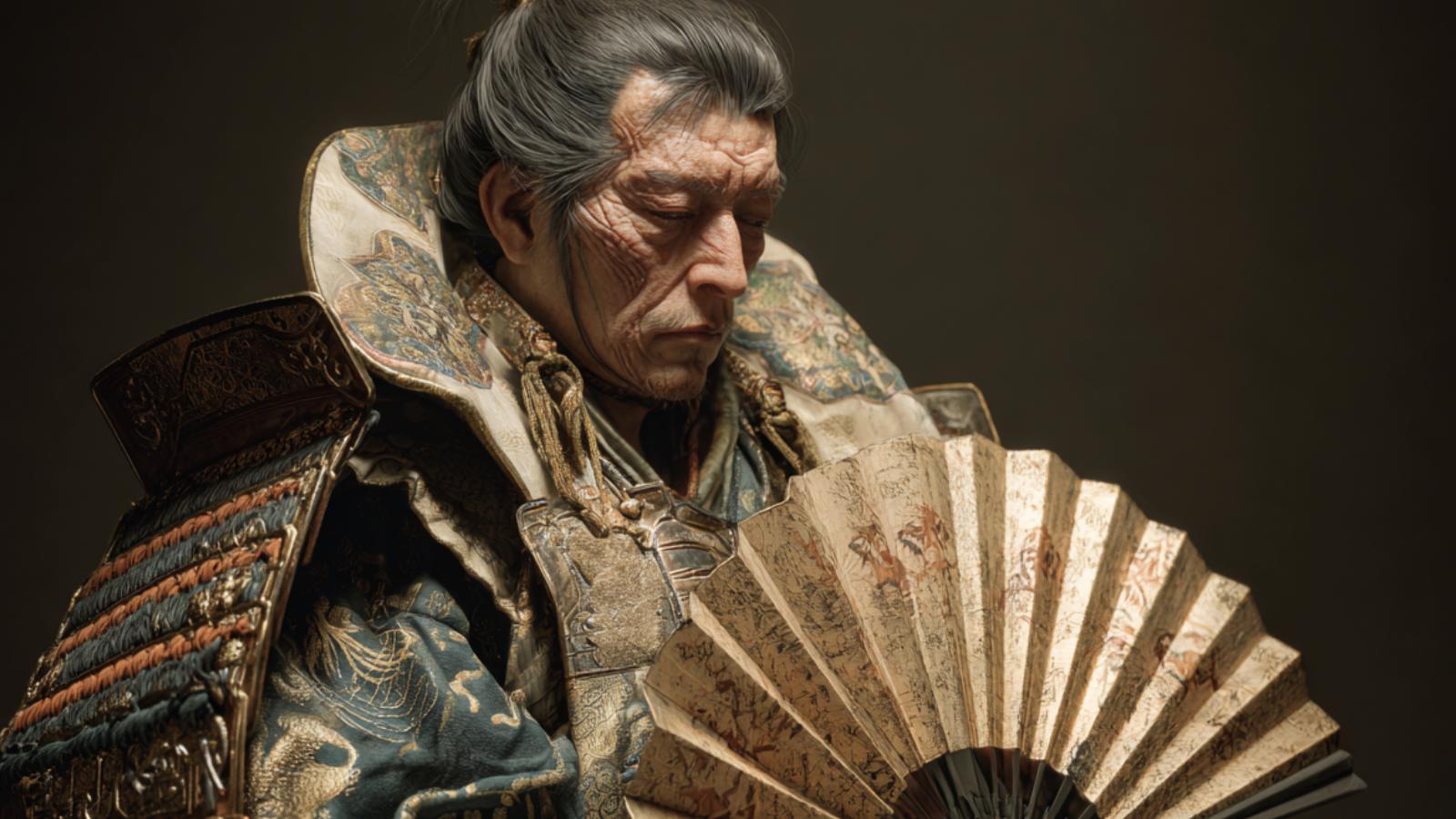
“今川の義に勝てる者などいない。”
— None can defeat the righteousness of Imagawa.

| Lead 統率 |
Valor 武勇 |
Intel 知略 |
Pol 政治 |
|---|---|---|---|
| 75 | 60 | 80 | 85 |
| Name (JP) | 今川 義元 |
|---|---|
| Title | Daimyo |
| Clan / Force | Imagawa Clan |
| Era | 1526 – 1560 |
| Origin | Suruga |
| Key Battles | |
| Arts | No Drama |
About Imagawa Yoshimoto
He inherited a strong and was raised in a tumultuous time marked by samurai and shifting allegiances.
Given his lineage as a Shugo, Yoshimoto received education in martial arts and governance, preparing him for his future role as a leader.
Yoshimoto became the head of the Imagawa clan after succeeding his father.
His ambitious nature led him to expand his territory, focusing on alliances rather than direct conflict for territorial gain.
He forged significant political ties, including the marriage alliances that strengthened the Imagawa clans influence in the region.
Over the years, he was able to consolidate power by effectively managing his vassals and engaging in diplomatic negotiations, laying a foundation for his military campaigns.
The most notable military action of Yoshimoto came in 1560 when he launched an invasion of Owari province, aiming to defeat the rising power of Oda Nobunaga.
Though he began with a substantial army, his forces were caught off guard during the Battle of Okehazama.
Nobunaga’s unexpected and audacious attack led to Yoshimotos downfall, showcasing the unpredictability of war during the Sengoku period.
The defeat was a pivotal moment that shifted the balance of power in Japan and marked the of Oda Nobunaga as a formidable force.
Despite his defeat, Imagawa Yoshimoto is remembered for his governance strategies, and his attempts at reforming the administrative structures of the territories he controlled.
He is often referenced as a capable military leader and a tragic figure in the annals of Japanese history, showcasing both the complexities of the Sengoku period and the risks of ambition in feudal Japan.









comment