
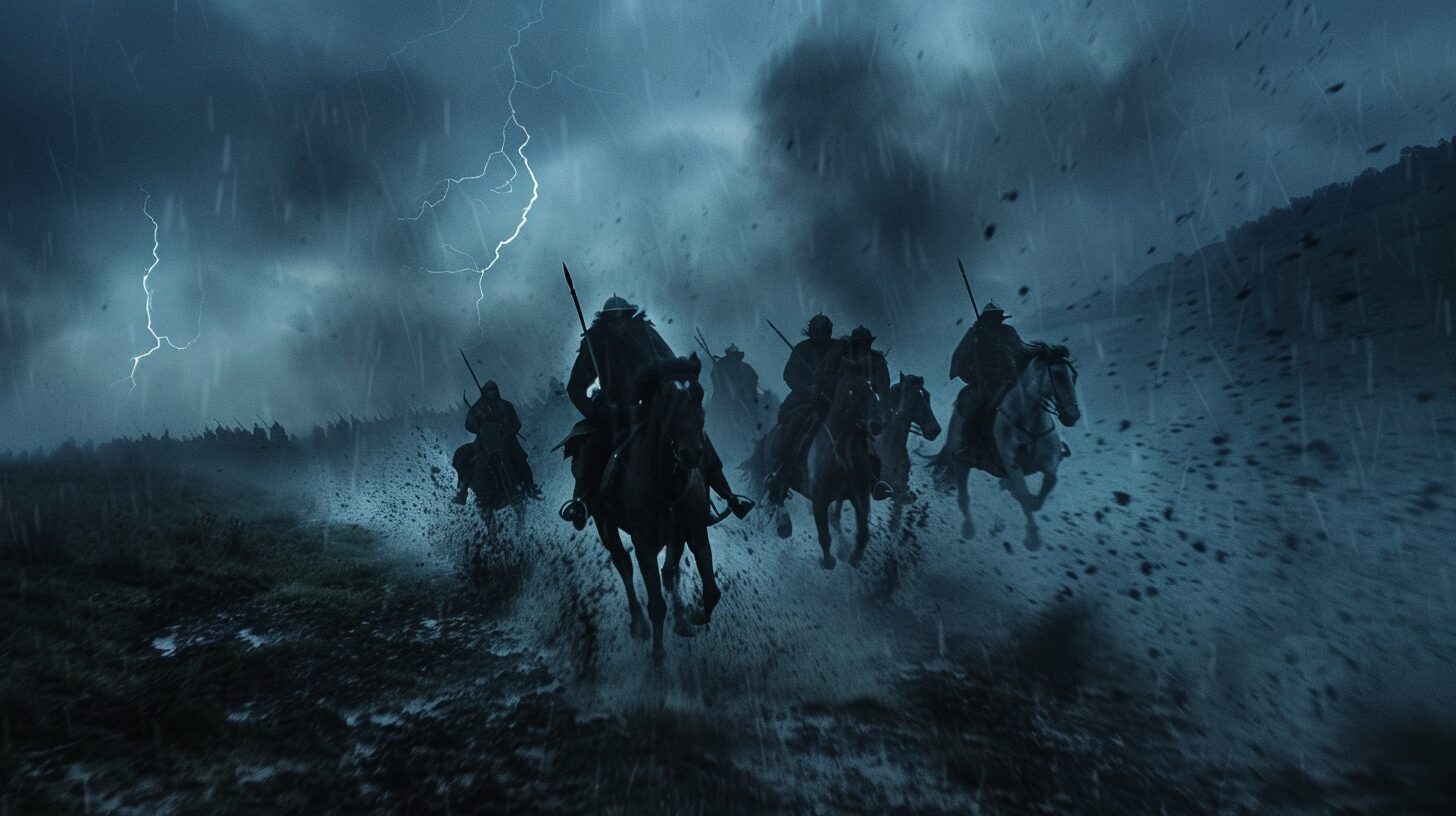
In 1560, the young lord of Owari, Oda Nobunaga, launched a surprise attack and killed Imagawa Yoshimoto, who commanded a massive army, in what is known as the Battle of Okehazama.
In this battle, Nobunaga’s army of only a few thousand men defeated an opposing force of more than twenty thousand. It has become a symbol of “the weak overthrowing the strong” and is regarded as a turning point in Sengoku-period history.
In this article, we clearly explain the background leading up to the battle, the course of the fighting, and the key tactical points, and we end with a list of participating samurai already featured on this site.
This is a reference article you can use not only as a Sengoku fan, but also for study and research.
- We take a detailed look at the Battle of Okehazama
What was the Battle of Okehazama?
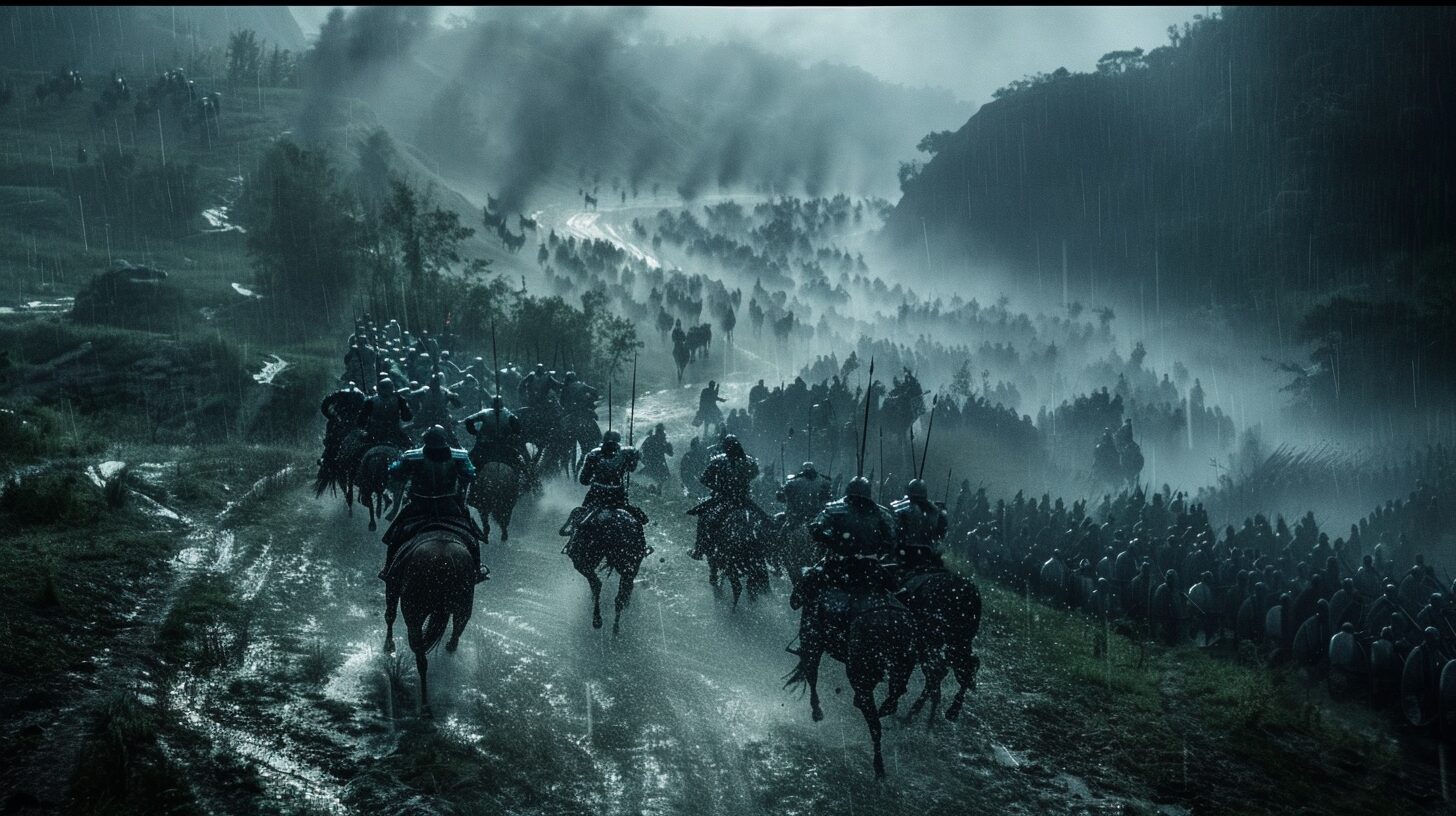
The Battle of Okehazama was a conflict fought in Owari Province in 1560 (Eiroku 3).
- A small Oda force launched a surprise attack on the main Imagawa army, which was marching on Kyoto, and killed its commander-in-chief, Imagawa Yoshimoto
This is how it is commonly described.
Facing the powerful Imagawa clan, which ruled Suruga, Tōtōmi, and Mikawa, Oda Nobunaga of Owari overturned his numerical disadvantage and won a stunning victory.
This single battle made Nobunaga famous throughout the country and opened the path toward his “Tenka Fubu” – “rule the realm by force” – policy.
Battlefield and balance of power
The battlefield and overall balance of power were as follows.
| Item | Details |
|---|---|
| Year | 1560 (Eiroku 3) |
| Location | Owari Province, Okehazama (present-day Minami Ward, Nagoya City to Toyoake City, Aichi Prefecture) |
| Oda army strength | Approx. 2,500–4,000 men (various estimates) |
| Imagawa army strength | Estimated around 25,000 men (various estimates) |
| Outcome | Oda victory; Imagawa Yoshimoto killed in battle |
Under normal circumstances, there was virtually no way the Oda side should have been able to win.
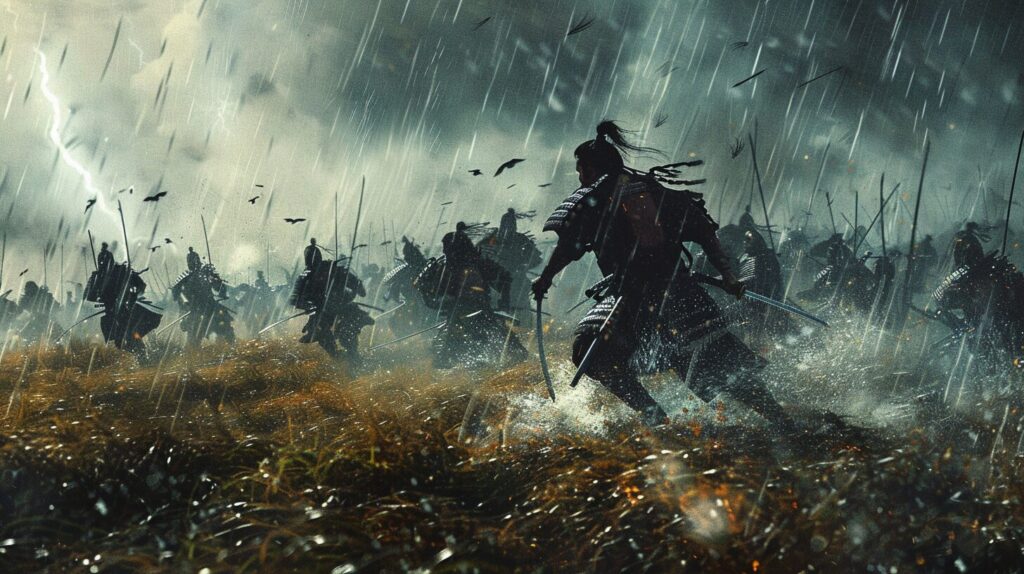
However, Nobunaga took advantage of a torrential downpour to launch a surprise attack and led a hand-picked elite force in a charge straight at the enemy headquarters.
Background to the battle
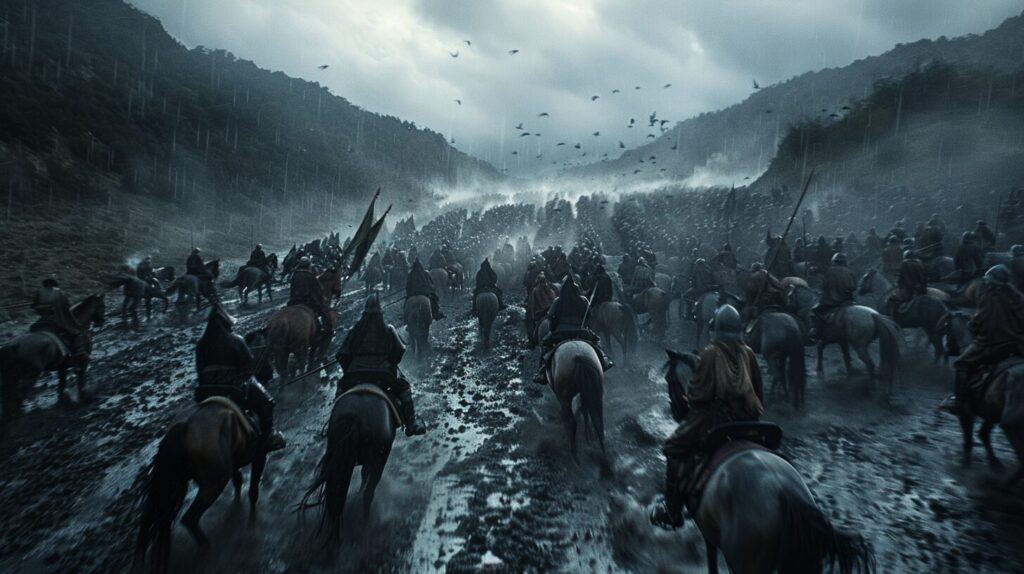
Nobunaga was forced into this unfavorable battle by a harsh strategic situation that left him little choice.
- Imagawa Yoshimoto ruled three provinces and launched an invasion of Owari as part of his plan to march on Kyoto
- Matsudaira Motoyasu of Mikawa (later Tokugawa Ieyasu) fought as an Imagawa retainer at the time
- Oda Nobunaga had only just completed his unification of Owari and his domain was still weaker in overall power
- For Nobunaga to win, he needed a plan other than a straightforward, head-on battle
Faced with these circumstances, Nobunaga carefully read the enemy’s overconfidence and the changes in weather, and chose to launch a one-point breakthrough surprise attack aimed solely at the enemy headquarters.
Course of the battle (timeline)
In this section, we walk through the Battle of Okehazama step by step.
Imagawa invasion and fall of the forts
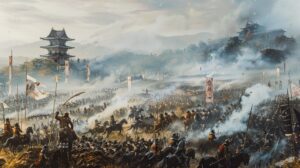
The Imagawa army captured the Washizu and Marune forts, forcing the Oda army to pull back its defensive line.
The situation was entirely in Imagawa’s favor.
Nobunaga rides out from Kiyosu Castle
Upon receiving reports of the worsening situation, Nobunaga decided to sortie.
He prayed for victory at Atsuta Shrine, then mustered his troops and advanced to the front.
Torrential rain and the decision to strike
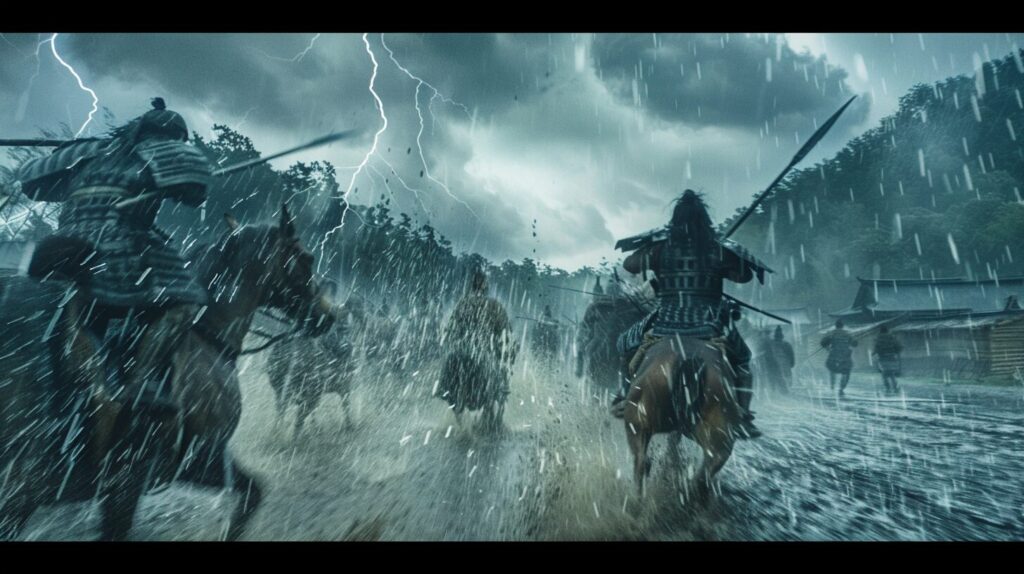
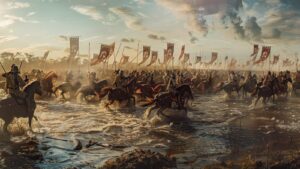
In the afternoon, a violent thunderstorm rolled over the battlefield.
Nobunaga saw this weather as “an opportunity sent by the gods” and led a picked force into the valleys around Okehazama.
The charge on Imagawa’s main camp
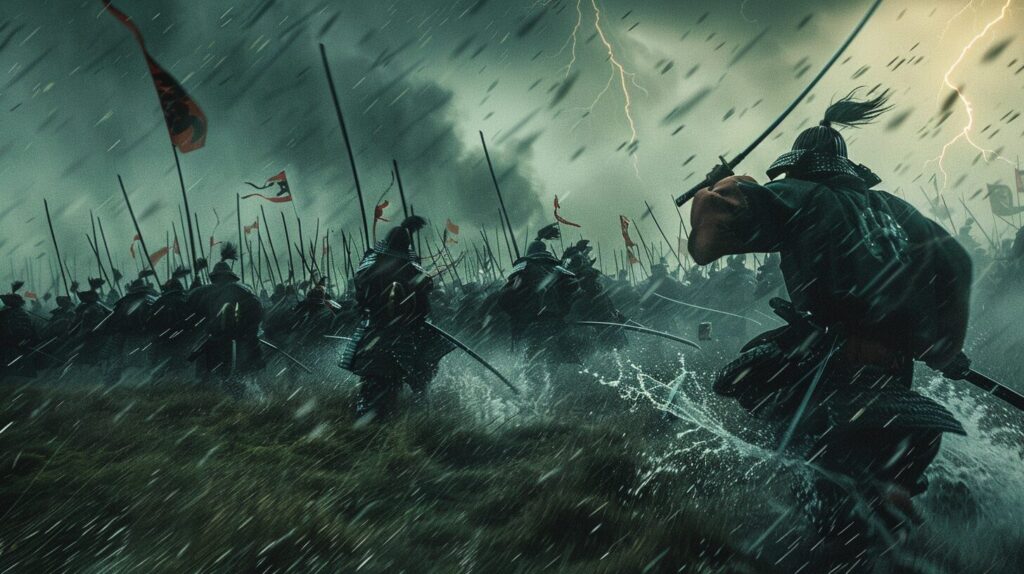
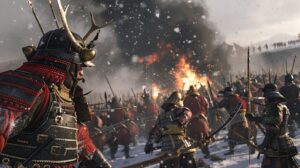
The heavy rain reduced visibility, and it is said that there was a degree of complacency in the Imagawa headquarters.
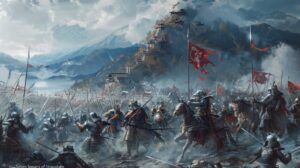
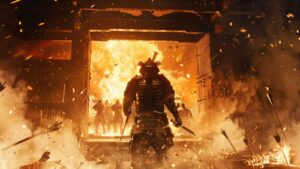
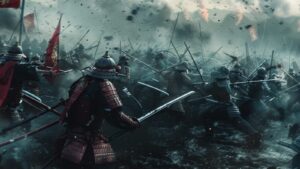
Nobunaga’s troops suddenly rushed the main camp, and the battle turned into a chaotic melee.
Imagawa Yoshimoto falls and the tide turns
Yoshimoto fought bravely but was killed, and his army collapsed in panic.
The Oda clan achieved a sweeping victory, and history began to move in a new direction.
In this way, the battle unfolded like a dramatic come-from-behind story.
Why the victory at Okehazama changed history
The Battle of Okehazama is often described as a battle that “changed the course of history.”
There were several reasons for this.
Nobunaga steps onto the main stage of history
First, it catapulted Oda Nobunaga, who had been merely a minor power in Owari, into the position of a leading figure of the Sengoku era.
Because of this shocking battle, the whole country came to know of the “monster” named Oda Nobunaga. It was a crucial turning point that announced his presence to Japan.
The fall of the Imagawa and Tokugawa Ieyasu’s independence
The Battle of Okehazama led directly to the decline of the Imagawa clan.
Matsudaira Motoyasu of Mikawa (later Tokugawa Ieyasu), who had been fighting as an Imagawa retainer at the time, later broke away after this battle, formed an alliance with Nobunaga, and began expanding his own power.
In other words, this was not only a huge turning point that spread Nobunaga’s name, but also a crucial moment in the life of Tokugawa Ieyasu, who would eventually found the Edo shogunate.
A “miraculous victory” remembered in Japanese history
The Battle of Okehazama is often cited as a textbook case of boldness, intelligence gathering, and effective use of terrain, and remains a famous battle rich with tactical lessons.
This victory was not mere luck; it was the result of decisions that leveraged terrain, weather, information, and mobility to the fullest.
Nobunaga treated the poor visibility caused by the thunderstorm as an opportunity, chose a concentrated strike aimed solely at the enemy headquarters with a small, elite force, and by killing the commander-in-chief Imagawa Yoshimoto, brought the battle to an abrupt conclusion.
The Battle of Okehazama is also seen as a classic example of what is now known in business and marketing as the “Lanchester strategy” – the strategy of the weaker side.
Under Lanchester’s first law, “a numerically inferior force should not disperse its strength, but instead concentrate its attack on a single point in a localized battle.”
Nobunaga’s way of fighting matched this principle exactly.
- Avoid a frontal, all-out battle (a weaker side should not fight a total war)
- Target only the enemy headquarters (concentrated attack)
- Use mobility and surprise to create local superiority (reverse the numerical disadvantage in a limited area)
These points together form a classic real-world example of how a weaker side can win.
In short, the victory at Okehazama showed that outcomes are not determined by military strength and numbers alone. It stands as a historical success model in which strategy, information, and timing overturned a numerical disadvantage.
- The Imagawa clan rapidly declined, and Matsudaira Motoyasu of Mikawa (Tokugawa Ieyasu) became independent
- Nobunaga’s name spread across the realm, opening the path to Kyoto and his “Tenka Fubu” policy
- The battle became a symbol that “victory and defeat in war can be reversed not by numbers, but by strategy and decision-making”
- The tide of history shifted, leading into the age of Nobunaga, Hideyoshi, and Ieyasu
In this sense, Okehazama was a historical crossroads where the old order collapsed and new powers rose, a turning point where the great currents of the Sengoku period changed direction.
List of participating and related figures
So who actually took part in the Battle of Okehazama?
Let’s list the main samurai.
Oda side
The main commanders on the Oda side were:
Imagawa side (plus Mikawa forces)
The main commanders on the Imagawa side were:
Final Thoughts
In this article, we have explored the Battle of Okehazama of 1560, covering the background to the conflict, the flow of the fighting, the distinctive tactics used, and its broader historical significance.
Okehazama is remembered as a battle in which Oda Nobunaga, faced with overwhelmingly unfavorable odds, successfully carried out a daring surprise attack and killed Imagawa Yoshimoto, dramatically altering the course of Japanese history.
The come-from-behind victory was not a simple “miracle,” but the result of strategic decision-making and information warfare that combined weather judgment, use of terrain, feints, and rapid decision-making.
That victory triggered the rapid decline of the Imagawa clan and paved the way for Tokugawa Ieyasu’s independence and rise.
Nobunaga himself opened the road toward unifying the realm, and from this point onward, Japan’s political map began to change dramatically.
Put another way, the Battle of Okehazama was:
- A turning point marking the end of the Imagawa era and the beginning of the age of Nobunaga and Ieyasu.
It was a major “crossroads” at which the power map of the Sengoku period was redrawn and the flow of later history was set in motion.
comment