

“敵は本能寺にあり!”
— The enemy is at Honno-ji!

| Lead 統率 |
Valor 武勇 |
Intel 知略 |
Pol 政治 |
|---|---|---|---|
| 85 | 70 | 95 | 80 |
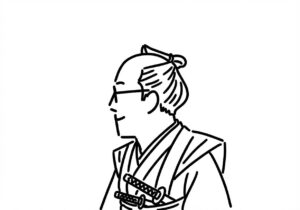
| Name (JP) | 明智 光秀 |
|---|---|
| Title | Daimyo |
| Clan / Force | Oda Clan |
| Era | 1528 – 1582 |
| Origin | Mino |
| Key Battles | |
| Arts | Noh Theatre |
About Akechi Mitsuhide
His family held a position of influence as Shugo, and from a young age, Mitsuhide was immersed in the military culture of the time.
He began his samurai career serving under the powerful daimyo Oda Nobunaga, rapidly rising through the ranks due to his keen intellect and tactical skills.
Mitsuhide quickly distinguished himself in various military campaigns, showcasing not only his leadership but also his ability to adapt to changing battle conditions.
His loyalty to Nobunaga set a strong foundation for his reputation; however, mixed feelings about Nobunagas methods and ambitions began to brew within him.
His political maneuvering and strategic mind led him to strategic victories for Nobunaga, further embedding him within the Oda clans hierarchy.
One of Mitsuhides significant achievements was his role in the Battle of Anegawa (1570) against the Takeda and Asakura clans, where he displayed both bravery and strategic thinking.
However, his most infamous act came in 1582 when, discontented with Nobunagas harsh treatment and perhaps influenced by his own aspirations, he orchestrated a coup détat against his lord, leading to the assassination of Nobunaga at Honnō-ji temple.
This pivotal moment drastically altered the power dynamics of Japan, but it also led to Mitsuhide becoming a fugitive, as he faced the wrath of Nobunagas loyalists, including Toyotomi Hideyoshi.
Mitsuhides betrayal left a lasting mark on Japanese history, often debated and scrutinized.
While some view him as a traitor, others argue he acted out of necessity, driven by the turmoil of the time.
His life and actions have been romanticized in various forms of media, including literature and theatre, solidifying him as a controversial yet fascinating figure in the annals of the Sengoku period.
Despite his relatively brief reign after Nobunagas death, Akechi Mitsuhides name remains synonymous with betrayal, strategy, and the turbulent politics of feudal Japan.








comment