
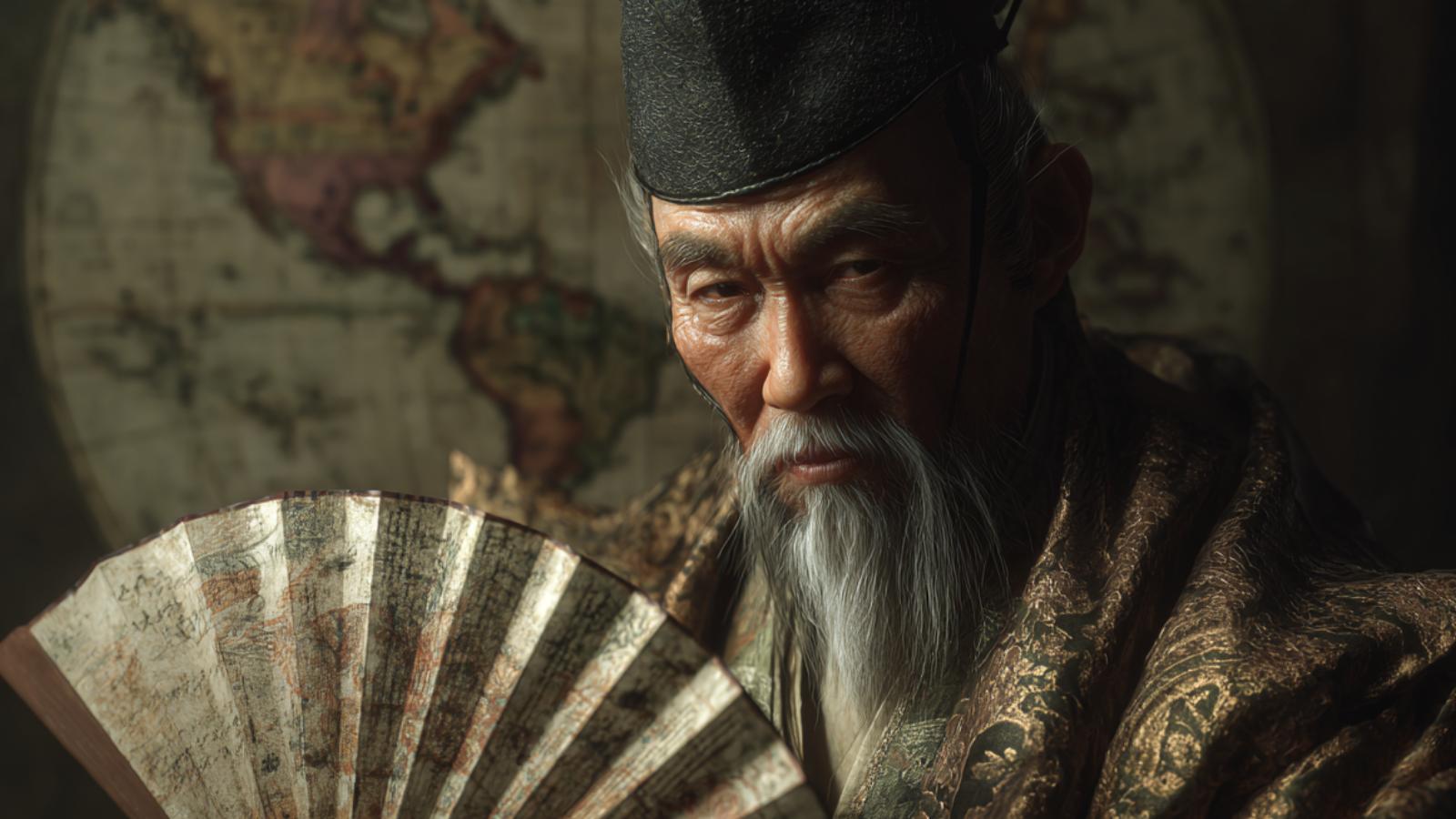
“水墨画は心を磨く。”
— Ink painting sharpens the mind.

| Lead 統率 |
Valor 武勇 |
Intel 知略 |
Pol 政治 |
|---|---|---|---|
| 65 | 40 | 90 | 50 |
| Name (JP) | 雪舟 等楊 |
|---|---|
| Title | Zen Priest |
| Clan / Force | Unknown |
| Era | 1420 – 1506 |
| Origin | Mimasaka |
| Key Battles | |
| Arts | Ink Painting |
About Sesshu Toyo
He dedicated his life to art and Zen, becoming a monk, which allowed him to immerse himself in the philosophical practices of Zen while cultivating his skills in painting.
His talent for ink wash painting was nurtured under the tutelage of venerable masters, allowing him to explore the delicate balance between nature and the human experience.
During the Muromachi period, Sesshus work began to gain recognition.
His travels to China, where he studied the Song Dynastys painting styles, significantly influenced his unique approach to ink painting.
By incorporating elements from Chinese art, he created a distinctive style that would lay the foundations for later generations of Japanese painters.
His notable works are characterized by their fluid brush strokes, expressive landscapes, and unique ability to convey the essence of Zen philosophy through visual aesthetics.
Although Sesshu was primarily an artist and Zen monk, he was also involved in the cultural of his time, advocating for the integration of Zen principles into the arts.
His ability to navigate the complexities of the artistic community in a politically tumultuous era was crucial in promoting the acceptance of ink painting as a revered form of cultural expression.
Sesshu Toyo passed away in 1506, leaving behind a rich as one of the most celebrated ink painters in Japanese history.
His works inspired future artists and helped to elevate Japanese ink painting to new heights.
The harmonious blend of Zen and art that he perfected continues to resonate in Japanese culture today, making Sesshu a central figure in the history of Japanese visual arts.
His philosophy that art is a means of spiritual reflection remains influential, demonstrating the profound impact of his life and work.







comment