
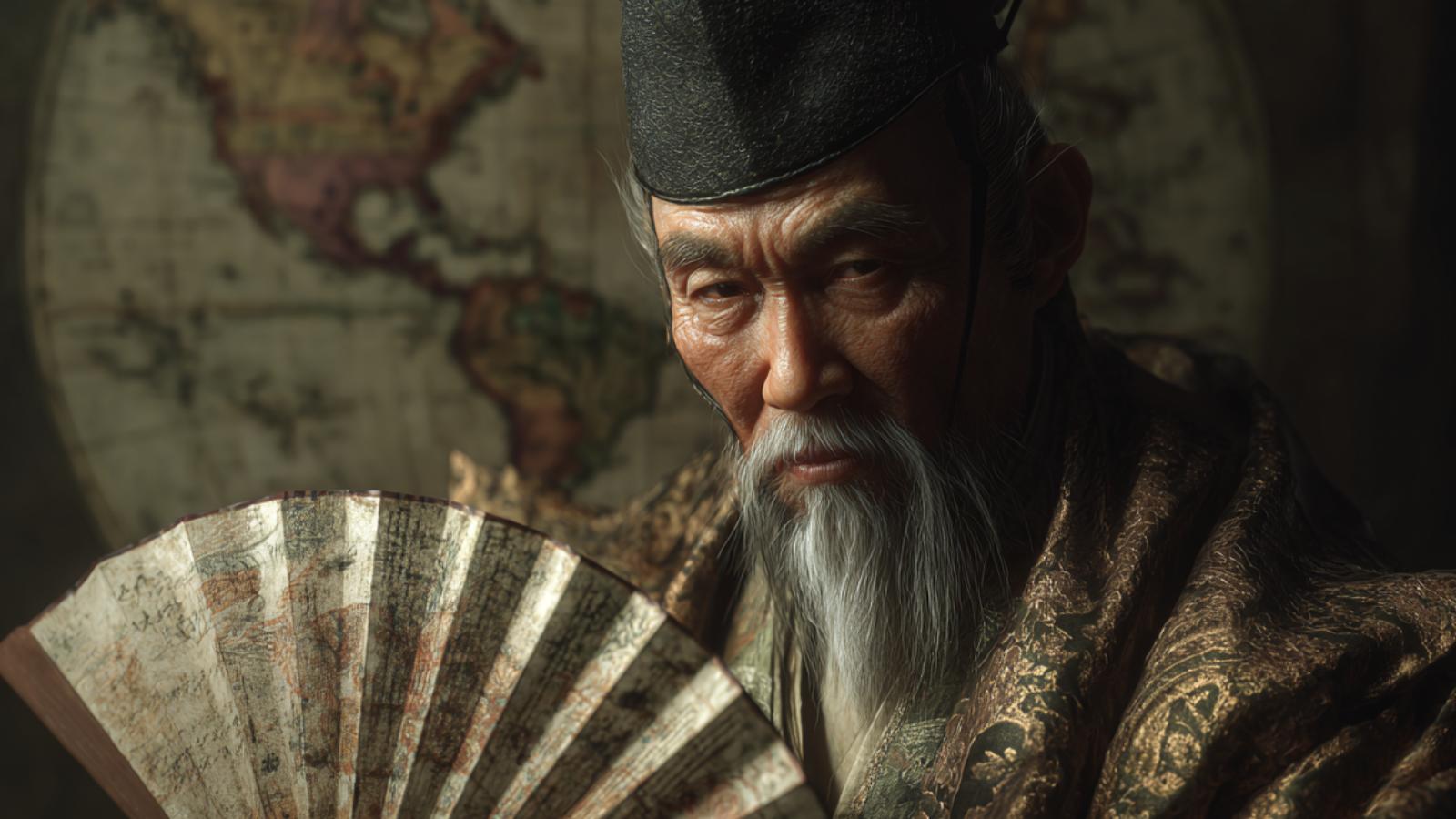
“智恵をもって道を切り開け、和平は勝利の策略なり。”
— Forge the path with wisdom, for peace is the strategy of victory.

| Lead 統率 |
Valor 武勇 |
Intel 知略 |
Pol 政治 |
|---|---|---|---|
| 75 | 60 | 85 | 90 |
| Name (JP) | 南光坊 天海 |
|---|---|
| Title | Chief Abbot |
| Clan / Force | Tokugawa Shogunate |
| Era | 1536 – 1643 |
| Origin | Shimotsuke |
| Key Battles | |
| Arts | Zen Buddhism |
About Nankobo Tenkai
He initially lived as a monk and was well-versed in Zen Buddhism, which influenced his philosophical outlook and strategies.
His early dedication to study and meditation paved the way for his later engagements in the turbulent landscape of feudal Japan.
Tenkais to prominence occurred during the late Sengoku period, a time of great political instability and warfare among rival clans.
He became an advisor to powerful leaders and utilized his intelligence to navigate complex political situations.
Tenkai was well-respected for his strong diplomatic skills, often mediating conflicts and building alliances among warring factions.
While Tenkai was not known for his personal combat skills, his strategic insight proved invaluable during several significant .
He contributed to the planning and execution of strategies that helped shape the course of conflicts, particularly in supporting Tokugawa Ieyasus to power.
His role was more about influencing decisions and guiding commanders than leading troops on the battlefield.
Nankobo Tenkai passed away in 1643, leaving behind a as a wise counselor and a respected figure in Zen Buddhism.
His teachings inspired many, and he is remembered not just for his strategic mind, but also for his contributions to the cultural and spiritual life of Japan during a pivotal era.
His impact on diplomacy and governance continues to be studied by historians and strategists alike.









comment