
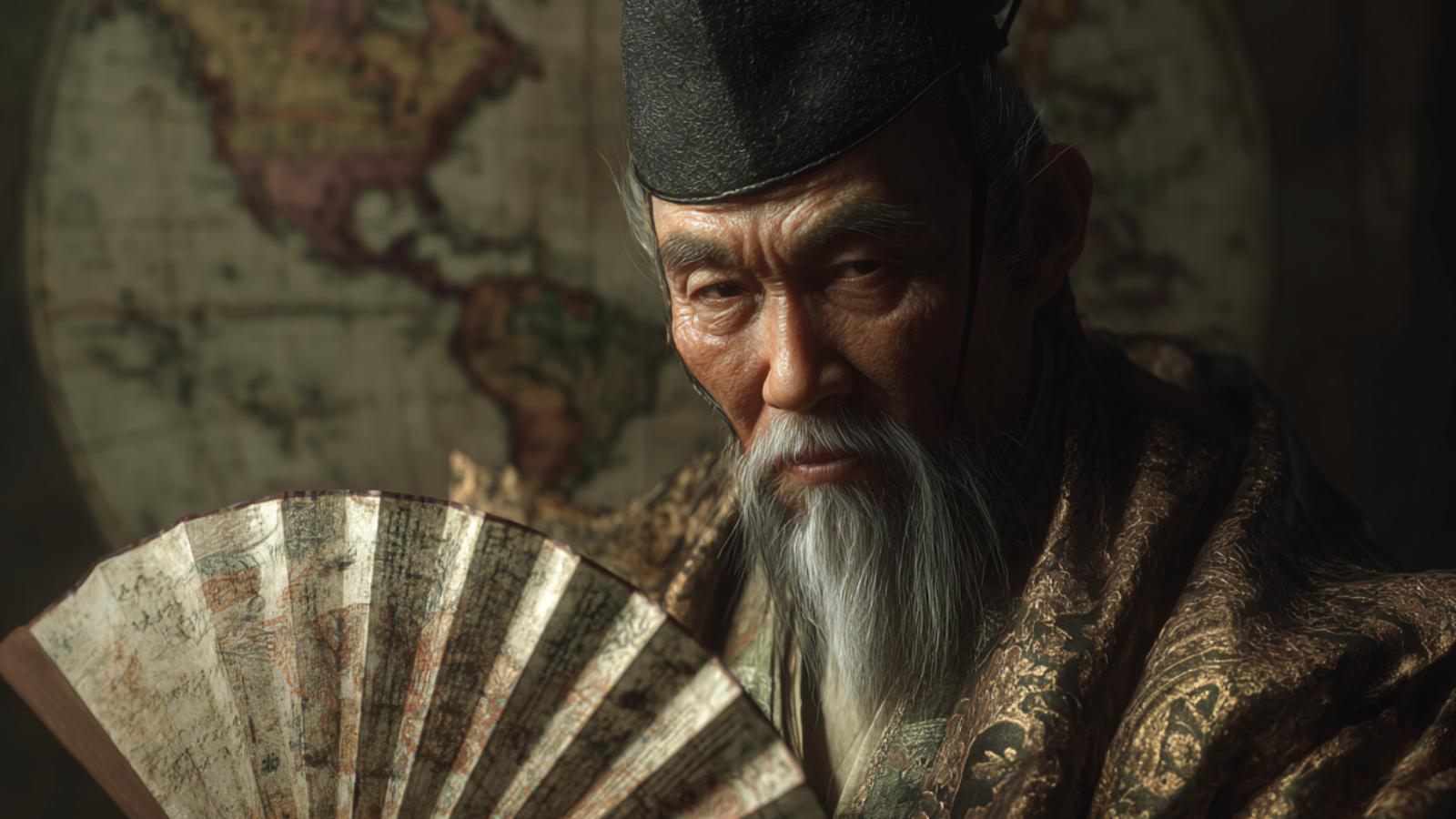
“心の静けさは、最も大切な武器である。”
— The calmness of the heart is the most important weapon.

| Lead 統率 |
Valor 武勇 |
Intel 知略 |
Pol 政治 |
|---|---|---|---|
| 75 | 70 | 78 | 65 |
| Name (JP) | 桂林院 |
|---|---|
| Title | Abbot |
| Clan / Force | Unknown |
| Era | 1772 – 1854 |
| Origin | Kyoto |
| Key Battles | |
| Arts | Zen Buddhism |
About Keirin-in
His upbringing in the religious environment of the city influenced his philosophical outlook and enabled him to delve deeply into the teachings of Zen Buddhism.
As a young monk, he dedicated himself to the practice of meditation and learning the ways of the samurai, seeing the warriors path as one closely aligned with Buddhist ideals of discipline and focus.
As Keirin-in matured, he became increasingly influential within the Buddhist community, emphasizing the importance of inner tranquility and the harmony between martial prowess and spiritual enlightenment.
By the age of 40, he was appointed as the abbot of a prominent temple, where he sought to integrate traditional samurai practices with Zen teachings, emphasizing that true strength comes from mental fortitude rather than physical combat alone.
Although not a military leader in the traditional sense, Keirin-in was known for mediating conflicts between samurai factions in Kyoto, leveraging his status as a respected monk.
His influence grew during the tensions leading up to the Boshin War, where he advocated for peace amid rising militarism, seeking to guide warriors back to the principles of honor and respect through Zen teachings.
He often hosted discussions in his temple, promoting compassion over violence among conflicting leaders, gaining both followers and opponents.
Keirin-in passed away in 1854, leaving behind a of bridging the gap between the philosophical teachings of Buddhism and the practical realities of samurai life.
Today, he is remembered for his approach to leadership and the promotion of a balanced life, eming the spirit of a true warrior monk who valued peace and wisdom over warfare.
His teachings continue to resonate with practitioners of Zen and modern warriors alike.









comment