
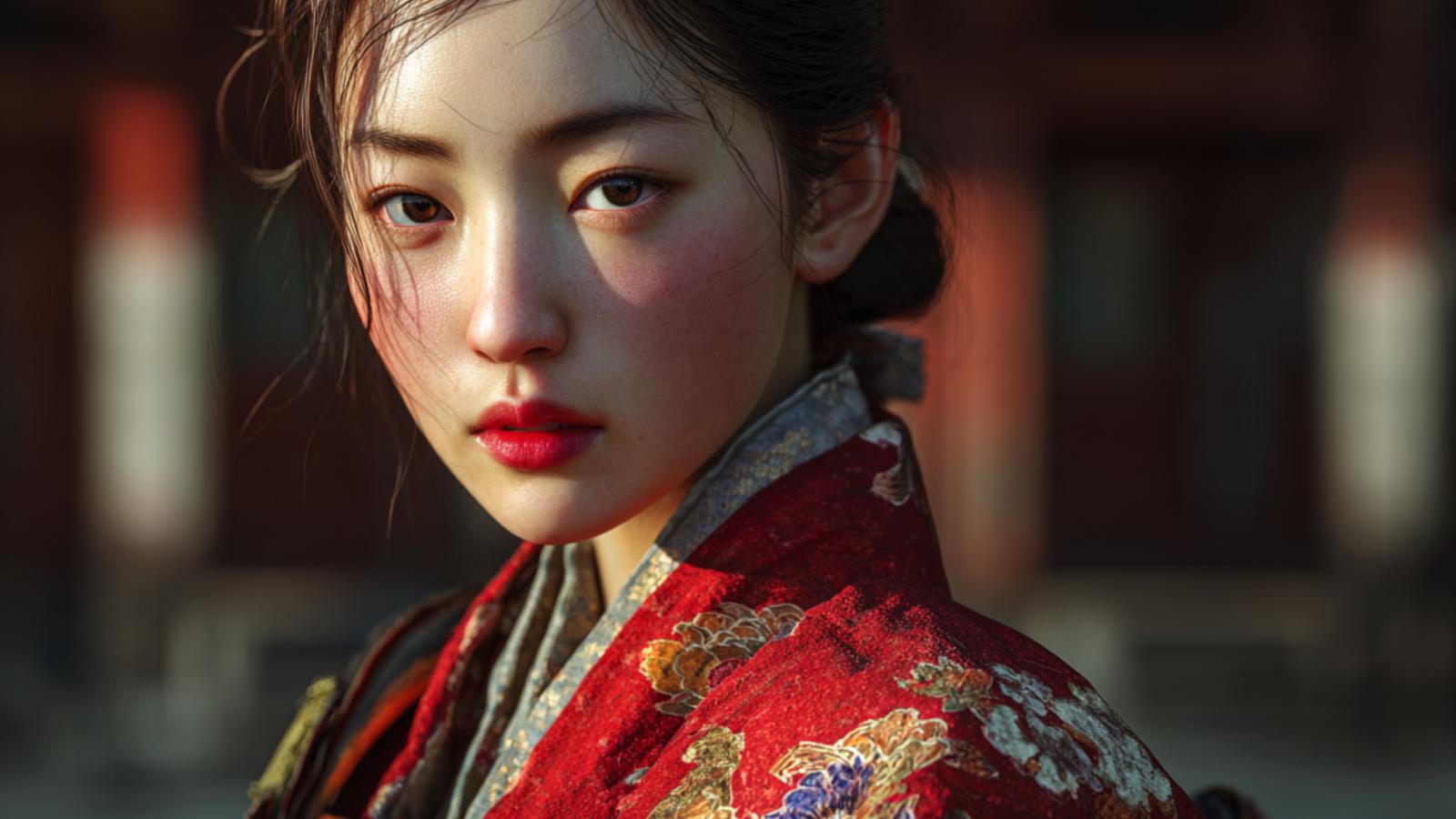
“名誉をかけて戦う。”
— I fight for honor.

| Lead 統率 |
Valor 武勇 |
Intel 知略 |
Pol 政治 |
|---|---|---|---|
| 70 | 65 | 75 | 60 |
| Name (JP) | 阿南姫 |
|---|---|
| Title | Kunoichi |
| Clan / Force | Unknown |
| Era | 1550 – 1617 |
| Origin | Mutsu |
| Key Battles | |
| Arts | Noh Theatre |
About Onamihime
From a young age, she was trained in the arts of combat and strategy, exhibiting remarkable prowess that was unusual for women of her time.
Her upbringing in a warrior household instilled in her a strong sense of honor and duty.
As the Sengoku era reached its zenith, Onamihimes skills caught the attention of prominent lords.
She began her military career as a Kunoichi, skilled in both espionage and combat.
Her reputation as a brave warrior made her a vital asset during campaigns, supporting her lord in strategic operations that often led to significant victories.
Despite societal expectations, she fought alongside male warriors, proving her capabilities on various battlefields.
Onamihime participated in numerous skirmishes and full-scale throughout her life.
She was particularly noted for her contributions during the Siege of Aizuwakamatsu, where her tactical insight and bravery turned the tide in favor of her allied forces.
Her presence on the battlefield was both inspiring and formidable, as she became a symbol of female strength in a predominantly male-dominated era.
Following her death in 1617, Onamihime’s lived on through tales of her bravery and skill.
She became an inspiration for future generations of women in Japan, echoing a spirit of resilience and courage.
Her life story exemplifies the potential of women in martial roles during the Sengoku period, making her a celebrated figure in Japanese history.









comment