
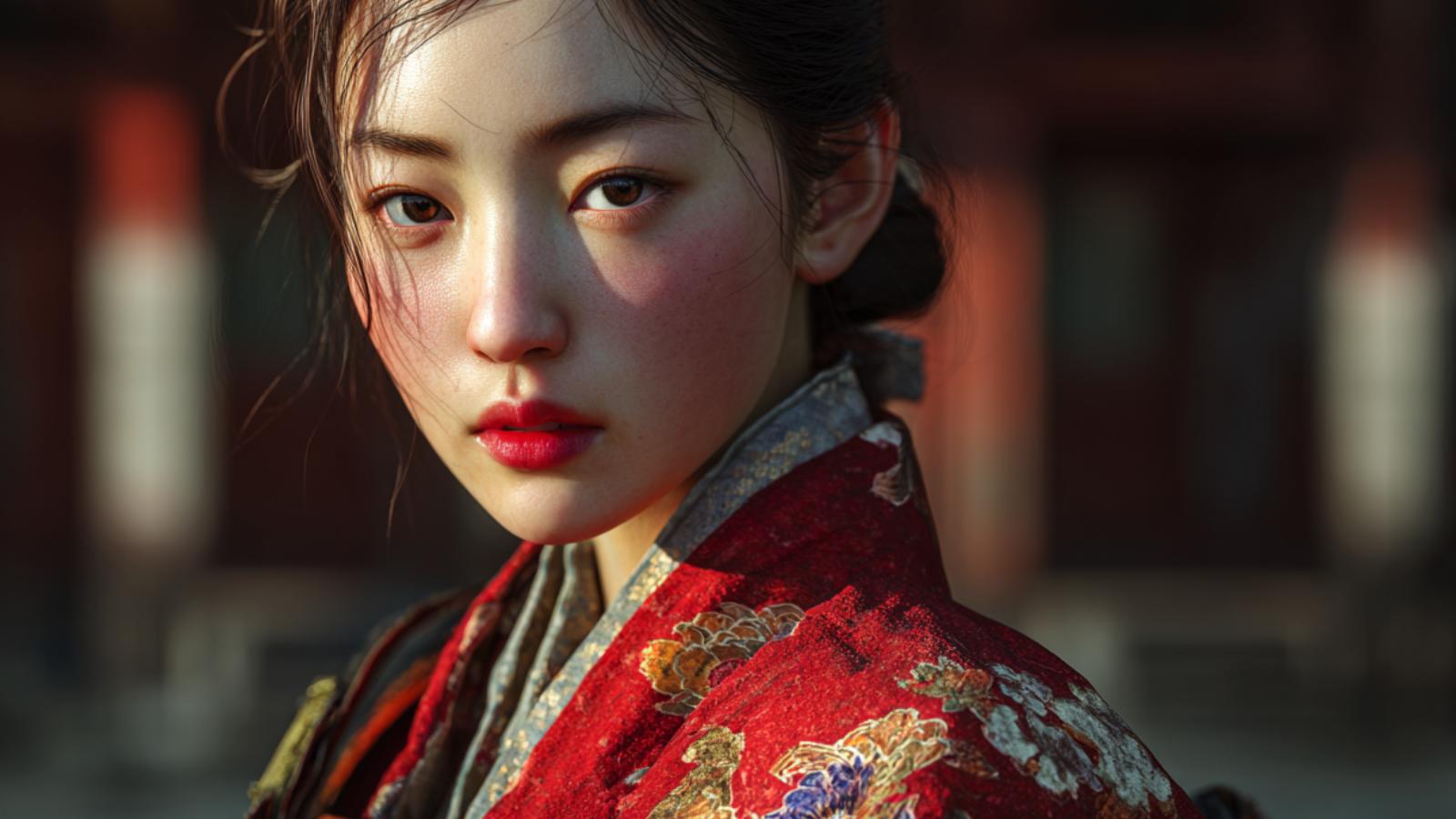
“勇気を持って真実を語ることが、私の魂を救う。”
— To speak the truth with courage is what saves my soul.

| Lead 統率 |
Valor 武勇 |
Intel 知略 |
Pol 政治 |
|---|---|---|---|
| 62 | 55 | 70 | 78 |
| Name (JP) | 小松姫 |
|---|---|
| Title | Princess |
| Clan / Force | Tokugawa Clan |
| Era | 1560 – 1620 |
| Origin | Mikawa |
| Key Battles | |
| Arts | Noh Theatre |
About Komatsuhime
Growing up in a time of constant warfare and political instability, she was educated in the ways of governance and the arts, particularly Noh theatre, which became a significant aspect of her life.
Her lineage provided her with a unique perspective on the complex dynamics of power and conflict in the Sengoku period.
As a young woman, Komatsuhime became known for her intelligence and wit.
She was adept at navigating the intricacies of court life and quickly rose to prominence as a political player.
Her most significant relationships with powerful daimyos allowed her to wield influence in matters of diplomacy and strategy.
Although she did not lead armies into battle, her ability to advise and counsel was highly valued.
While Komatsuhime did not participate directly in military engagements, her role was crucial during times of conflict.
She provided strategic insights to her family and allies, contributing to the decision-making processes that could determine the outcomes of various skirmishes.
Many tales highlight her ability to defuse tensions and secure alliances through careful negotiation, demonstrating that warfare was not solely reliant on combat prowess.
Komatsuhimes is one of subtle strength.
She exemplified how women in the Sengoku era could possess power and influence outside the battlefield.
Her contributions to the cultural sphere, especially in promoting Noh theatre, solidified her status as an intellectual in her own right.
Today, she is remembered not just as a noblewoman but as a figure who shaped the political and cultural landscape of her time.







comment