
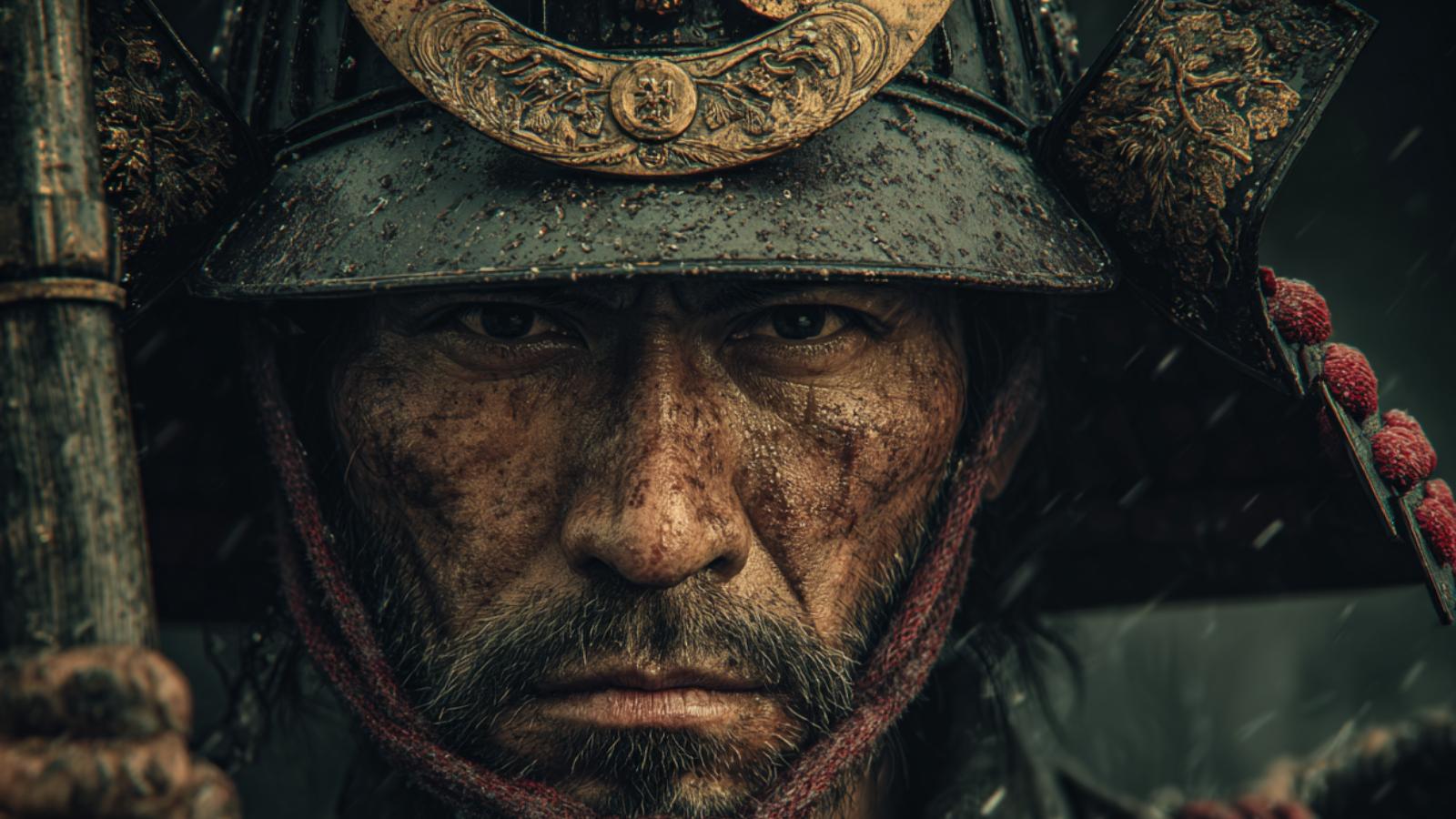
“無心の心。”
— The heart of no heart.

| Lead 統率 |
Valor 武勇 |
Intel 知略 |
Pol 政治 |
|---|---|---|---|
| 70 | 60 | 85 | 75 |
| Name (JP) | 古田 織部 |
|---|---|
| Title | Chief Retainer |
| Clan / Force | Tea practitioners and the Maeda Clan |
| Era | 1544 – 1615 |
| Origin | Mino |
| Key Battles | |
| Arts | Tea Ceremony |
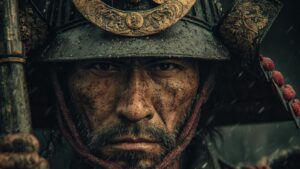
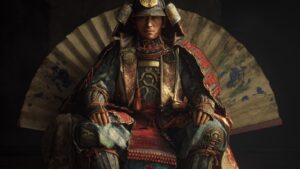
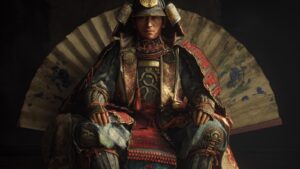
About Furuta Oribe
Raised in a samurai family, he was trained in the arts of war as well as the cultural practices expected of a noble warrior.
His early involvement in military affairs shaped his understanding of leadership and strategy, ultimately leading him to a significant role in the tumultuous times of the late 16th century.
Oribes reputation began to flourish under Toyotomi Hideyoshi, a formidable unifier of Japan.
As a chief retainer, Oribe participated in many key military campaigns.
His close relationship with Hideyoshi allowed him to not only gain political favor but also to influence the aesthetics and cultural practices among the samurai class.
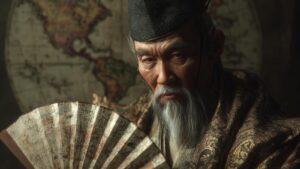
As a tea master, he innovated the tea ceremony, combining it with military discipline and artistic expression, which greatly impacted Japanese tea culture.
While Oribe may not have been as famed for his personal bravery as contemporaries, his strategic insight was invaluable.
He contributed to the siege of several castles during the unification wars and was present at significant that aided Hideyoshi’s consolidation of power.
Although he had a military role, his lasting contributions are found more in cultural fields than on the battlefield, illustrating the duality of samurai life during this period.
Furuta Oribes extends beyond military service; he is revered as a pivotal figure in the evolution of the Japanese tea ceremony.
His method, known as Oribe style, emphasized simplicity and natural beauty, influencing generations of tea practitioners.
Even after his death in 1615, Oribes contributions to both the martial and cultural identities of Japan have made him a celebrated historical figure, eming the ideals of a samurai who bridged the worlds of warfare and art.
comment