The Battle of Komaki-Nagakute (1584): The Sole Direct Military Clash Between Hideyoshi and Ieyasu. Ieyasu’s Tactical Victory vs. Hideyoshi’s Strategic Triumph.
The Battle of Komaki-Nagakute (1584): The Sole Direct Military Clash Between Hideyoshi and Ieyasu. Ieyasu’s Tactical Victory vs. Hideyoshi’s Strategic Triumph.
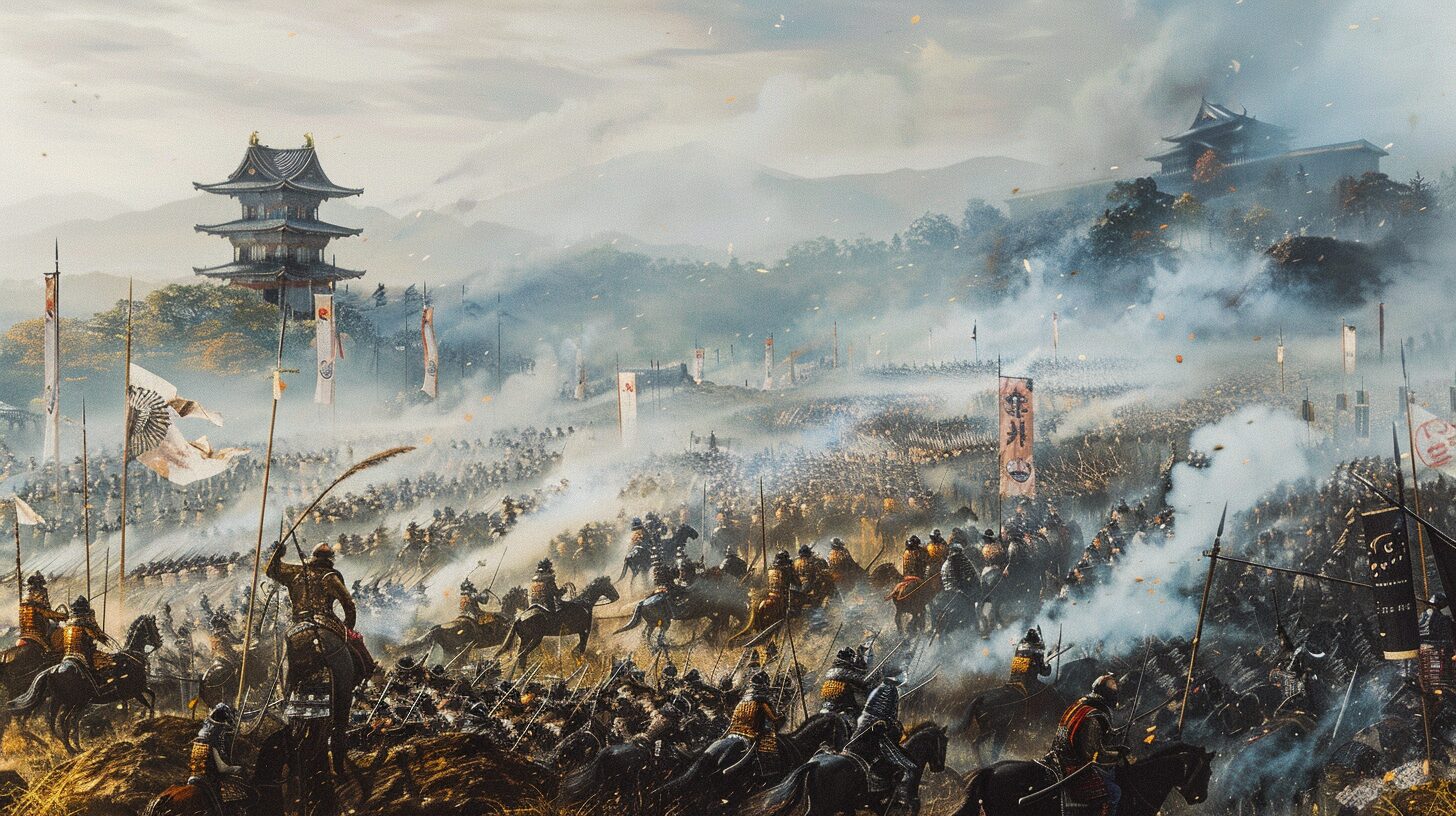
In 1584, the two titans who would define the final chapter of the Sengoku era—Hashiba Hideyoshi and Tokugawa Ieyasu—faced each other directly on the battlefield for the only time in their careers. This was the Komaki-Nagakute Campaign. The conflict produced one of history’s most paradoxical results: Ieyasu won the decisive field engagement at Nagakute, yet Hideyoshi won the campaign itself through a brilliant political maneuver. This multi-language guide—available in English, Japanese, French, and German—explores how political strategy triumphed over military force in this defining confrontation.
contents
The Battle of Komaki-Nagakute (1584): The Only Military Clash Between Hideyoshi and Ieyasu
In the spring and summer of 1584, the two men who would come to define the final chapter of the Sengoku era — Hashiba Hideyoshi and Tokugawa Ieyasu — faced each other directly on the battlefield for the only time in their careers. The Komaki-Nagakute Campaign — known in Japanese as Komaki-Nagakute no tatakai — was not a single engagement but an extended military and political contest fought across Owari Province in 1584.
The campaign produced one of history’s more paradoxical results: Ieyasu won the decisive field engagement at Nagakute, killing three of Hideyoshi’s senior commanders, yet Hideyoshi won the campaign itself — through a political maneuver that stripped Ieyasu of his reason to fight. It was a conflict that ended not with one side’s army destroyed, but with one side’s political position made untenable.
This article explains the background, course, and significance of the campaign, closing with a list of the key figures involved.
What Was the Komaki-Nagakute Campaign?
The Komaki-Nagakute Campaign took place throughout 1584 (Tenshō 12), with the decisive engagement at Nagakute fought on approximately the 9th day of the 4th month (approximately May 18, 1584). The theater of operations centered on Komaki Mountain (小牧山) in Owari Province — in the area of modern Komaki City and Nagakute City in Aichi Prefecture.
The opposing sides were Hashiba Hideyoshi on one side, and the alliance of Tokugawa Ieyasu with Oda Nobukatsu (織田信雄, Nobunaga’s second son) on the other. Hideyoshi achieved strategic victory by negotiating a separate peace with Nobukatsu, leaving Ieyasu without a political justification for continuing the war.
Victory — separate peace with Nobukatsu isolates Ieyasu
Defeat — Nobukatsu’s defection ends the coalition
Year
1584 (Tenshō 12); decisive battle approx. May 18, 1584
Location
Komaki and Nagakute, Owari Province (modern Komaki City and Nagakute City, Aichi Prefecture)
Result
Strategic Hideyoshi victory through political settlement; Ieyasu formally submits to Hideyoshi in 1586
Background to the Campaign
The Situation After Shizugatake
Following his victory at the Battle of Shizugatake and the death of Shibata Katsuie in 1583, Hashiba Hideyoshi had emerged as the dominant figure among Nobunaga’s former retainers. However, his position as supreme heir to Nobunaga’s legacy was not universally accepted. Two of Nobunaga’s sons remained: Oda Nobukatsu (the second son) and Oda Nobutaka (the third son, who died in 1583). Of these, Nobukatsu was now the senior surviving Oda heir — and he grew increasingly resentful of Hideyoshi’s dominance.
Nobukatsu’s Defiance — and the Alliance with Ieyasu
In early 1584, Oda Nobukatsu took a dramatic step: he had three of his own senior retainers killed, suspecting them of serving as Hideyoshi’s agents within the Oda household. This act amounted to an open declaration of hostility toward Hideyoshi, and Nobukatsu quickly sought the military protection of Tokugawa Ieyasu. For Ieyasu, the alliance offered a legitimate pretext — defending a member of the Oda clan — to check Hideyoshi’s growing power before it became overwhelming. The two men formed a coalition, and war became inevitable.
Why Ieyasu Chose to Fight
Ieyasu’s decision to oppose Hideyoshi directly in 1584 was one of the most calculated gambles of his career. He understood that Hideyoshi’s strategic position — controlling the Kinai heartland and commanding far more resources — was stronger. But he also understood that if he allowed Hideyoshi to fully consolidate power without resistance, any future negotiating position would be far weaker. By fighting now, he could demonstrate his military capabilities and force Hideyoshi to deal with him as an equal rather than a subordinate. The Komaki-Nagakute Campaign was, in this sense, less about winning than about establishing the terms of an eventual peace.
Course of the Campaign
Scene 1 — The Standoff at Komaki Mountain
In the spring of 1584, Ieyasu occupied the strategic heights of Komaki Mountain in Owari Province and fortified his position. Hideyoshi advanced with a much larger army and established his own network of fortified camps surrounding Komaki. For weeks, the two sides faced each other in a strategic stalemate — Ieyasu’s position was too strong to assault directly, and Ieyasu’s forces were too outnumbered to attack. The campaign evolved into a war of attrition and maneuver.
Scene 2 — Ikeda Tsuneoki’s Daring Flanking Move
Frustrated by the stalemate, Hideyoshi’s senior general Ikeda Tsuneoki — a childhood companion of Nobunaga and one of the most experienced commanders in Japan — proposed a bold flanking operation. He would lead a large detached force on a wide sweep around Ieyasu’s flank and strike deep into Mikawa Province — Ieyasu’s home territory — forcing Ieyasu to abandon his strong defensive position at Komaki and come out to fight. Hideyoshi authorized the plan. Tsuneoki advanced with his son Ikeda Motosuke and another commander, Mori Nagayoshi (the elder brother of the famous Mori Ranmaru), at the head of a substantial force.
Scene 3 — Ieyasu Intercepts: The Battle of Nagakute
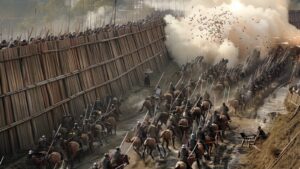
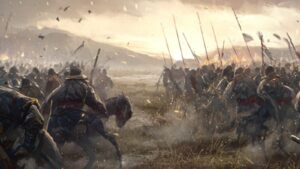
Ieyasu learned of the flanking move through intelligence and acted with characteristic decisiveness. He left a garrison to hold Komaki and personally led a rapid counter-march to intercept Tsuneoki’s column. On approximately May 18, 1584, Ieyasu’s forces caught and destroyed the Ikeda-Mori detachment at Nagakute. Ikeda Tsuneoki, his son Ikeda Motosuke, and Mori Nagayoshi were all killed in the fighting. It was a catastrophic tactical defeat for Hideyoshi — three senior commanders lost in a single engagement.
Scene 4 — Strategic Stalemate Continues
Despite his stunning tactical victory at Nagakute, Ieyasu could not translate it into a strategic breakthrough. Hideyoshi still commanded a far larger army, and the overall balance of forces had not fundamentally shifted. The two sides returned to a prolonged standoff. Hideyoshi, recognizing that a frontal assault on Ieyasu’s position would be costly and uncertain, sought a political solution.
Scene 5 — Hideyoshi Outmaneuvers Ieyasu Diplomatically
In the autumn of 1584, Hideyoshi made his decisive move — not on the battlefield, but at the negotiating table. He opened direct negotiations with Oda Nobukatsu and offered terms that Nobukatsu accepted, concluding a separate peace. With Nobukatsu at peace with Hideyoshi, the entire political justification for Ieyasu’s campaign — defending the Oda heir against Hideyoshi’s dominance — evaporated. Ieyasu had no choice but to accept terms as well. The two sides stood down, and the campaign ended without a decisive military conclusion.
Scene 6 — The Final Settlement (1586)
The political resolution came fully in 1586, when Tokugawa Ieyasu traveled to Osaka Castle and formally acknowledged Hideyoshi‘s supremacy. To facilitate this, Hideyoshi had arranged for his own sister, Asahi-hime, to marry Ieyasu, and later sent his aged mother, Ō-Mandokoro, to stay in Ieyasu’s domain — a gesture that functioned as a diplomatic hostage arrangement, demonstrating Hideyoshi’s good faith. Ieyasu’s submission was formal but preserved his autonomy and military strength, laying the groundwork for what came after Hideyoshi’s death.
Why This Campaign Matters Historically
1. The Only Direct Military Clash of the Two Future Rulers
Among all the conflicts of the late Sengoku period, Komaki-Nagakute stands alone as the single occasion when Hideyoshi and Ieyasu tested each other on the battlefield. Ieyasu’s tactical victory at Nagakute demonstrated convincingly that he could match Hideyoshi’s generals in the field. This military credibility shaped every subsequent negotiation between the two men and ensured that when Hideyoshi sought to incorporate Ieyasu into his order, he did so on terms that respected Tokugawa autonomy.
2. The Triumph of Political Strategy over Military Force
The campaign’s resolution — achieved not through battle but through Hideyoshi’s diplomatic separation of Nobukatsu from Ieyasu — is one of the clearest demonstrations of Hideyoshi’s genius as a political operator. He did not need to defeat Ieyasu militarily; he needed only to remove the political rationale for the war. The lesson was absorbed by both men, and it defined the nature of their relationship for the rest of Hideyoshi’s life.
3. The Foundation of the Tokugawa Future
By fighting Hideyoshi to a political draw — and then negotiating a settlement that preserved Tokugawa lands and independence — Ieyasu secured the base from which the Tokugawa clan would eventually rise to supreme power. The terms of his 1586 submission to Hideyoshi were carefully structured to leave him as the dominant lord of eastern Japan. When Hideyoshi died in 1598, it was Ieyasu — with his intact military strength and eastern power base — who was positioned to make the decisive move at Sekigahara in 1600.
List of Participating and Related Figures
Who were the key figures in the Komaki-Nagakute Campaign? Below is a list of the main samurai and related figures already featured on this site.
Ikeda Tsuneoki (池田恒興) — Senior general; proposed and led the flanking operation toward Mikawa; killed at the Battle of Nagakute along with his son Ikeda Motosuke
Mori Nagayoshi (森長可) — Commander in the Ikeda-led flanking force; killed at Nagakute. Elder brother of Mori Ranmaru, the famous page of Oda Nobunaga who died at Honnoji
Ieyasu-Nobukatsu Side
Tokugawa Ieyasu (徳川家康) — Commander-in-chief of the Tokugawa-Nobukatsu coalition; personally led the intercept that destroyed Ikeda Tsuneoki’s column at Nagakute; accepted a negotiated peace after Nobukatsu’s separate settlement with Hideyoshi
Oda Nobukatsu (織田信雄) — Nobunaga’s second son; the immediate political cause of the war; concluded a separate peace with Hideyoshi in autumn 1584, ending the coalition’s rationale
Honda Tadakatsu (本多忠勝) — Distinguished himself in the Nagakute engagement; one of the “Four Heavenly Kings” of the Tokugawa
Ii Naomasa (井伊直政) — Tokugawa commander; one of the “Four Heavenly Kings”; fought in the campaign
Sakakibara Yasumasa (榊原康政) — Tokugawa commander; one of the “Four Heavenly Kings”; served throughout the campaign
Sakai Tadatsugu (酒井忠次) — Senior Tokugawa general; participated in the campaign
Final Thoughts
The Komaki-Nagakute Campaign of 1584 was, in microcosm, a portrait of the two men who would define Japan’s next two centuries. Hideyoshi — brilliant, creative, politically ruthless — found a way to win without needing to win on the battlefield. Ieyasu — patient, calculating, militarily formidable — absorbed a strategic setback without losing his fundamental power base, and waited.
When Hideyoshi died in 1598, Ieyasu was still waiting — still intact, still powerful, still positioned. The patience that sustained him through the political humiliation of 1584–1586 was the same patience that carried him to victory at Sekigahara in 1600 and to the founding of the Tokugawa shogunate in 1603. Komaki-Nagakute was not the end of anything — it was the beginning of Ieyasu’s long game.
La Campagne de Komaki-Nagakute (1584) : Le Seul Affrontement Militaire Direct entre Hideyoshi et Ieyasu
Au printemps et à l’été 1584, les deux hommes qui allaient définir le dernier chapitre de l’ère Sengoku — Hashiba Hideyoshi et Tokugawa Ieyasu — se firent face directement sur le champ de bataille pour la seule fois de leurs carrières. La campagne de Komaki-Nagakute n’était pas un engagement unique, mais un long affrontement militaire et politique mené en 1584 dans la province d’Owari.
La campagne produisit un résultat paradoxal : Ieyasu remporta l’engagement décisif sur le terrain à Nagakute, tuant trois commandants seniors de Hideyoshi — pourtant Hideyoshi gagna la campagne elle-même, par une manœuvre politique qui priva Ieyasu de sa raison de combattre.
Qu’est-ce que la campagne de Komaki-Nagakute ?
La campagne se déroula tout au long de 1584 (Tenshō 12), avec l’engagement décisif à Nagakute le 9e jour du 4e mois (environ le 18 mai 1584). Le théâtre d’opérations se concentrait sur la montagne Komaki dans la province d’Owari — dans la région des actuelles villes de Komaki et Nagakute, préfecture d’Aichi.
Les camps opposés étaient Hashiba Hideyoshi d’un côté, et l’alliance de Tokugawa Ieyasu avec Oda Nobukatsu (le deuxième fils de Nobunaga) de l’autre. Hideyoshi obtint la victoire stratégique en négociant une paix séparée avec Nobukatsu, privant Ieyasu de toute justification politique pour continuer la guerre.
Victoire — les forces d’Ieyasu écrasent la colonne détachée
Résultat stratégique
Victoire — paix séparée avec Nobukatsu isolant Ieyasu
Défaite — la défection de Nobukatsu met fin à la coalition
Année
1584 (Tenshō 12) ; bataille décisive env. 18 mai 1584
Lieu
Komaki et Nagakute, province d’Owari (actuelles Komaki et Nagakute, préfecture d’Aichi)
Résultat
Victoire stratégique de Hideyoshi ; Ieyasu se soumet formellement à Hideyoshi en 1586
Contexte de la campagne
La situation après Shizugatake
Après sa victoire à la bataille de Shizugatake, Hashiba Hideyoshi dominait les anciens vassaux de Nobunaga. Mais Oda Nobukatsu, le second fils de Nobunaga, nourrissait un ressentiment croissant envers Hideyoshi.
La défiance de Nobukatsu et l’alliance avec Ieyasu
En 1584, Oda Nobukatsu fit tuer trois de ses propres vassaux seniors, les soupçonnant d’être des agents de Hideyoshi. Cet acte équivalait à une déclaration d’hostilité ouverte, et Nobukatsu chercha aussitôt la protection militaire de Tokugawa Ieyasu. Pour Ieyasu, l’alliance offrait un prétexte légitime pour contenir le pouvoir croissant de Hideyoshi.
Pourquoi Ieyasu choisit de combattre
La décision d’Ieyasu d’affronter directement Hideyoshi était l’un des paris les plus calculés de sa carrière. En démontrant ses capacités militaires, il pouvait forcer Hideyoshi à le traiter en égal plutôt qu’en subordonné — et établir les termes d’une paix éventuelle sur un pied moins défavorable.
Chronologie de la campagne
Scène 1 — L’impasse à la montagne Komaki
Ieyasu occupa les hauteurs stratégiques de la montagne Komaki et fortifia sa position. Hideyoshi avança avec une armée bien plus grande, mais la position d’Ieyasu était trop forte pour être assaillie directement. La campagne évolua en guerre d’attrition.
Scène 2 — Le mouvement tournant audacieux d’Ikeda Tsuneoki
Frustré par l’impasse, Ikeda Tsuneoki proposa une opération tournante hardie : conduire une grande force détachée en profondeur dans la province de Mikawa — le territoire natal d’Ieyasu — pour le forcer à abandonner sa position défensive de Komaki. Hideyoshi autorisa le plan. Tsuneoki avança avec son fils Ikeda Motosuke et Mori Nagayoshi (le frère aîné du célèbre Mori Ranmaru).
Scène 3 — L’interception d’Ieyasu : la bataille de Nagakute
Ieyasu apprit le mouvement tournant par ses services de renseignement et agit avec décision. Il laissa une garnison à Komaki et mena personnellement une contre-marche rapide pour intercepter la colonne d’Ikeda-Mori. Le 18 mai 1584 environ, ses forces détruisirent le détachement à Nagakute. Ikeda Tsuneoki, son fils Ikeda Motosuke et Mori Nagayoshi furent tous tués — une défaite tactique catastrophique pour Hideyoshi.
Scène 4 — L’impasse stratégique continue
Malgré sa victoire tactique, Ieyasu ne pouvait la transformer en percée stratégique. Hideyoshi commandait toujours une armée bien plus grande. Reconnaissant qu’une solution militaire lui serait coûteuse, Hideyoshi chercha un dénouement politique.
Scène 5 — Hideyoshi isole Ieyasu par la diplomatie
À l’automne 1584, Hideyoshi négocia directement avec Oda Nobukatsu une paix séparée. Avec Nobukatsu réconcilié avec Hideyoshi, la justification politique de la guerre d’Ieyasu disparut. Ieyasu n’eut d’autre choix que d’accepter également les conditions de paix.
Scène 6 — Le règlement final (1586)
En 1586, Tokugawa Ieyasu se rendit au château d’Osaka et reconnut formellement la suprématie de Hideyoshi. Pour faciliter cela, Hideyoshi avait arrangé le mariage de sa sœur Asahi-hime avec Ieyasu, et envoya sa mère Ō-Mandokoro dans le domaine d’Ieyasu — un arrangement fonctionnant comme une garantie diplomatique.
Pourquoi cette campagne est-elle historiquement importante ?
1. Le seul affrontement militaire direct des deux futurs maîtres du Japon
La victoire tactique d’Ieyasu à Nagakute démontra de manière convaincante qu’il pouvait égaler les généraux de Hideyoshi sur le terrain. Cette crédibilité militaire façonna chaque négociation ultérieure entre les deux hommes.
2. Le triomphe de la stratégie politique sur la force militaire
La résolution de la campagne — obtenue non par la bataille mais par la séparation diplomatique de Nobukatsu d’Ieyasu — est l’une des démonstrations les plus claires du génie politique de Hideyoshi. Il n’avait pas besoin de vaincre Ieyasu militairement ; il lui suffisait de supprimer la justification politique de la guerre.
3. Le fondement de l’avenir des Tokugawa
En négociant un règlement qui préservait ses terres et son indépendance, Ieyasu conserva la base depuis laquelle le clan Tokugawa s’élèverait à la puissance suprême. Quand Hideyoshi mourut en 1598, c’est Ieyasu — avec sa force militaire intacte — qui était positionné pour faire le mouvement décisif à Sekigahara en 1600.
Liste des protagonistes et figures associées
Qui étaient les figures clés de la campagne de Komaki-Nagakute ?
Ikeda Tsuneoki (池田恒興) — Proposa et mena l’opération tournante ; tué à la bataille de Nagakute avec son fils Ikeda Motosuke
Mori Nagayoshi (森長可) — Commandant dans la force tournante d’Ikeda ; tué à Nagakute. Frère aîné de Mori Ranmaru, le célèbre page d’Oda Nobunaga mort à Honnoji
Camp Ieyasu-Nobukatsu
Tokugawa Ieyasu (徳川家康) — Commandant en chef de la coalition ; mena personnellement l’interception qui détruisit la colonne d’Ikeda Tsuneoki ; accepta un règlement négocié après la paix séparée de Nobukatsu
Oda Nobukatsu (織田信雄) — Second fils de Nobunaga ; conclut une paix séparée avec Hideyoshi à l’automne 1584, mettant fin à la coalition
Honda Tadakatsu (本多忠勝) — Se distingua dans la campagne ; l’un des « Quatre Rois Célestes » des Tokugawa
Ii Naomasa (井伊直政) — Commandant Tokugawa ; l’un des « Quatre Rois Célestes »
Sakakibara Yasumasa (榊原康政) — Commandant Tokugawa ; l’un des « Quatre Rois Célestes »
Sakai Tadatsugu (酒井忠次) — Général senior Tokugawa ; participa à la campagne
Conclusion
La campagne de Komaki-Nagakute de 1584 fut, en miniature, un portrait des deux hommes qui allaient définir les deux siècles suivants du Japon. Hideyoshi — brillant, créatif, politiquement impitoyable — trouva un moyen de gagner sans avoir à gagner sur le champ de bataille. Ieyasu — patient, calculateur, militairement redoutable — absorba un revers stratégique sans perdre sa base de pouvoir fondamentale, et attendit.
Quand Hideyoshi mourut en 1598, Ieyasu attendait toujours — intact, puissant, positionné. La patience qui le soutint à travers les humiliations politiques de 1584–1586 fut la même patience qui le porta à la victoire à Sekigahara en 1600.
Der Feldzug von Komaki-Nagakute (1584): Die Einzige Militärische Konfrontation zwischen Hideyoshi und Ieyasu
Im Frühjahr und Sommer 1584 standen die zwei Männer, die das letzte Kapitel der Sengoku-Ära prägen sollten — Hashiba Hideyoshi und Tokugawa Ieyasu — zum einzigen Mal in ihrer Karriere direkt auf dem Schlachtfeld gegenüber. Der Feldzug von Komaki-Nagakute war kein einzelnes Gefecht, sondern ein ausgedehnter militärischer und politischer Wettstreit in der Provinz Owari im Jahr 1584.
Der Feldzug brachte ein paradoxes Ergebnis: Ieyasu gewann das entscheidende Feldgefecht bei Nagakute und tötete drei senior Kommandanten Hideyoshis — doch Hideyoshi gewann den Feldzug selbst, durch einen politischen Schachzug, der Ieyasu seiner Rechtfertigung zum Kämpfen beraubte.
Was war der Feldzug von Komaki-Nagakute?
Der Feldzug erstreckte sich über das gesamte Jahr 1584 (Tenshō 12), mit dem entscheidenden Gefecht bei Nagakute am 9. Tag des 4. Monats (ca. 18. Mai 1584). Das Operationsgebiet konzentrierte sich auf den Berg Komaki in der Provinz Owari — im Bereich der heutigen Städte Komaki und Nagakute, Präfektur Aichi.
Auf der einen Seite stand Hashiba Hideyoshi, auf der anderen das Bündnis von Tokugawa Ieyasu mit Oda Nobukatsu (dem zweiten Sohn Nobunagas). Hideyoshi errang den strategischen Sieg, indem er einen Separatfrieden mit Nobukatsu aushandelte und Ieyasu seiner politischen Rechtfertigung beraubte.
Sieg — Separatfrieden mit Nobukatsu isoliert Ieyasu
Niederlage — Nobunagas Abfall beendet die Koalition
Jahr
1584 (Tenshō 12) ; entscheidendes Gefecht ca. 18. Mai 1584
Ort
Komaki und Nagakute, Provinz Owari (heutige Städte Komaki und Nagakute, Präfektur Aichi)
Ergebnis
Strategischer Sieg Hideyoshis ; Ieyasu unterwirft sich Hideyoshi formell 1586
Hintergründe des Feldzuges
Die Lage nach Shizugatake
Nach seiner Niederlage über Shibata Katsuie bei der Schlacht von Shizugatake dominierte Hideyoshi die ehemaligen Vasallen Nobunagas. Doch Oda Nobukatsu, der zweite Sohn Nobunagas, hegte wachsenden Groll gegen Hideyoshis Dominanz.
Nobunagas Trotz — und das Bündnis mit Ieyasu
1584 ließ Oda Nobukatsu drei seiner eigenen senior Vasallen töten, da er sie als Agenten Hideyoshis verdächtigte. Dieser Akt kam einer offenen Feindseligkeit gegen Hideyoshi gleich, und Nobukatsu suchte umgehend den militärischen Schutz von Tokugawa Ieyasu. Für Ieyasu bot das Bündnis einen legitimen Vorwand, Hideyoshis wachsende Macht zu begrenzen.
Warum Ieyasu sich zum Kämpfen entschied
Ieyasus Entscheidung, Hideyoshi direkt entgegenzutreten, war eines der kalkuliertesten Wagisse seiner Karriere. Indem er seine militärischen Fähigkeiten demonstrierte, konnte er Hideyoshi zwingen, mit ihm als Gleichem statt als Untergebenem umzugehen.
Zeitplan des Feldzuges
Szene 1 — Die Pattsituation am Berg Komaki
Ieyasu besetzte die strategischen Höhen des Berges Komaki und befestigte seine Position. Hideyoshi rückte mit einer weit größeren Armee vor, aber Ieyasus Stellung war zu stark für einen direkten Angriff. Der Feldzug entwickelte sich zu einem Zermürbungskrieg.
Szene 2 — Ikeda Tsuneokis kühne Flankenoperation
Ikeda Tsuneoki schlug eine kühne Umgehungsoperation vor: Er würde eine große abgetrennte Kraft tief in die Provinz Mikawa — Ieyasus Heimatgebiet — führen und ihn so zwingen, seine starke Stellung bei Komaki aufzugeben. Hideyoshi genehmigte den Plan. Tsuneoki rückte mit seinem Sohn Ikeda Motosuke und Mori Nagayoshi (dem älteren Bruder des berühmten Mori Ranmaru) vor.
Szene 3 — Ieyasus Abfang: Die Schlacht von Nagakute
Ieyasu erfuhr von der Flankenbewegung durch Nachrichtendienste und handelte entschlossen. Er ließ eine Garnison bei Komaki zurück und führte persönlich einen schnellen Gegenmarsch, um Tsuneokis Kolonne abzufangen. Am ca. 18. Mai 1584 vernichteten seine Kräfte den Ikeda-Mori-Verband bei Nagakute. Ikeda Tsuneoki, sein Sohn Ikeda Motosuke und Mori Nagayoshi wurden alle getötet — eine katastrophale taktische Niederlage für Hideyoshi.
Szene 4 — Strategisches Patt
Trotz seines taktischen Sieges konnte Ieyasu ihn nicht in einen strategischen Durchbruch ummünzen. Hideyoshi befehligte noch immer eine weit größere Armee. Hideyoshi, der erkannte, dass eine Frontallösung teuer wäre, suchte eine politische Lösung.
Szene 5 — Hideyoshi isoliert Ieyasu diplomatisch
Im Herbst 1584 verhandelte Hideyoshi direkt mit Oda Nobukatsu und schloss einen Separatfrieden. Mit Nobukatsu im Frieden mit Hideyoshi verschwand die politische Rechtfertigung für Ieyasus Krieg. Ieyasu hatte keine Wahl, als ebenfalls die Bedingungen anzunehmen.
Szene 6 — Die endgültige Einigung (1586)
1586 reiste Tokugawa Ieyasu nach Osaka und erkannte Hideyoshis Vorherrschaft formell an. Hideyoshi hatte dafür gesorgt, dass seine Schwester Asahi-hime Ieyasu heiratete, und schickte seine Mutter Ō-Mandokoro in Ieyasus Gebiet — eine Geste, die als diplomatisches Pfandabkommen funktionierte.
Warum dieser Feldzug historisch bedeutsam ist
1. Die einzige direkte militärische Konfrontation der zwei zukünftigen Herrscher
Ieyasus taktischer Sieg bei Nagakute bewies überzeugend, dass er Hideyoshis Generäle im Feld schlagen konnte. Diese militärische Glaubwürdigkeit formte jede spätere Verhandlung zwischen den beiden Männern.
2. Der Triumph politischer Strategie über militärische Stärke
Die Lösung des Feldzuges — durch Hideyoshis diplomatische Trennung von Nobukatsu und Ieyasu — ist eine der klarsten Demonstrationen von Hideyoshis politischem Genie. Er musste Ieyasu nicht militärisch besiegen; er musste nur die politische Grundlage des Krieges beseitigen.
3. Das Fundament der Tokugawa-Zukunft
Indem er eine Einigung aushandelte, die seine Ländereien und Unabhängigkeit bewahrte, sicherte Ieyasu die Basis für den späteren Aufstieg der Tokugawa zur obersten Macht. Als Hideyoshi 1598 starb, war Ieyasu — mit seiner intakten Streitmacht — in Position für den entscheidenden Zug bei Sekigahara im Jahr 1600.
Liste der Teilnehmenden und verwandten Persönlichkeiten
Wer waren die Schlüsselfiguren beim Feldzug von Komaki-Nagakute?
Ikeda Tsuneoki (池田恒興) — Schlug die Flankenoperation vor und führte sie ; bei Nagakute zusammen mit seinem Sohn Ikeda Motosuke getötet
Mori Nagayoshi (森長可) — Kommandant in Ikedas Flankenverband ; bei Nagakute getötet. Älterer Bruder von Mori Ranmaru, dem berühmten Page von Oda Nobunaga
Ieyasu-Nobukatsu-Seite
Tokugawa Ieyasu (徳川家康) — Oberbefehlshaber der Koalition ; führte persönlich den Abfang, der Ikeda Tsuneokis Kolonne bei Nagakute vernichtete ; akzeptierte einen verhandelten Frieden nach Nobukastu Separatfrieden
Oda Nobukatsu (織田信雄) — Zweiter Sohn Nobunagas ; schloss Herbst 1584 Separatfrieden mit Hideyoshi, was die Koalition beendete
Honda Tadakatsu (本多忠勝) — Zeichnete sich im Feldzug aus ; einer der „Vier Himmelskönige” der Tokugawa
Ii Naomasa (井伊直政) — Tokugawa-Kommandant ; einer der „Vier Himmelskönige”
Sakakibara Yasumasa (榊原康政) — Tokugawa-Kommandant ; einer der „Vier Himmelskönige”
Sakai Tadatsugu (酒井忠次) — Senior Tokugawa-General ; nahm am Feldzug teil
Schlussbetrachtung
Der Feldzug von Komaki-Nagakute im Jahr 1584 war im Kleinen ein Portrait der zwei Männer, die Japans nächste zwei Jahrhunderte prägen sollten. Hideyoshi — brillant, kreativ, politisch rücksichtslos — fand einen Weg zu siegen, ohne auf dem Schlachtfeld siegen zu müssen. Ieyasu — geduldig, berechnend, militärisch formidabel — absorbierte einen strategischen Rückschlag ohne seinen grundlegenden Machtfundament zu verlieren, und wartete.
Als Hideyoshi 1598 starb, wartete Ieyasu noch — unversehrt, mächtig, positioniert. Die Geduld, die ihn durch die politische Demütigung von 1584–1586 trug, war dieselbe, die ihn zum Sieg bei Sekigahara im Jahr 1600 führte.
Yanorisu
history fan
Nice to meet you! I am Yanorisu, a Japanese guy who loves history.

comment