Battle of Anegawa (1570): Nobunaga and Ieyasu vs. the Azai-Asakura Alliance. The dramatic clash along the Anegawa River and the answer to Azai Nagamasa’s betrayal.
Battle of Anegawa (1570): Nobunaga and Ieyasu vs. the Azai-Asakura Alliance. The dramatic clash along the Anegawa River and the answer to Azai Nagamasa’s betrayal.
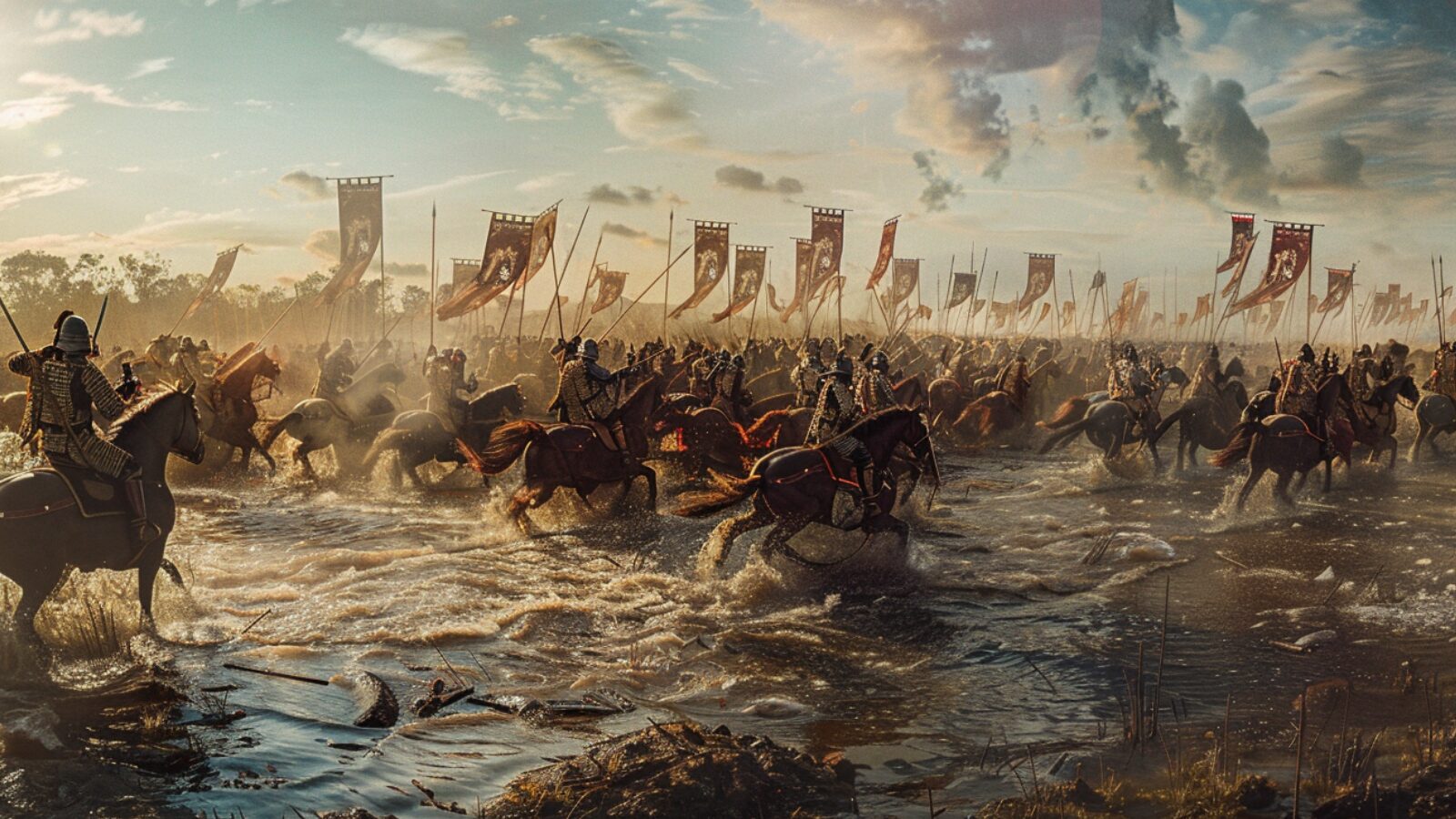
In the summer of 1570, along the banks of the Anegawa River in Ōmi Province, the forces of Oda Nobunaga and his key ally Tokugawa Ieyasu clashed with the combined forces of the Azai and Asakura clans. The Battle of Anegawa was the first major tactical test of the Oda-Tokugawa alliance and a pivotal confrontation in Nobunaga’s struggle to dominate central Japan. Explore the background of this dramatic brother-in-law confrontation, the course of the battle, its historical significance, and a list of key samurai involved.
contents
The Battle of Anegawa (1570): Nobunaga and Ieyasu vs. the Azai-Asakura Alliance
In the summer of 1570, Oda Nobunaga and his crucial ally Tokugawa Ieyasu clashed with the combined forces of the Azai and Asakura clans along the banks of the Anegawa River in Ōmi Province. The Battle of Anegawa — known in Japanese as Anegawa no tatakai — was the first major test of the Oda-Tokugawa alliance and a pivotal confrontation in Nobunaga’s long struggle to dominate central Japan.
What made this battle particularly dramatic was its personal dimension: Nobunaga was fighting against Azai Nagamasa, his own brother-in-law, whose marriage to Nobunaga’s younger sister Oichi had been intended to seal a political alliance. The Azai’s sudden betrayal just months earlier — when they turned on Nobunaga during his campaign against the Asakura clan — had transformed a trusted ally into a dangerous enemy. Anegawa was Nobunaga’s answer.
In this article, we explain the background to the battle, the course of the fighting, and its lasting historical significance, closing with a list of the key samurai involved.
What Was the Battle of Anegawa?
The Battle of Anegawa took place on the 28th day of the 6th month of Genki 1 (approximately July 30, 1570), along the Anegawa River in Ōmi Province — in the area of modern-day Nagahama City, Shiga Prefecture.
The battle pitted the combined forces of Oda Nobunaga and Tokugawa Ieyasu against an alliance of the Azai clan of northern Ōmi and the Asakura clan of Echizen. The Oda-Tokugawa side won a clear victory, but the Azai and Asakura were not destroyed — both clans continued to resist Nobunaga until their final defeat in 1573.
Anegawa River, Ōmi Province (modern Nagahama City, Shiga Prefecture)
Result
Oda-Tokugawa victory; Azai and Asakura weakened but survive until 1573
Background to the Battle
The Azai Betrayal and the Kanegasaki Retreat (Spring 1570)
To understand Anegawa, one must begin with the dramatic events of spring 1570. Nobunaga had launched a campaign against the Asakura clan of Echizen Province, who had refused to support his march on Kyoto. However, in a stunning reversal, his ally Azai Nagamasa broke their alliance and attacked the Oda army from the rear. Nobunaga was forced into a hasty retreat from Kanegasaki, a moment of acute personal danger that he barely survived.
Nobunaga had married his younger sister Oichi to Nagamasa in 1564 to cement the Oda-Azai alliance
The Azai clan had a prior agreement with the Asakura that they would not support any attack on Echizen — an obligation Nagamasa honored, even at the cost of his relationship with Nobunaga
After the Kanegasaki retreat, Nobunaga faced a serious strategic situation. The Azai and Asakura combined to threaten him from the north, while other powerful enemies — including the Ikko-ikki religious leagues and the Miyoshi clan — pressed from other directions. The Battle of Anegawa was Nobunaga’s move to eliminate the immediate northern threat before it could coordinate with his other enemies.
The Oda-Tokugawa Alliance
Tokugawa Ieyasu, who had allied with Nobunaga in 1562 (the Kiyosu Alliance), brought a significant force to reinforce the Oda army. The battlefield assignment — Tokugawa facing the Azai, Oda facing the Asakura — reflected both the geographical position of the two enemy forces and the respective strengths of each allied contingent.
Course of the Battle
Scene 1 — Armies Converge at the Anegawa (July 1570)
The Azai-Asakura combined force advanced into Ōmi Province and took position on the far bank of the Anegawa River. Nobunaga and Ieyasu deployed their forces on the opposite bank, with the Oda contingent on the right and the Tokugawa on the left. Both sides prepared to force a crossing of the shallow but tactically significant river.
Scene 2 — Tokugawa Struggles Against the Azai
When battle was joined, the Tokugawa forces found themselves hard-pressed by the formidable Azai army under Nagamasa. The Azai clan’s warriors were among the finest in the region, and the Tokugawa contingent — though fierce — was in danger of being overwhelmed. Figures such as Honda Tadakatsu distinguished themselves in this desperate fighting on the Tokugawa flank.
Scene 3 — Oda Breaks Through the Asakura
On the Oda flank, Nobunaga’s forces attacked the Asakura contingent — commanded at the battle by Asakura Kagetake — and broke through their lines. The Asakura, outnumbered and outmaneuvered, collapsed faster than the Azai. Nobunaga’s decisive breakthrough on this flank changed the entire shape of the battle.
Scene 4 — The Oda Wheel Inward and the Azai Are Flanked
With the Asakura routed, the victorious Oda forces wheeled inward and struck the Azai from the flank and rear. Caught between the Tokugawa to their front and the Oda now threatening their flank, the Azai could no longer maintain their position. Nagamasa ordered a withdrawal, and the Azai-Asakura forces retreated.
Scene 5 — Aftermath and the Long War Continues
The Oda-Tokugawa alliance had won a clear tactical victory, but the Azai and Asakura were not destroyed. Both clans retreated to their castles and continued to resist. Nagamasa held out in Odani Castle until 1573, when Nobunaga besieged and took it; the Asakura clan fell in the same year. Anegawa thus opened the final chapter of the Azai-Asakura story — but it did not close it.
Why This Battle Matters Historically
1. The Oda-Tokugawa Alliance Proved in Battle
Anegawa was the first large-scale engagement fought by the Oda-Tokugawa alliance. The two forces coordinated effectively — Tokugawa holding the Azai while Oda broke through the Asakura and turned to help — demonstrating the alliance’s real military value. This partnership, forged in 1562 and tested at Anegawa, would prove one of the most consequential relationships of the entire Sengoku period, enduring until Nobunaga’s death in 1582.
2. The Human Cost of Nobunaga’s Ambition
Anegawa illustrates the brutal personal dimensions of Sengoku politics. Nobunaga fought his own brother-in-law. His sister Oichi, wife of Azai Nagamasa, would eventually be rescued after the fall of Odani Castle in 1573, but she had lived through years of war between her husband and her brother. After Nagamasa’s death, Oichi later married Shibata Katsuie, and died alongside him at the fall of Kitanosho Castle in 1583 — a life shaped entirely by the wars of the Sengoku era.
3. The Beginning of the Anti-Nobunaga League
The Azai-Asakura alliance was one piece of a larger anti-Nobunaga coalition that would later include the Takeda clan, the Ikko-ikki, and other powers. Anegawa was an early chapter in this long struggle. Nobunaga’s survival and victory here allowed him to continue his campaign toward national hegemony — but the opposition he faced would grow more formidable before it was finally broken.
List of Participating and Related Figures
Who were the key figures at the Battle of Anegawa? Below is a list of the main samurai and related figures already featured on this site.
Oda Side
Oda Nobunaga (織田信長) — Commander-in-chief of the combined force; lord of Owari and Mino
Tokugawa Ieyasu (徳川家康) — Commander of the Tokugawa contingent; faced the Azai on the left flank
Honda Tadakatsu (本多忠勝) — Distinguished himself in fierce fighting against the Azai; one of the “Four Heavenly Kings” of the Tokugawa
Azai-Asakura Side
Azai Nagamasa (浅井長政) — Lord of northern Ōmi; Nobunaga’s brother-in-law (husband of Oichi); commanded the Azai forces and survived the battle, holding out until the fall of Odani Castle in 1573
Asakura Kagetake (朝倉景健) — Commanded the Asakura forces at the battle on behalf of clan leader Asakura Yoshikage
Asakura Yoshikage (朝倉義景) — Head of the Asakura clan of Echizen; the clan fell in 1573
Final Thoughts
The Battle of Anegawa in 1570 was a pivotal engagement in Nobunaga’s long campaign to dominate central Japan. It demonstrated the strength of the Oda-Tokugawa alliance, revealed the personal costs that Sengoku ambition could exact, and set the stage for the final destruction of the Azai and Asakura clans three years later.
Victory at Anegawa did not end the threat — but it put Nobunaga firmly on the path toward doing so. In the brutal calculus of the Sengoku period, a wounded enemy still standing was a problem that had to be solved. It would take three more years and two more sieges before Nobunaga could finally move beyond the northern Ōmi threat and focus his attention on the wider stage of national unification.
La Bataille d’Anegawa (1570) : Nobunaga et Ieyasu contre l’Alliance Azai-Asakura
À l’été 1570, Oda Nobunaga et son allié crucial Tokugawa Ieyasu affrontèrent les forces combinées des clans Azai et Asakura sur les rives de la rivière Anegawa, dans la province d’Ōmi. La bataille d’Anegawa fut la première grande épreuve de l’alliance Oda-Tokugawa et un affrontement décisif dans la longue lutte de Nobunaga pour dominer le Japon central.
Ce qui rendait cette bataille particulièrement dramatique, c’est sa dimension personnelle : Nobunaga combattait contre Azai Nagamasa, son propre beau-frère, dont le mariage avec la sœur cadette de Nobunaga, Oichi, avait été conçu pour sceller une alliance politique. La trahison soudaine des Azai quelques mois plus tôt — lorsqu’ils avaient attaqué Nobunaga par derrière lors de sa campagne contre le clan Asakura — avait transformé un allié de confiance en un ennemi dangereux. Anegawa était la réponse de Nobunaga.
Qu’est-ce que la bataille d’Anegawa ?
La bataille d’Anegawa eut lieu le 28e jour du 6e mois de Genki 1 (environ le 30 juillet 1570), le long de la rivière Anegawa dans la province d’Ōmi — dans la région de l’actuelle ville de Nagahama, préfecture de Shiga.
Elle opposa les forces combinées de Oda Nobunaga et Tokugawa Ieyasu à une alliance entre le clan Azai du nord d’Ōmi et le clan Asakura d’Echizen. Le camp Oda-Tokugawa l’emporta nettement, mais les Azai et les Asakura ne furent pas détruits — les deux clans continuèrent à résister à Nobunaga jusqu’à leur défaite finale en 1573.
Oda face aux Asakura (aile droite) ; Tokugawa face aux Azai (aile gauche)
Asakura face aux Oda ; Azai face aux Tokugawa
Année
1570 (Genki 1), environ le 30 juillet
Lieu
Rivière Anegawa, province d’Ōmi (actuelle ville de Nagahama, préfecture de Shiga)
Résultat
Victoire Oda-Tokugawa ; Azai et Asakura affaiblis mais survivent jusqu’en 1573
Contexte de la bataille
La trahison des Azai et la retraite de Kanegasaki (printemps 1570)
Pour comprendre Anegawa, il faut remonter aux événements dramatiques du printemps 1570. Nobunaga avait lancé une campagne contre le clan Asakura d’Echizen, qui avait refusé de soutenir sa marche sur Kyoto. Mais Azai Nagamasa rompit leur alliance et attaqua l’armée Oda par derrière. Nobunaga dut se replier précipitamment de Kanegasaki, dans un moment de danger personnel aigu. L’arrière-garde fut tenue notamment par Kinoshita Tōkichirō (futur Hideyoshi) et Akechi Mitsuhide.
Nobunaga avait marié sa sœur cadette Oichi à Nagamasa vers 1564 pour sceller l’alliance Oda-Azai
Le clan Azai avait un accord préalable avec les Asakura l’obligeant à ne pas soutenir toute attaque contre Echizen — obligation que Nagamasa honora, au prix de sa relation avec Nobunaga
La formation d’un réseau anti-Nobunaga
Après la retraite de Kanegasaki, Nobunaga se retrouva menacé sur plusieurs fronts à la fois. La bataille d’Anegawa était sa réponse pour éliminer la menace immédiate du nord avant qu’elle ne se coordonne avec ses autres ennemis.
L’alliance Oda-Tokugawa
Tokugawa Ieyasu, allié de Nobunaga depuis l’alliance de Kiyosu en 1562, amena une force significative. La disposition sur le champ de bataille — Tokugawa face aux Azai, Oda face aux Asakura — reflétait à la fois la position géographique des ennemis et les forces respectives de chaque contingent allié.
Chronologie de la bataille
Scène 1 — Les armées convergent à l’Anegawa
La force combinée Azai-Asakura prit position sur la rive opposée de la rivière Anegawa. Nobunaga et Ieyasu déployèrent leurs forces sur la rive d’en face, les Oda à droite et les Tokugawa à gauche, se préparant à forcer la traversée de la rivière peu profonde mais stratégiquement importante.
Scène 2 — Les Tokugawa peinent face aux Azai
Quand la bataille fut engagée, les forces Tokugawa se retrouvèrent en grande difficulté face à la redoutable armée Azai de Nagamasa. Des figures comme Honda Tadakatsu se distinguèrent dans ces combats désespérés sur le flanc Tokugawa.
Scène 3 — Les Oda percent les lignes Asakura
Sur le flanc Oda, les forces de Nobunaga attaquèrent le contingent Asakura — commandé au combat par Asakura Kagetake — et percèrent leurs lignes. Les Asakura, inférieurs en nombre et débordés, s’effondrèrent plus rapidement que les Azai.
Scène 4 — Les Oda pivotent et prennent les Azai en tenaille
Les Asakura mis en déroute, les forces Oda victorieuses pivotèrent vers l’intérieur et frappèrent les Azai par le flanc et l’arrière. Pris entre les Tokugawa à leur front et les Oda menaçant leur flanc, les Azai ne purent maintenir leur position. Nagamasa ordonna la retraite.
Scène 5 — L’après-bataille et la guerre qui continue
L’alliance Oda-Tokugawa avait remporté une nette victoire tactique, mais les Azai et les Asakura n’étaient pas détruits. Nagamasa tint le château d’Odani jusqu’en 1573, quand Nobunaga l’assiégea et le prit ; le clan Asakura tomba la même année. Anegawa ouvrit ainsi le dernier chapitre de l’histoire Azai-Asakura — sans le refermer.
Pourquoi cette bataille est-elle historiquement importante ?
1. L’alliance Oda-Tokugawa mise à l’épreuve
Anegawa fut le premier grand engagement de l’alliance Oda-Tokugawa. La coordination efficace des deux forces démontra la valeur réelle de ce partenariat. Cette alliance, forgée en 1562 et éprouvée à Anegawa, s’avéra l’une des relations les plus déterminantes de toute la période Sengoku, perdurant jusqu’à la mort de Nobunaga en 1582.
2. Le coût humain de l’ambition de Nobunaga
Anegawa illustre les dimensions personnelles brutales de la politique Sengoku. Nobunaga combattit son propre beau-frère. Sa sœur Oichi, épouse de Nagamasa, fut finalement sauvée après la chute du château d’Odani en 1573. Elle épousa ensuite Shibata Katsuie et mourut à ses côtés lors de la chute du château de Kitanosho en 1583 — une vie entièrement façonnée par les guerres de l’ère Sengoku.
3. Le début de la ligue anti-Nobunaga
L’alliance Azai-Asakura était une pièce d’une coalition anti-Nobunaga plus large qui inclurait plus tard le clan Takeda et d’autres puissances. La survie et la victoire de Nobunaga ici lui permirent de poursuivre sa campagne vers l’hégémonie nationale.
Liste des protagonistes et figures associées
Qui étaient les figures clés de la bataille d’Anegawa ? Voici les principaux samouraïs et personnages liés à cet événement, déjà présentés sur ce site.
Camp Oda
Oda Nobunaga (織田信長) — Commandant en chef de la force combinée ; seigneur d’Owari et de Mino
Tokugawa Ieyasu (徳川家康) — Commandant du contingent Tokugawa ; fit face aux Azai sur le flanc gauche
Honda Tadakatsu (本多忠勝) — Se distingua dans les combats acharnés contre les Azai ; l’un des « Quatre Rois Célestes » des Tokugawa
Camp Azai-Asakura
Azai Nagamasa (浅井長政) — Seigneur du nord d’Ōmi ; beau-frère de Nobunaga (époux d’Oichi) ; commanda les forces Azai et survécut à la bataille, résistant jusqu’à la chute du château d’Odani en 1573
Asakura Kagetake (朝倉景健) — Commanda les forces Asakura au combat au nom du chef de clan Asakura Yoshikage
Asakura Yoshikage (朝倉義景) — Chef du clan Asakura d’Echizen ; le clan tomba en 1573
Conclusion
La bataille d’Anegawa en 1570 fut un engagement décisif dans la longue campagne de Nobunaga pour dominer le Japon central. Elle démontra la solidité de l’alliance Oda-Tokugawa, révéla les coûts personnels que l’ambition Sengoku pouvait exiger, et prépara le terrain pour la destruction finale des clans Azai et Asakura trois ans plus tard.
La victoire à Anegawa ne mit pas fin à la menace — mais elle plaça fermement Nobunaga sur la voie pour y parvenir. Dans le calcul brutal de la période Sengoku, un ennemi blessé encore debout restait un problème à résoudre.
Die Schlacht am Fluss Ane (1570): Nobunaga und Ieyasu gegen das Azai-Asakura-Bündnis
Im Sommer 1570 stießen Oda Nobunaga und sein wichtiger Verbündeter Tokugawa Ieyasu mit den vereinten Kräften der Clans Azai und Asakura an den Ufern des Flusses Ane in der Provinz Ōmi zusammen. Die Schlacht am Fluss Ane — japanisch Anegawa no tatakai — war die erste große Bewährungsprobe des Oda-Tokugawa-Bündnisses und eine entscheidende Konfrontation in Nobunagas langem Kampf um die Vorherrschaft im zentralen Japan.
Besonders dramatisch war die persönliche Dimension dieser Schlacht: Nobunaga kämpfte gegen Azai Nagamasa, seinen eigenen Schwager, dessen Heirat mit Nobunagas jüngerer Schwester Oichi ein politisches Bündnis besiegeln sollte. Der plötzliche Verrat der Azai wenige Monate zuvor — als sie Nobunaga während seines Feldzuges gegen den Asakura-Clan in den Rücken fielen — hatte einen vertrauenswürdigen Verbündeten in einen gefährlichen Feind verwandelt. Anegawa war Nobunagas Antwort darauf.
Was war die Schlacht am Fluss Ane?
Die Schlacht fand am 28. Tag des 6. Monats von Genki 1 (ca. 30. Juli 1570) am Fluss Ane in der Provinz Ōmi statt — im Bereich der heutigen Stadt Nagahama, Präfektur Shiga.
Die vereinten Kräfte von Oda Nobunaga und Tokugawa Ieyasu stießen auf ein Bündnis des Azai-Clans aus dem nördlichen Ōmi und des Asakura-Clans aus Echizen. Die Oda-Tokugawa-Seite errang einen klaren Sieg, doch die Azai und Asakura wurden nicht vernichtet — beide Clans leisteten Nobunaga bis zu ihrer endgültigen Niederlage im Jahr 1573 Widerstand.
Oda gegen Asakura (rechter Flügel) ; Tokugawa gegen Azai (linker Flügel)
Asakura gegen Oda ; Azai gegen Tokugawa
Jahr
1570 (Genki 1), ca. 30. Juli
Ort
Fluss Ane, Provinz Ōmi (heutige Stadt Nagahama, Präfektur Shiga)
Ergebnis
Sieg der Oda-Tokugawa ; Azai und Asakura geschwächt, überleben bis 1573
Hintergründe der Schlacht
Der Azai-Verrat und der Rückzug von Kanegasaki (Frühjahr 1570)
Um Anegawa zu verstehen, muss man bei den dramatischen Ereignissen des Frühjahrs 1570 beginnen. Nobunaga hatte einen Feldzug gegen den Asakura-Clan in Echizen gestartet, der sich geweigert hatte, seinen Marsch auf Kyoto zu unterstützen. Doch Azai Nagamasa brach das Bündnis und griff die Oda-Armee von hinten an. Nobunaga musste sich überstürzt von Kanegasaki zurückziehen. Die Nachhut wurde unter anderem von Kinoshita Tōkichirō (dem späteren Hideyoshi) und Akechi Mitsuhide gehalten.
Nobunaga hatte seine jüngere Schwester Oichi ca. 1564 mit Nagamasa verheiratet, um das Oda-Azai-Bündnis zu festigen
Der Azai-Clan hatte eine Vorvereinbarung mit den Asakura, die ihn verpflichtete, keinen Angriff auf Echizen zu unterstützen — eine Verpflichtung, die Nagamasa einhielt, auch auf Kosten seiner Beziehung zu Nobunaga
Die Bildung eines Anti-Nobunaga-Netzwerks
Nach dem Rückzug von Kanegasaki sah sich Nobunaga einer ernsthaften strategischen Lage gegenüber. Die Azai und Asakura bedrohten ihn vom Norden, während andere mächtige Feinde — darunter die Ikko-ikki und der Miyoshi-Clan — von anderen Richtungen drückten. Die Schlacht von Anegawa war Nobunagas Zug, um die unmittelbare nördliche Bedrohung auszuschalten.
Das Oda-Tokugawa-Bündnis
Tokugawa Ieyasu, seit dem Kiyosu-Bündnis von 1562 mit Nobunaga verbündet, brachte eine beträchtliche Streitmacht mit. Die Schlachtaufstellung — Tokugawa gegen die Azai, Oda gegen die Asakura — spiegelte sowohl die geografische Lage der Feindkräfte als auch die jeweiligen Stärken der Verbündetenverbände wider.
Zeitplan der Ereignisse
Szene 1 — Die Armeen treffen am Fluss Ane aufeinander
Die kombinierte Azai-Asakura-Kraft bezog auf dem gegenüberliegenden Ufer des Flusses Ane Stellung. Nobunaga und Ieyasu entfalteten ihre Kräfte am diesseiten Ufer, mit den Oda rechts und den Tokugawa links, bereit, den Fluss zu überschreiten.
Szene 2 — Die Tokugawa kämpfen hart gegen die Azai
Als die Schlacht begann, gerieten die Tokugawa-Kräfte unter starken Druck der überlegenen Azai-Armee unter Nagamasa. Persönlichkeiten wie Honda Tadakatsu zeichneten sich in diesem erbitterten Kampf auf dem Tokugawa-Flügel aus.
Szene 3 — Die Oda durchbrechen die Asakura-Linien
Auf dem Oda-Flügel griffen Nobunagas Kräfte das von Asakura Kagetake kommandierte Asakura-Kontingent an und brachen durch ihre Linien. Die Asakura, zahlenmäßig unterlegen und umgangen, brachen schneller zusammen als die Azai.
Szene 4 — Die Oda schwenken ein und nehmen die Azai in die Zange
Mit dem Asakura-Kontingent in die Flucht geschlagen, schwenkten die siegreichen Oda-Kräfte nach innen und griffen die Azai von der Flanke und dem Rücken an. Zwischen den Tokugawa an ihrer Front und den Oda, die ihre Flanke bedrohten, konnten die Azai ihre Position nicht halten. Nagamasa befahl den Rückzug.
Szene 5 — Nachspiel und der lange Krieg geht weiter
Das Oda-Tokugawa-Bündnis hatte einen klaren taktischen Sieg errungen, aber die Azai und Asakura waren nicht vernichtet. Nagamasa hielt sich in Burg Odani, bis Nobunaga sie 1573 belagerte und einnahm; der Asakura-Clan fiel im gleichen Jahr. Anegawa eröffnete damit das letzte Kapitel der Azai-Asakura-Geschichte — schloss es aber nicht.
Warum diese Schlacht historisch bedeutsam ist
1. Das Oda-Tokugawa-Bündnis im Feuer erprobt
Anegawa war das erste große Gefecht des Oda-Tokugawa-Bündnisses. Die effektive Koordination der beiden Kräfte — Tokugawa hält die Azai, während Oda durch die Asakura bricht und dann zu Hilfe kommt — bewies den realen militärischen Wert dieser Partnerschaft. Diese Allianz, 1562 geschmiedet und bei Anegawa erprobt, sollte bis zu Nobunagas Tod 1582 andauern.
2. Die persönlichen Kosten von Nobunagas Ehrgeiz
Anegawa verdeutlicht die brutalen persönlichen Dimensionen der Sengoku-Politik. Nobunaga kämpfte gegen seinen eigenen Schwager. Seine Schwester Oichi, Ehefrau von Nagamasa, wurde schließlich nach dem Fall von Burg Odani 1573 gerettet. Sie heiratete später Shibata Katsuie und starb 1583 an seiner Seite beim Fall von Burg Kitanosho — ein Leben, das vollständig von den Kriegen der Sengoku-Ära geprägt war.
3. Der Beginn der Anti-Nobunaga-Liga
Das Azai-Asakura-Bündnis war ein Baustein einer größeren Anti-Nobunaga-Koalition, die später den Takeda-Clan und andere Mächte einschloss. Das Überleben und der Sieg Nobunagas hier erlaubten ihm, seine Kampagne zur nationalen Hegemonie fortzusetzen.
Liste der Teilnehmenden und verwandten Persönlichkeiten
Wer waren die Schlüsselfiguren bei der Schlacht am Fluss Ane? Nachfolgend sind die wichtigsten Samurai und verwandten Persönlichkeiten aufgeführt, die bereits auf dieser Website vorgestellt werden.
Seite Oda
Oda Nobunaga (織田信長) — Oberbefehlshaber der kombinierten Streitmacht ; Herr von Owari und Mino
Tokugawa Ieyasu (徳川家康) — Kommandant des Tokugawa-Kontingents ; stellte sich den Azai auf dem linken Flügel
Honda Tadakatsu (本多忠勝) — Zeichnete sich in den erbitterten Kämpfen gegen die Azai aus ; einer der „Vier Himmelskönige” der Tokugawa
Seite Azai-Asakura
Azai Nagamasa (浅井長政) — Herr des nördlichen Ōmi ; Schwager Nobunagas (Ehemann von Oichi) ; kommandierte die Azai-Kräfte und überlebte die Schlacht, hielt bis zum Fall von Burg Odani 1573 durch
Asakura Kagetake (朝倉景健) — Kommandierte die Asakura-Kräfte im Kampf im Auftrag des Clanoberhaupts Asakura Yoshikage
Asakura Yoshikage (朝倉義景) — Oberhaupt des Asakura-Clans aus Echizen ; der Clan fiel 1573
Schlussbetrachtung
Die Schlacht am Fluss Ane im Jahr 1570 war ein entscheidender Schritt in Nobunagas langer Kampagne zur Vorherrschaft über das zentrale Japan. Sie bewies die Stärke des Oda-Tokugawa-Bündnisses, enthüllte die persönlichen Kosten, die Sengoku-Ehrgeiz fordern konnte, und bereitete den Boden für die endgültige Vernichtung der Clans Azai und Asakura drei Jahre später.
Der Sieg bei Anegawa beendete die Bedrohung nicht — aber er brachte Nobunaga fest auf den Weg, dies zu tun. Im brutalen Kalkül der Sengoku-Periode blieb ein verwundeter Feind, der noch stand, ein Problem, das gelöst werden musste.
Yanorisu
history fan
Nice to meet you! I am Yanorisu, a Japanese guy who loves history.








comment