
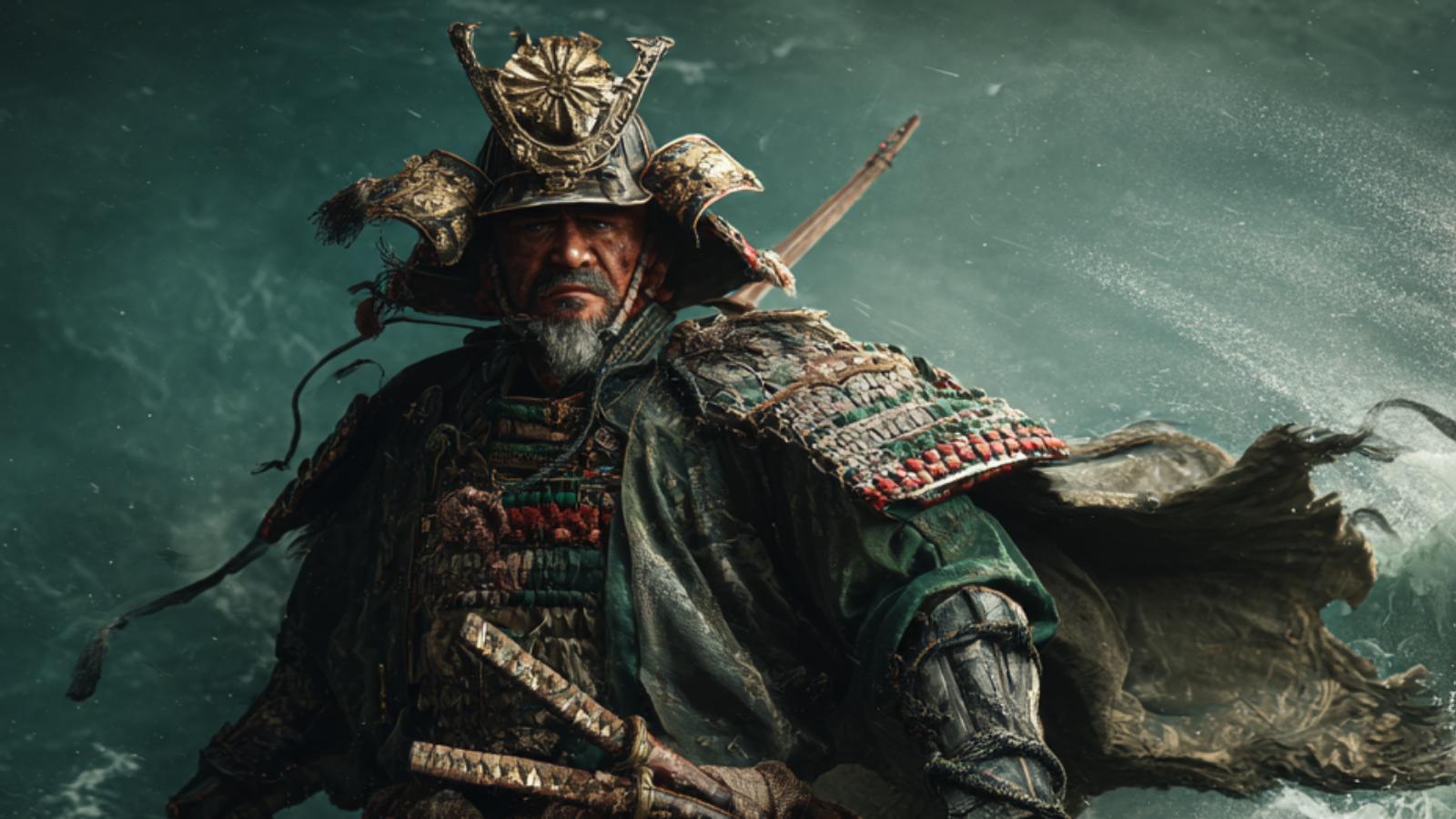
“一領具足”
— One set of armor (Farmer-soldiers ready for battle).

| Lead 統率 |
Valor 武勇 |
Intel 知略 |
Pol 政治 |
|---|---|---|---|
| 82 | 75 | 80 | 78 |
| Name (JP) | 長宗我部 元親 |
|---|---|
| Title | Daimyo |
| Clan / Force | Chosokabe Clan |
| Era | 1533 – 1599 |
| Origin | Tosa |
| Key Battles | |
| Arts | Noh Theater |
About Chosokabe Motochika
He belonged to the Chosokabe clan, which was a minor provincial family at the time.
His was marked by the civil unrest of the Sengoku period, where various daimyo fought for power.
Unlike many of his contemporaries, Motochika was not born into wealth, but he was determined to make a name for himself and restore the fortunes of his family.
After gaining control of his familys territory, Motochika pursued an aggressive strategy of expanding his influence across Shikoku.
He successfully unified the island under his banner, conquering rival clans with a combination of military prowess and strategic diplomacy.
By forming important alliances and employing tactical ingenuity, he elevated the Chosokabe clan from obscurity to a dominant power on the island.
His reign also witnessed the introduction of new agricultural reforms and improvements in infrastructure, which greatly benefited his domain.
Motochika’s military campaigns were characterized by a series of decisive that showcased his leadership and valor.
He famously led his troops in confrontations such as the Battle of Kōbai in 1582, where his forces were known for their well-coordinated tactics and resilience.
His effective use of naval power was also a key component of his military strategy, as Tosa had access to the sea and trade routes.
Despite his successes, Motochika faced significant challenges, particularly from powerful regional rivals and the growing influence of larger factions on the mainland.
Chosokabe Motochika is remembered not only for his military achievements but also for his contributions to culture, especially in promoting Noh theater within his domain.
His in Shikoku is significant; he served as a unifying force during a tumultuous period and set the foundation for future leaders in the region.
Although faced with various adversities, his vision and ambition left an indelible mark on Japanese history, and his influence can still be observed in the cultural and historical landscape of modern Japan.









comment